
- SpeedX and ProShip Unite to Power Last-Mile Delivery Across the US
- Indian Carriers Resume Flights to Riyadh as MoCA Monitors West Asia Situation
- India Activates Emergency Measures as Hormuz Closure Enters Day 13
- Iran Grants Safe Passage to Indian Vessels Through Strait of Hormuz
- ACAAI Northern Region Meet Boosts Industry Collaboration
- Softlink Global Takes Logistics Tech to Classrooms
- India-EFTA Trade Pact Marks Two Years
- Madurai Airport Gets International Status
- Cabinet Clears Jewar Airport Expressway
- Mumbai Cargo Service Center Cold Chain Solutions Wins IATA Best Performance Award
Expert Views
The e-commerce surge has deeply impacted the air cargo industry, prompting the question of how industry leaders can meet the evolving needs of online…

The air cargo industry is undergoing a seismic shift due to the e-commerce boom. Meeting the escalating demands for speed and reliability brought about…
Vivek Johri, VP (Sales & Ops) at iWay Logistics Services, narrates this piece that delves into India’s logistics, exploring tech-driven transformation, economic growth, and enhanced customer satisfaction for an evolving industry.
Rajesh Menon, Regional Head – Cargo, South Asia, Middle East & Africa, Cathay Pacific Airways, discusses IoT, AI, and automation’s influence on cargo operations. The dialogue highlights their role in boosting efficiency, cost reduction, cybersecurity management, upskilling, and anticipating industry evolution.
Sandeep Bansal, Chief Business Officer, Falcon Autotech, explains how a technological revolution is occurring within intralogistics due to automation leading to improved effectiveness, self-directed functions, and customer-centric solutions in response to the dynamic e-commerce landscape.
Parvinder Singh, Managing Director, Hans Infomatic, notes how technology has reshaped cargo logistics. Automation, tracking, and data analytics streamline operations, while IoT and AI boost efficiency and cut costs.
Amar More, CEO, Co-Founder, Kale Logistics Solutions, explores tech’s impact on cargo, focusing on AI’s rise. Navigating LogiTech’s landscape, he uncovers potential and challenges.
Dr. Pushpendra Pratap Singh, Country Head, Asia Shipping, sheds light on multimodal logistics, emphasising the importance of technology for integration. He also explains how government initiatives, along with India’s growth, offer promising prospects for the industry.
Bipin Kevadiya, the CMD, Ethics Group of Companies, explains how companies can deal with ethical challenges like forced labour, environmental sustainability, and transparency issues. He suggests a multi-faceted approach that includes using technology, collaborating with others, educating employees, and improving communication.
An extensive interview with Amit Maheshwari, Founder & CEO, Softlink Global, exploring how technology empowers air cargo companies to efficiently handle e-commerce growth, reduce carbon footprints, manage cross-border complexities, enhance data security, and address skilled labour shortages in the industry.
The Solution de Technology, Automation & Robotics Conference at The Lalit, New Delhi on 21 July 2023 provided profound insights into industry evolution, cost reduction, and advanced technology supply.
In an exclusive interview, Puneet Dhiman, Founder and CEO, Chaabi, expresses his views regarding the necessity of specialised training and upskilling for blue-collar workers in the logistics and supply chain sectors.
In this interview, Vipul Bhalla, Chief Business Officer, Pradhan Air Express, shares his extensive experience in the aviation industry, spanning over 35 years with roles in various airlines.
Videh Kumar Jaipuriar, CEO-DIAL, showcases Delhi Airport’s commitment to efficient and sustainable air cargo operations with upgrades, digitisation, and green initiatives.
Samir J. Shah, Chief Mentor and Director, JBS Academy, discusses the changing trends in training and development in the logistics industry, the impact of technology, the importance of continuous learning and upskilling, and the challenges of adapting to remote work and virtual teams.
Chandrakala Bobba, Director, Bobba Logistics, discusses the advantages of warehouses over godowns in the modern age of logistics, emphasising increased cost efficiency, storage capacity, inventory management, and turnaround times.
Kinjal Pande, CEO, DB Schenker India, shares insights on India’s logistics industry growth, warehouse automation, digital transformation, sustainability practises, and the impact of the National Logistics Policy.
Ports and airports are not traditionally considered interconnected since they serve different supply chains. While this assumption remains true, numerous developments have occurred in recent years, with the emergence of a level of integration between port and airport terminals and their transportation networks. A veteran in the field, Dr. Pushpendra Pratap Singh, Country Head, Asia Shipping, explains the same.
James Clark, Vice President, Bastian Solutions for manufacturing strategy and operations, who is responsible for all manufacturing globally, provides insights into the company’s solutions for warehouse clients.
With a vast reach across the country, skill in serving many industries, and over six decades of experience, the V-Trans group is distinguished by its diversified services.
The concessionaire pact between Air India SATS Airport Services (AISATS) and Jewar Airport (Noida International Airport) is for 37 years to develop a Multi-Modal Cargo Hub (MMCH) at Noida International Airport (NIA).
In an effort to better understand the business, Cargo Insights spoke with notable figures in FM Logistic, including Jean-Christophe Mache, CEO; Stephane Descarpentries, Managing Director, Asian operations: Ajit Jangle, Managing Director, India.
Sustainability and environmental responsibility are increasingly important considerations for logistics companies, Vijay Vashisht, AVP, Safexpress discusses the initiatives Safexpress has undertaken to minimize its carbon footprint and promote sustainable practices.
Mukesh Mudholkar, Senior Consultant, Airport IT strategy, Kale Logistics Solutions, provides expert insight into the current state of domestic air cargo in India, as well as how it has evolved in recent years with the growth of e-commerce. He also discusses specific technology solutions for freighter operators, the government’s support for the domestic air cargo industry, the role of technology and innovation and how they are shaping its future.
Dr. Pushpendra Pratap Singh, Country Head for India, Asia Shipping, shares his thoughts on how the automotive logistics sector has evolved, some of the biggest challenges it currently faces, the role technology plays in the sector, some of the emerging trends, as well as key sustainability issues.
As per Arvind Nayak, Managing Director, Nayak Aviation Services, the Domestic Air Cargo sector in India is on the rise due to the boom in e-commerce. Let us throw some light on opportunities available along with strategies to take on challenges.
The automobile logistics industry has evolved over the last decade, according to Huafreed Nasarwanji, Chief Commercial Officer, Gati.
The industry veteran, Malay Shankar, CEO, ProConnect, spearheading ProConnect Supply Chain Solutions speaks his mind about what the industry can do to become more gender-neutral.
Kale Logistics’ Head of Marketing, Rajni Patwardhan, reveals what the logistics industry can do to attract young talent and encourage more women to join.
Dr. Pushpendra Pratap Singh, Country Head, Asia Shipping, talks about the importance of ensuring women’s safety to build a more gender-neutral workforce.
Managing Director, Bertling Logistics, Sharmila Amin, shares her story and speaks up on how much the logistics industry supports women.
According to Aditya Shah, Executive Director, V-Trans India & CEO V-Xpress, the pharmaceutical supply chain is crucial for guaranteeing access to safe and effective medicines.
The political and business environment has gained the confidence of the industry, and many projects have found their way to India as a part of their company’s strategic risk-mitigation tactics for the future.
The Indian pharmaceutical industry ranks third in terms of volume and is the biggest supplier of pharmaceuticals in the world.
From the perspectives of effectiveness, openness, safety, inventory management, and removing fake medications from the supply chain, there are numerous problems. But many of these problems have an answer now thanks to the cloud, says Prasoon Pathak, Director Delivery, Cloud Services, SecureKloud Technologies.
Reverse logistics, commonly referred to as “returns management,” covers a wide range of e-commerce fulfillment activities and is just as crucial to efficient supply chain management as traditional “forward” logistics.
Strong collaborations with other cold-chain participants are necessary to ensure seamless transitions and successful pharmaceutical product transportation, says Vaibhav Vohra, MD, Continental Carriers.
Sunil Nair, CEO, Snowman Logistics, explains that while pharmaceuticals have always been critical, the pandemic has given us a new perspective on health and medicine.
According to Dr. Pushpendra Pratap Singh, Country Head, Asia Shipping International Transport, shipping, and logistics are thriving and growing at an exponential rate, and the momentum has been accelerated by the recently launched National Logistics Policy.
As per Ashish Asaf, Group MD, SA Consultants & Forwarders, the industry will continue to experience a variety of changes in 2023, with complete digitalisation remaining the most significant.
As prescriptive and predictive analytics become required features of demand and supply planning, the use of AI/ML/Big data technologies will take centre stage.
According to Kamesh Peri, CEO, Celebi Delhi Cargo Terminal Management, the National Logistics Policy and infrastructure development initiatives will make the Indian logistics industry and supply chain competitive on a global scale.
Today’s customers rightly demand improved supply chain efficiency, and newer technology ensures that.
Logistics for a corporation to implement an effective and efficient packing process. Packaging plays a significant role in this process, beginning with the selection of sturdy materials that can survive the rigours of transportation.
Warehouse automation, if used effectively, results in the best cost savings, higher productivity levels, and a decrease in theft and pilferage.
Samir Gandhi, MD at Gandhi Automation thinks that warehouse automation is a reasonable answer for many firms with a rising number of responsibilities when it comes to running and improving their facilities.
Organising and Predictability Will Increase in the Warehousing Sector – Industry Expert Nihar Parida, Industry Specialist – Warehousing and Logistics, chooses to believe that, finally, the government is addressing the Indian supply chain industry by doing more than just talking about it.
The NLP clearly outlines warehousing as one of the key areas of focus and development. The government in collaboration with industry has now formulated a clear minimum requirement for the classification of Grade A warehousing.
The National Logistics Policy, according to Vikas Yadav, Director, Future Warehouse Solutions, intends to lower India’s high logistics costs and is undoubtedly a stepping stone for the expansion of the warehousing industry.
The new policy which was recently unveiled by our honorable prime minister will reduce the logistics cost for improving the competitiveness of Indian goods both in domestic as well as in international export markets.
Sujeet Vichare, Sr. Sourcing Manager, WorkStore, Lightening Division -RLT, opines, that multinational companies like Amazon, DHL, Maersk, and others encouraged Indian warehouse operators to raise standards and catch up with international standards in the warehousing industry.
Freight, or the movement of goods, is the need of the hour and will always be necessary for the smooth functioning of an economy.
India’s opportunities in warehousing are riding on the growing demand of online retail, which is opening up warehouses in tier 1 and tier 2 cities apart from collaborating with logistics service providers across the country.
Akash Bansal, Country Head, Om Logistics believes that there is a long way for the Warehousing sector to go and that significant upgrades in warehousing infrastructure and capabilities are needed to match international standards.
According to Vandana Singh, Director-Global Corporate Key Accounts Asia Pacific, Saudia Cargo, the Indian air cargo industry is currently one of the most competitive and growing markets in the sector.
The Air cargo market in India has witnessed steady growth despite the pandemic and how it impacted the economy,” says Satyaki Raghunath, Chief Strategy and Development Officer, Bangalore International Airport Ltd.
Aby George, Chief of Airport Services and Cargo, Air India Express, says, “The air cargo sector has just emerged from the COVID market and is poised to take off.
Kale Logistics Solutions is a pioneer in providing state-of-the-art community and enterprise solutions.
Logistics, like all other fields, is evolving. Dr. Pramod Sant, Industry Expert & Former Vice President Head, Import-Export and Customs, Siemens, South Asia, in an exclusive interview with CargoInsights tells us, it will be difficult to predict how logistics will look in the future, but we can always make our best efforts to shape the “Next Generation in Logistics.”
Chaitaly Mehta, Director, EKF Global Logistics, a logistics specialist with over 25 years of industry experience, is the third generation of a customs broker and the second generation of a freight forwarder in the family-owned business, EKF Logistics.
Ayesha Katgara, Head of Corporate Strategy at Jeena & Company and a Strategic Marketing MSc graduate says, “The Millennials are up to date on the latest technological developments and are adopting the latest technological trends that ensure faster outputs through process recreation.”
“It all started with a family transport company,” said Arshdeep Singh Mundi, Executive Director of the Ludhiana-based Jujhar Group. This was always my main objective.”
Avishkar Srivastava, Chief Innovation Officer, The PDP Group joined the family firm after graduation in 2014. “I was born into a family that was highly passionate about logistics,” he explained.
This is actually the right time for India to reinforce its leadership as a global trade destination and hub. And for that, we need a holistic focus.
Cargo Insights took flight on August 6th, 2022, with its launch event at Ibis, Aerocity. The magazine and the website were launched in New Delhi by Piyush Srivastava, Senior Economic Advisor to the Ministry of Civil Aviation, Government of India. in the presence of industry stalwarts.
The logistics industry is using digitalisation to adapt to unique cultures, implement new initiatives, and even reinvent consumer experiences in order to meet market needs and respond to unpredictable business conditions.
Raghavendran Viswanathan, CEO of Freightify, a company that empowers freight forwarders to go digital by providing plug-and-play technologies.
Hector Patel, Executive Director of Jeena, a freight forwarding and supply chain solutions company, speaks to CargoInsights on his views on the recently held FFFAI convention and the role of technology in taking the industry forward.
Dr. Pramod Sant, Industry Expert and Former Vice President and Head of Import, Export, and Customs, Siemens Ltd., South Asia, discusses how the FFFAI is reshaping the freight forwarding industry.
Small, traditional logistics service providers now face a survival dilemma after COVID-19 highlighted their weaknesses and shortcomings.
P.S. Atree, gave his insights on how FFFAI is re-shaping the freight forwarding industry.
Rama Krishna S, Managing Director Balaji Mariline is a Customs Broker of 1989 batch with working experience of 12 years in large industries in Exim and Logistics prior to 1989. He has been the former Chairman of the Freight Forwarders Association in India, and the President of Noida Customs Brokers Association & Delhi Customs Brokers Association.
Digitisation or digitalisation are the keywords that the cargo sector needs to adopt at a lightning speed for faster implementation and integration with various other systems, such as the government’s Unified Logistics Platform (ULP) scheme.
Ministry of Civil Aviation is targeting to achieve 10 million tons of air cargo by 2030 from current 3.33 million tons roughly translating to a CAGR of 13.5% with the collective effort of all industry stakeholders and enhanced cargo capacities at metro airports.
We caught up with Mr Ashish Asaf to probe his thoughts on digitisation in the Logistics industry. Read his expert opinion.
With its conducive geographic location, aided with robust infrastructure, and adequate airline capacities to key markets globally, BLR Airport has transformed itself into a preferred choice for perishable shipments in India.
Mr Shankar Shinde, Chairman, FFFAI talks about the need for revolutionary technology, infrastructure and governmental support to achieve greater heights in the economy.
Need is to adopt technology with human touch and co-operative model to grow in Logistics Business.
Know from Akash Bansal, Country Head, Om Logistics their plans for expansion and the ways to optimise operations and costs.
With an increased emphasis on last-mile delivery, making back-office operations more efficient, faster, productive and error-free, while pushing for digital transformation, centralisation of data strategy, paperless transactions and cross-border logistics along with rising demand for robust software as a service-providers.
Pronk Multiservice offers advanced solutions for safeguarding your cargo. Shailender Anand, Managing Director-INDIA & Director-DUBAI, Pronk Multiservice speaks to Cargo Insights about their plans and the role of this segment during the pandemic.
Learn what the Air Cargo experts think about the pre and post-pandemic era.
Platforms like Cargo Community System aim at streamlining, upgrading, and standardising interactions with and between the supply chain stakeholders, helping to advance digital collaborations and making way for enhanced efficacy by promoting a powerful partnership between carriers, freight forwarders, Airports/Ports, transporters, regulatory agencies and traders.
Maintaining the momentum established during the pandemic and to continue building resilience post-COVID, Air cargo sector must meet customers’ expectations for the highest standards of sustainability. Halit Tuncer, Cargo Director, South Asia, Turkish Cargo, shares the details.
An efficient and transparent network is the need of hour to focus on the first mile of pickup management and connectivity to transhipment operations if it has to stand the test of customer satisfaction. Vijay Vashisht , AVP, Safexpress shares the details.
‘Digital Fitness’ is the new prerequisite for success where winners will be those who understand how to exploit a whole range of new technologies, from data analytics to automation and platform solutions. Those who don’t, risk obsolescence.
Faster time to market and ever-increasing demand from the time sensitive e-commerce sector has changed the dynamics of the logistics industry. Extensive use of technology is a stepping stone in this process as they provide an ease in time-bound supply, customer satisfaction and risk-free environment.
Cargo Insights caught up with Vipin Vohra, Chairman of Continental Carriers to gather their views on the current practices in the post-pandemic era; why sustainability and digitalisation are critical; and, their plans for the next year.
Customers’ expectations for digital solutions are the new trend in the logistics industry from offering customized, tailor-made services to the client, be it in the form of hybrid model or giving digital solutions.
Efficient positioning of intermodal transport as connectivity and transhipment among Ocean-Air transport modes is required on priority as the rail and road connectivity in the Indian subcontinent improves simultaneously.
With neighboring countries faltering economically, India stands tall amongst them with great domestic demand, state of the art manufacturing facilities for the EXIM trade and rapid infrastructure development in road, railways, air and inland waterways.
Growth of passenger traffic will go hand in hand with the growth of air cargo and developing infrastructure to sustain that growth is of paramount importance. Amitabh Khosla, IATA’s Country Director, India, emphasis on the eminent role played by air cargo during the pandemic times.
Most significant and innovative conception for the aviation industry during the pandemic was the conversion of aircrafts from Passenger to Cargo(P2C) thus bringing in…
The e-commerce surge has deeply impacted the air cargo industry,…
The air cargo industry is undergoing a seismic shift due…

Vivek Johri, VP (Sales & Ops) at iWay Logistics Services, narrates this piece that delves into India’s logistics, exploring tech-driven transformation, economic growth, and enhanced customer satisfaction for an evolving industry.
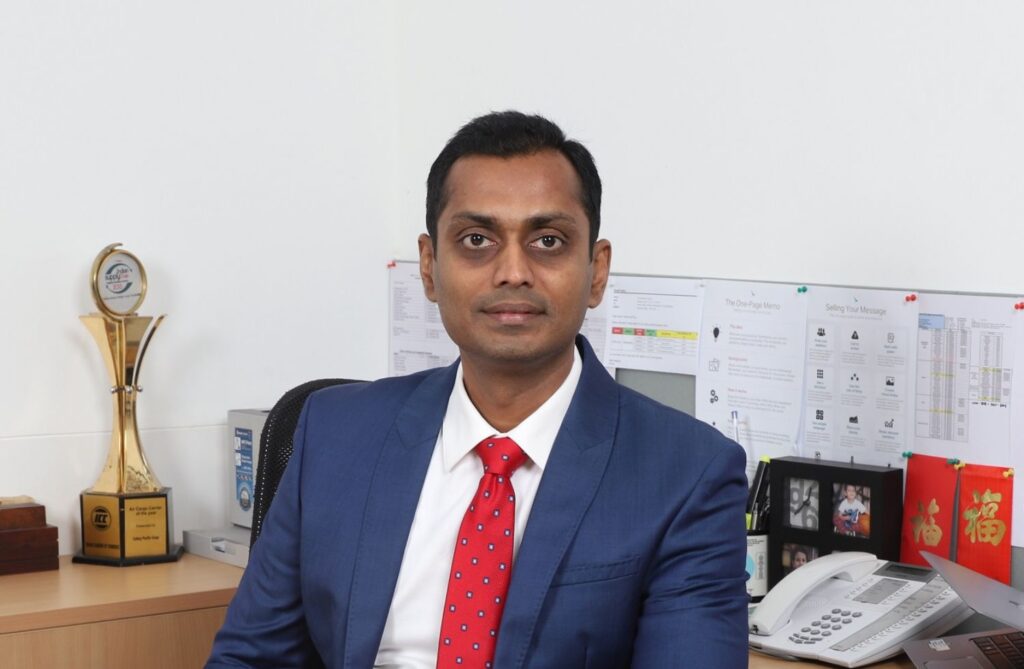
Rajesh Menon, Regional Head – Cargo, South Asia, Middle East & Africa, Cathay Pacific Airways, discusses IoT, AI, and automation’s influence on cargo operations. The dialogue highlights their role in boosting efficiency, cost reduction, cybersecurity management, upskilling, and anticipating industry evolution.
Sandeep Bansal, Chief Business Officer, Falcon Autotech, explains how a technological revolution is occurring within intralogistics due to automation leading to improved effectiveness, self-directed functions, and customer-centric solutions in response to the dynamic e-commerce landscape.
Parvinder Singh, Managing Director, Hans Infomatic, notes how technology has reshaped cargo logistics. Automation, tracking, and data analytics streamline operations, while IoT and AI boost efficiency and cut costs.
Amar More, CEO, Co-Founder, Kale Logistics Solutions, explores tech’s impact on cargo, focusing on AI’s rise. Navigating LogiTech’s landscape, he uncovers potential and challenges.
Dr. Pushpendra Pratap Singh, Country Head, Asia Shipping, sheds light on multimodal logistics, emphasising the importance of technology for integration. He also explains how government initiatives, along with India’s growth, offer promising prospects for the industry.
Bipin Kevadiya, the CMD, Ethics Group of Companies, explains how companies can deal with ethical challenges like forced labour, environmental sustainability, and transparency issues. He suggests a multi-faceted approach that includes using technology, collaborating with others, educating employees, and improving communication.
An extensive interview with Amit Maheshwari, Founder & CEO, Softlink Global, exploring how technology empowers air cargo companies to efficiently handle e-commerce growth, reduce carbon footprints, manage cross-border complexities, enhance data security, and address skilled labour shortages in the industry.
The Solution de Technology, Automation & Robotics Conference at The Lalit, New Delhi on 21 July 2023 provided profound insights into industry evolution, cost reduction, and advanced technology supply.
In an exclusive interview, Puneet Dhiman, Founder and CEO, Chaabi, expresses his views regarding the necessity of specialised training and upskilling for blue-collar workers in the logistics and supply chain sectors.
In this interview, Vipul Bhalla, Chief Business Officer, Pradhan Air Express, shares his extensive experience in the aviation industry, spanning over 35 years with roles in various airlines.
Videh Kumar Jaipuriar, CEO-DIAL, showcases Delhi Airport’s commitment to efficient and sustainable air cargo operations with upgrades, digitisation, and green initiatives.
Samir J. Shah, Chief Mentor and Director, JBS Academy, discusses the changing trends in training and development in the logistics industry, the impact of technology, the importance of continuous learning and upskilling, and the challenges of adapting to remote work and virtual teams.
Chandrakala Bobba, Director, Bobba Logistics, discusses the advantages of warehouses over godowns in the modern age of logistics, emphasising increased cost efficiency, storage capacity, inventory management, and turnaround times.
Kinjal Pande, CEO, DB Schenker India, shares insights on India’s logistics industry growth, warehouse automation, digital transformation, sustainability practises, and the impact of the National Logistics Policy.
Ports and airports are not traditionally considered interconnected since they serve different supply chains. While this assumption remains true, numerous developments have occurred in recent years, with the emergence of a level of integration between port and airport terminals and their transportation networks. A veteran in the field, Dr. Pushpendra Pratap Singh, Country Head, Asia Shipping, explains the same.
James Clark, Vice President, Bastian Solutions for manufacturing strategy and operations, who is responsible for all manufacturing globally, provides insights into the company’s solutions for warehouse clients.
With a vast reach across the country, skill in serving many industries, and over six decades of experience, the V-Trans group is distinguished by its diversified services.
The concessionaire pact between Air India SATS Airport Services (AISATS) and Jewar Airport (Noida International Airport) is for 37 years to develop a Multi-Modal Cargo Hub (MMCH) at Noida International Airport (NIA).
In an effort to better understand the business, Cargo Insights spoke with notable figures in FM Logistic, including Jean-Christophe Mache, CEO; Stephane Descarpentries, Managing Director, Asian operations: Ajit Jangle, Managing Director, India.
Sustainability and environmental responsibility are increasingly important considerations for logistics companies, Vijay Vashisht, AVP, Safexpress discusses the initiatives Safexpress has undertaken to minimize its carbon footprint and promote sustainable practices.
Mukesh Mudholkar, Senior Consultant, Airport IT strategy, Kale Logistics Solutions, provides expert insight into the current state of domestic air cargo in India, as well as how it has evolved in recent years with the growth of e-commerce. He also discusses specific technology solutions for freighter operators, the government’s support for the domestic air cargo industry, the role of technology and innovation and how they are shaping its future.
Dr. Pushpendra Pratap Singh, Country Head for India, Asia Shipping, shares his thoughts on how the automotive logistics sector has evolved, some of the biggest challenges it currently faces, the role technology plays in the sector, some of the emerging trends, as well as key sustainability issues.
As per Arvind Nayak, Managing Director, Nayak Aviation Services, the Domestic Air Cargo sector in India is on the rise due to the boom in e-commerce. Let us throw some light on opportunities available along with strategies to take on challenges.
The automobile logistics industry has evolved over the last decade, according to Huafreed Nasarwanji, Chief Commercial Officer, Gati.
The industry veteran, Malay Shankar, CEO, ProConnect, spearheading ProConnect Supply Chain Solutions speaks his mind about what the industry can do to become more gender-neutral.
Kale Logistics’ Head of Marketing, Rajni Patwardhan, reveals what the logistics industry can do to attract young talent and encourage more women to join.
Dr. Pushpendra Pratap Singh, Country Head, Asia Shipping, talks about the importance of ensuring women’s safety to build a more gender-neutral workforce.
Managing Director, Bertling Logistics, Sharmila Amin, shares her story and speaks up on how much the logistics industry supports women.
According to Aditya Shah, Executive Director, V-Trans India & CEO V-Xpress, the pharmaceutical supply chain is crucial for guaranteeing access to safe and effective medicines.
The political and business environment has gained the confidence of the industry, and many projects have found their way to India as a part of their company’s strategic risk-mitigation tactics for the future.
The Indian pharmaceutical industry ranks third in terms of volume and is the biggest supplier of pharmaceuticals in the world.
From the perspectives of effectiveness, openness, safety, inventory management, and removing fake medications from the supply chain, there are numerous problems. But many of these problems have an answer now thanks to the cloud, says Prasoon Pathak, Director Delivery, Cloud Services, SecureKloud Technologies.
Reverse logistics, commonly referred to as “returns management,” covers a wide range of e-commerce fulfillment activities and is just as crucial to efficient supply chain management as traditional “forward” logistics.
Strong collaborations with other cold-chain participants are necessary to ensure seamless transitions and successful pharmaceutical product transportation, says Vaibhav Vohra, MD, Continental Carriers.
Sunil Nair, CEO, Snowman Logistics, explains that while pharmaceuticals have always been critical, the pandemic has given us a new perspective on health and medicine.
According to Dr. Pushpendra Pratap Singh, Country Head, Asia Shipping International Transport, shipping, and logistics are thriving and growing at an exponential rate, and the momentum has been accelerated by the recently launched National Logistics Policy.
As per Ashish Asaf, Group MD, SA Consultants & Forwarders, the industry will continue to experience a variety of changes in 2023, with complete digitalisation remaining the most significant.
As prescriptive and predictive analytics become required features of demand and supply planning, the use of AI/ML/Big data technologies will take centre stage.
According to Kamesh Peri, CEO, Celebi Delhi Cargo Terminal Management, the National Logistics Policy and infrastructure development initiatives will make the Indian logistics industry and supply chain competitive on a global scale.
Today’s customers rightly demand improved supply chain efficiency, and newer technology ensures that.
Logistics for a corporation to implement an effective and efficient packing process. Packaging plays a significant role in this process, beginning with the selection of sturdy materials that can survive the rigours of transportation.
Warehouse automation, if used effectively, results in the best cost savings, higher productivity levels, and a decrease in theft and pilferage.
Samir Gandhi, MD at Gandhi Automation thinks that warehouse automation is a reasonable answer for many firms with a rising number of responsibilities when it comes to running and improving their facilities.
Organising and Predictability Will Increase in the Warehousing Sector – Industry Expert Nihar Parida, Industry Specialist – Warehousing and Logistics, chooses to believe that, finally, the government is addressing the Indian supply chain industry by doing more than just talking about it.
The NLP clearly outlines warehousing as one of the key areas of focus and development. The government in collaboration with industry has now formulated a clear minimum requirement for the classification of Grade A warehousing.
The National Logistics Policy, according to Vikas Yadav, Director, Future Warehouse Solutions, intends to lower India’s high logistics costs and is undoubtedly a stepping stone for the expansion of the warehousing industry.
The new policy which was recently unveiled by our honorable prime minister will reduce the logistics cost for improving the competitiveness of Indian goods both in domestic as well as in international export markets.
Sujeet Vichare, Sr. Sourcing Manager, WorkStore, Lightening Division -RLT, opines, that multinational companies like Amazon, DHL, Maersk, and others encouraged Indian warehouse operators to raise standards and catch up with international standards in the warehousing industry.
Freight, or the movement of goods, is the need of the hour and will always be necessary for the smooth functioning of an economy.
India’s opportunities in warehousing are riding on the growing demand of online retail, which is opening up warehouses in tier 1 and tier 2 cities apart from collaborating with logistics service providers across the country.
Akash Bansal, Country Head, Om Logistics believes that there is a long way for the Warehousing sector to go and that significant upgrades in warehousing infrastructure and capabilities are needed to match international standards.
According to Vandana Singh, Director-Global Corporate Key Accounts Asia Pacific, Saudia Cargo, the Indian air cargo industry is currently one of the most competitive and growing markets in the sector.
The Air cargo market in India has witnessed steady growth despite the pandemic and how it impacted the economy,” says Satyaki Raghunath, Chief Strategy and Development Officer, Bangalore International Airport Ltd.
Aby George, Chief of Airport Services and Cargo, Air India Express, says, “The air cargo sector has just emerged from the COVID market and is poised to take off.
Kale Logistics Solutions is a pioneer in providing state-of-the-art community and enterprise solutions.
Logistics, like all other fields, is evolving. Dr. Pramod Sant, Industry Expert & Former Vice President Head, Import-Export and Customs, Siemens, South Asia, in an exclusive interview with CargoInsights tells us, it will be difficult to predict how logistics will look in the future, but we can always make our best efforts to shape the “Next Generation in Logistics.”
Chaitaly Mehta, Director, EKF Global Logistics, a logistics specialist with over 25 years of industry experience, is the third generation of a customs broker and the second generation of a freight forwarder in the family-owned business, EKF Logistics.
Ayesha Katgara, Head of Corporate Strategy at Jeena & Company and a Strategic Marketing MSc graduate says, “The Millennials are up to date on the latest technological developments and are adopting the latest technological trends that ensure faster outputs through process recreation.”
“It all started with a family transport company,” said Arshdeep Singh Mundi, Executive Director of the Ludhiana-based Jujhar Group. This was always my main objective.”
Avishkar Srivastava, Chief Innovation Officer, The PDP Group joined the family firm after graduation in 2014. “I was born into a family that was highly passionate about logistics,” he explained.
This is actually the right time for India to reinforce its leadership as a global trade destination and hub. And for that, we need a holistic focus.
Cargo Insights took flight on August 6th, 2022, with its launch event at Ibis, Aerocity. The magazine and the website were launched in New Delhi by Piyush Srivastava, Senior Economic Advisor to the Ministry of Civil Aviation, Government of India. in the presence of industry stalwarts.
The logistics industry is using digitalisation to adapt to unique cultures, implement new initiatives, and even reinvent consumer experiences in order to meet market needs and respond to unpredictable business conditions.
Raghavendran Viswanathan, CEO of Freightify, a company that empowers freight forwarders to go digital by providing plug-and-play technologies.
Hector Patel, Executive Director of Jeena, a freight forwarding and supply chain solutions company, speaks to CargoInsights on his views on the recently held FFFAI convention and the role of technology in taking the industry forward.
Dr. Pramod Sant, Industry Expert and Former Vice President and Head of Import, Export, and Customs, Siemens Ltd., South Asia, discusses how the FFFAI is reshaping the freight forwarding industry.
Small, traditional logistics service providers now face a survival dilemma after COVID-19 highlighted their weaknesses and shortcomings.
P.S. Atree, gave his insights on how FFFAI is re-shaping the freight forwarding industry.
Rama Krishna S, Managing Director Balaji Mariline is a Customs Broker of 1989 batch with working experience of 12 years in large industries in Exim and Logistics prior to 1989. He has been the former Chairman of the Freight Forwarders Association in India, and the President of Noida Customs Brokers Association & Delhi Customs Brokers Association.
Digitisation or digitalisation are the keywords that the cargo sector needs to adopt at a lightning speed for faster implementation and integration with various other systems, such as the government’s Unified Logistics Platform (ULP) scheme.
Ministry of Civil Aviation is targeting to achieve 10 million tons of air cargo by 2030 from current 3.33 million tons roughly translating to a CAGR of 13.5% with the collective effort of all industry stakeholders and enhanced cargo capacities at metro airports.
We caught up with Mr Ashish Asaf to probe his thoughts on digitisation in the Logistics industry. Read his expert opinion.
With its conducive geographic location, aided with robust infrastructure, and adequate airline capacities to key markets globally, BLR Airport has transformed itself into a preferred choice for perishable shipments in India.
Mr Shankar Shinde, Chairman, FFFAI talks about the need for revolutionary technology, infrastructure and governmental support to achieve greater heights in the economy.
Need is to adopt technology with human touch and co-operative model to grow in Logistics Business.
Know from Akash Bansal, Country Head, Om Logistics their plans for expansion and the ways to optimise operations and costs.
With an increased emphasis on last-mile delivery, making back-office operations more efficient, faster, productive and error-free, while pushing for digital transformation, centralisation of data strategy, paperless transactions and cross-border logistics along with rising demand for robust software as a service-providers.
Pronk Multiservice offers advanced solutions for safeguarding your cargo. Shailender Anand, Managing Director-INDIA & Director-DUBAI, Pronk Multiservice speaks to Cargo Insights about their plans and the role of this segment during the pandemic.
Learn what the Air Cargo experts think about the pre and post-pandemic era.
Platforms like Cargo Community System aim at streamlining, upgrading, and standardising interactions with and between the supply chain stakeholders, helping to advance digital collaborations and making way for enhanced efficacy by promoting a powerful partnership between carriers, freight forwarders, Airports/Ports, transporters, regulatory agencies and traders.
Maintaining the momentum established during the pandemic and to continue building resilience post-COVID, Air cargo sector must meet customers’ expectations for the highest standards of sustainability. Halit Tuncer, Cargo Director, South Asia, Turkish Cargo, shares the details.
An efficient and transparent network is the need of hour to focus on the first mile of pickup management and connectivity to transhipment operations if it has to stand the test of customer satisfaction. Vijay Vashisht , AVP, Safexpress shares the details.
‘Digital Fitness’ is the new prerequisite for success where winners will be those who understand how to exploit a whole range of new technologies, from data analytics to automation and platform solutions. Those who don’t, risk obsolescence.
Faster time to market and ever-increasing demand from the time sensitive e-commerce sector has changed the dynamics of the logistics industry. Extensive use of technology is a stepping stone in this process as they provide an ease in time-bound supply, customer satisfaction and risk-free environment.
Cargo Insights caught up with Vipin Vohra, Chairman of Continental Carriers to gather their views on the current practices in the post-pandemic era; why sustainability and digitalisation are critical; and, their plans for the next year.
Customers’ expectations for digital solutions are the new trend in the logistics industry from offering customized, tailor-made services to the client, be it in the form of hybrid model or giving digital solutions.
Efficient positioning of intermodal transport as connectivity and transhipment among Ocean-Air transport modes is required on priority as the rail and road connectivity in the Indian subcontinent improves simultaneously.
With neighboring countries faltering economically, India stands tall amongst them with great domestic demand, state of the art manufacturing facilities for the EXIM trade and rapid infrastructure development in road, railways, air and inland waterways.
Growth of passenger traffic will go hand in hand with the growth of air cargo and developing infrastructure to sustain that growth is of paramount importance. Amitabh Khosla, IATA’s Country Director, India, emphasis on the eminent role played by air cargo during the pandemic times.
Most significant and innovative conception for the aviation industry during…
The e-commerce surge has deeply impacted the air cargo industry, prompting the question of how…
The air cargo industry is undergoing a seismic shift due to the e-commerce boom. Meeting…
Vivek Johri, VP (Sales & Ops) at iWay Logistics Services, narrates this piece that delves into India’s logistics, exploring tech-driven transformation, economic growth, and enhanced customer satisfaction for an evolving industry.

Rajesh Menon, Regional Head – Cargo, South Asia, Middle East & Africa, Cathay Pacific Airways, discusses IoT, AI, and automation’s influence on cargo operations. The dialogue highlights their role in boosting efficiency, cost reduction, cybersecurity management, upskilling, and anticipating industry evolution.
Sandeep Bansal, Chief Business Officer, Falcon Autotech, explains how a technological revolution is occurring within intralogistics due to automation leading to improved effectiveness, self-directed functions, and customer-centric solutions in response to the dynamic e-commerce landscape.
Parvinder Singh, Managing Director, Hans Infomatic, notes how technology has reshaped cargo logistics. Automation, tracking, and data analytics streamline operations, while IoT and AI boost efficiency and cut costs.
Amar More, CEO, Co-Founder, Kale Logistics Solutions, explores tech’s impact on cargo, focusing on AI’s rise. Navigating LogiTech’s landscape, he uncovers potential and challenges.
Dr. Pushpendra Pratap Singh, Country Head, Asia Shipping, sheds light on multimodal logistics, emphasising the importance of technology for integration. He also explains how government initiatives, along with India’s growth, offer promising prospects for the industry.
Bipin Kevadiya, the CMD, Ethics Group of Companies, explains how companies can deal with ethical challenges like forced labour, environmental sustainability, and transparency issues. He suggests a multi-faceted approach that includes using technology, collaborating with others, educating employees, and improving communication.
An extensive interview with Amit Maheshwari, Founder & CEO, Softlink Global, exploring how technology empowers air cargo companies to efficiently handle e-commerce growth, reduce carbon footprints, manage cross-border complexities, enhance data security, and address skilled labour shortages in the industry.
The Solution de Technology, Automation & Robotics Conference at The Lalit, New Delhi on 21 July 2023 provided profound insights into industry evolution, cost reduction, and advanced technology supply.
In an exclusive interview, Puneet Dhiman, Founder and CEO, Chaabi, expresses his views regarding the necessity of specialised training and upskilling for blue-collar workers in the logistics and supply chain sectors.
In this interview, Vipul Bhalla, Chief Business Officer, Pradhan Air Express, shares his extensive experience in the aviation industry, spanning over 35 years with roles in various airlines.
Videh Kumar Jaipuriar, CEO-DIAL, showcases Delhi Airport’s commitment to efficient and sustainable air cargo operations with upgrades, digitisation, and green initiatives.
Samir J. Shah, Chief Mentor and Director, JBS Academy, discusses the changing trends in training and development in the logistics industry, the impact of technology, the importance of continuous learning and upskilling, and the challenges of adapting to remote work and virtual teams.
Chandrakala Bobba, Director, Bobba Logistics, discusses the advantages of warehouses over godowns in the modern age of logistics, emphasising increased cost efficiency, storage capacity, inventory management, and turnaround times.
Kinjal Pande, CEO, DB Schenker India, shares insights on India’s logistics industry growth, warehouse automation, digital transformation, sustainability practises, and the impact of the National Logistics Policy.
Ports and airports are not traditionally considered interconnected since they serve different supply chains. While this assumption remains true, numerous developments have occurred in recent years, with the emergence of a level of integration between port and airport terminals and their transportation networks. A veteran in the field, Dr. Pushpendra Pratap Singh, Country Head, Asia Shipping, explains the same.
James Clark, Vice President, Bastian Solutions for manufacturing strategy and operations, who is responsible for all manufacturing globally, provides insights into the company’s solutions for warehouse clients.
With a vast reach across the country, skill in serving many industries, and over six decades of experience, the V-Trans group is distinguished by its diversified services.
The concessionaire pact between Air India SATS Airport Services (AISATS) and Jewar Airport (Noida International Airport) is for 37 years to develop a Multi-Modal Cargo Hub (MMCH) at Noida International Airport (NIA).
In an effort to better understand the business, Cargo Insights spoke with notable figures in FM Logistic, including Jean-Christophe Mache, CEO; Stephane Descarpentries, Managing Director, Asian operations: Ajit Jangle, Managing Director, India.
Sustainability and environmental responsibility are increasingly important considerations for logistics companies, Vijay Vashisht, AVP, Safexpress discusses the initiatives Safexpress has undertaken to minimize its carbon footprint and promote sustainable practices.
Mukesh Mudholkar, Senior Consultant, Airport IT strategy, Kale Logistics Solutions, provides expert insight into the current state of domestic air cargo in India, as well as how it has evolved in recent years with the growth of e-commerce. He also discusses specific technology solutions for freighter operators, the government’s support for the domestic air cargo industry, the role of technology and innovation and how they are shaping its future.
Dr. Pushpendra Pratap Singh, Country Head for India, Asia Shipping, shares his thoughts on how the automotive logistics sector has evolved, some of the biggest challenges it currently faces, the role technology plays in the sector, some of the emerging trends, as well as key sustainability issues.
As per Arvind Nayak, Managing Director, Nayak Aviation Services, the Domestic Air Cargo sector in India is on the rise due to the boom in e-commerce. Let us throw some light on opportunities available along with strategies to take on challenges.
The automobile logistics industry has evolved over the last decade, according to Huafreed Nasarwanji, Chief Commercial Officer, Gati.
The industry veteran, Malay Shankar, CEO, ProConnect, spearheading ProConnect Supply Chain Solutions speaks his mind about what the industry can do to become more gender-neutral.
Kale Logistics’ Head of Marketing, Rajni Patwardhan, reveals what the logistics industry can do to attract young talent and encourage more women to join.
Dr. Pushpendra Pratap Singh, Country Head, Asia Shipping, talks about the importance of ensuring women’s safety to build a more gender-neutral workforce.
Managing Director, Bertling Logistics, Sharmila Amin, shares her story and speaks up on how much the logistics industry supports women.
According to Aditya Shah, Executive Director, V-Trans India & CEO V-Xpress, the pharmaceutical supply chain is crucial for guaranteeing access to safe and effective medicines.
The political and business environment has gained the confidence of the industry, and many projects have found their way to India as a part of their company’s strategic risk-mitigation tactics for the future.
The Indian pharmaceutical industry ranks third in terms of volume and is the biggest supplier of pharmaceuticals in the world.
From the perspectives of effectiveness, openness, safety, inventory management, and removing fake medications from the supply chain, there are numerous problems. But many of these problems have an answer now thanks to the cloud, says Prasoon Pathak, Director Delivery, Cloud Services, SecureKloud Technologies.
Reverse logistics, commonly referred to as “returns management,” covers a wide range of e-commerce fulfillment activities and is just as crucial to efficient supply chain management as traditional “forward” logistics.
Strong collaborations with other cold-chain participants are necessary to ensure seamless transitions and successful pharmaceutical product transportation, says Vaibhav Vohra, MD, Continental Carriers.
Sunil Nair, CEO, Snowman Logistics, explains that while pharmaceuticals have always been critical, the pandemic has given us a new perspective on health and medicine.
According to Dr. Pushpendra Pratap Singh, Country Head, Asia Shipping International Transport, shipping, and logistics are thriving and growing at an exponential rate, and the momentum has been accelerated by the recently launched National Logistics Policy.
As per Ashish Asaf, Group MD, SA Consultants & Forwarders, the industry will continue to experience a variety of changes in 2023, with complete digitalisation remaining the most significant.
As prescriptive and predictive analytics become required features of demand and supply planning, the use of AI/ML/Big data technologies will take centre stage.
According to Kamesh Peri, CEO, Celebi Delhi Cargo Terminal Management, the National Logistics Policy and infrastructure development initiatives will make the Indian logistics industry and supply chain competitive on a global scale.
Today’s customers rightly demand improved supply chain efficiency, and newer technology ensures that.
Logistics for a corporation to implement an effective and efficient packing process. Packaging plays a significant role in this process, beginning with the selection of sturdy materials that can survive the rigours of transportation.
Warehouse automation, if used effectively, results in the best cost savings, higher productivity levels, and a decrease in theft and pilferage.
Samir Gandhi, MD at Gandhi Automation thinks that warehouse automation is a reasonable answer for many firms with a rising number of responsibilities when it comes to running and improving their facilities.
Organising and Predictability Will Increase in the Warehousing Sector – Industry Expert Nihar Parida, Industry Specialist – Warehousing and Logistics, chooses to believe that, finally, the government is addressing the Indian supply chain industry by doing more than just talking about it.
The NLP clearly outlines warehousing as one of the key areas of focus and development. The government in collaboration with industry has now formulated a clear minimum requirement for the classification of Grade A warehousing.
The National Logistics Policy, according to Vikas Yadav, Director, Future Warehouse Solutions, intends to lower India’s high logistics costs and is undoubtedly a stepping stone for the expansion of the warehousing industry.
The new policy which was recently unveiled by our honorable prime minister will reduce the logistics cost for improving the competitiveness of Indian goods both in domestic as well as in international export markets.
Sujeet Vichare, Sr. Sourcing Manager, WorkStore, Lightening Division -RLT, opines, that multinational companies like Amazon, DHL, Maersk, and others encouraged Indian warehouse operators to raise standards and catch up with international standards in the warehousing industry.
Freight, or the movement of goods, is the need of the hour and will always be necessary for the smooth functioning of an economy.
India’s opportunities in warehousing are riding on the growing demand of online retail, which is opening up warehouses in tier 1 and tier 2 cities apart from collaborating with logistics service providers across the country.
Akash Bansal, Country Head, Om Logistics believes that there is a long way for the Warehousing sector to go and that significant upgrades in warehousing infrastructure and capabilities are needed to match international standards.
According to Vandana Singh, Director-Global Corporate Key Accounts Asia Pacific, Saudia Cargo, the Indian air cargo industry is currently one of the most competitive and growing markets in the sector.
The Air cargo market in India has witnessed steady growth despite the pandemic and how it impacted the economy,” says Satyaki Raghunath, Chief Strategy and Development Officer, Bangalore International Airport Ltd.
Aby George, Chief of Airport Services and Cargo, Air India Express, says, “The air cargo sector has just emerged from the COVID market and is poised to take off.
Kale Logistics Solutions is a pioneer in providing state-of-the-art community and enterprise solutions.
Logistics, like all other fields, is evolving. Dr. Pramod Sant, Industry Expert & Former Vice President Head, Import-Export and Customs, Siemens, South Asia, in an exclusive interview with CargoInsights tells us, it will be difficult to predict how logistics will look in the future, but we can always make our best efforts to shape the “Next Generation in Logistics.”
Chaitaly Mehta, Director, EKF Global Logistics, a logistics specialist with over 25 years of industry experience, is the third generation of a customs broker and the second generation of a freight forwarder in the family-owned business, EKF Logistics.
Ayesha Katgara, Head of Corporate Strategy at Jeena & Company and a Strategic Marketing MSc graduate says, “The Millennials are up to date on the latest technological developments and are adopting the latest technological trends that ensure faster outputs through process recreation.”
“It all started with a family transport company,” said Arshdeep Singh Mundi, Executive Director of the Ludhiana-based Jujhar Group. This was always my main objective.”
Avishkar Srivastava, Chief Innovation Officer, The PDP Group joined the family firm after graduation in 2014. “I was born into a family that was highly passionate about logistics,” he explained.
This is actually the right time for India to reinforce its leadership as a global trade destination and hub. And for that, we need a holistic focus.
Cargo Insights took flight on August 6th, 2022, with its launch event at Ibis, Aerocity. The magazine and the website were launched in New Delhi by Piyush Srivastava, Senior Economic Advisor to the Ministry of Civil Aviation, Government of India. in the presence of industry stalwarts.
The logistics industry is using digitalisation to adapt to unique cultures, implement new initiatives, and even reinvent consumer experiences in order to meet market needs and respond to unpredictable business conditions.
Raghavendran Viswanathan, CEO of Freightify, a company that empowers freight forwarders to go digital by providing plug-and-play technologies.
Hector Patel, Executive Director of Jeena, a freight forwarding and supply chain solutions company, speaks to CargoInsights on his views on the recently held FFFAI convention and the role of technology in taking the industry forward.
Dr. Pramod Sant, Industry Expert and Former Vice President and Head of Import, Export, and Customs, Siemens Ltd., South Asia, discusses how the FFFAI is reshaping the freight forwarding industry.
Small, traditional logistics service providers now face a survival dilemma after COVID-19 highlighted their weaknesses and shortcomings.
P.S. Atree, gave his insights on how FFFAI is re-shaping the freight forwarding industry.
Rama Krishna S, Managing Director Balaji Mariline is a Customs Broker of 1989 batch with working experience of 12 years in large industries in Exim and Logistics prior to 1989. He has been the former Chairman of the Freight Forwarders Association in India, and the President of Noida Customs Brokers Association & Delhi Customs Brokers Association.
Digitisation or digitalisation are the keywords that the cargo sector needs to adopt at a lightning speed for faster implementation and integration with various other systems, such as the government’s Unified Logistics Platform (ULP) scheme.
Ministry of Civil Aviation is targeting to achieve 10 million tons of air cargo by 2030 from current 3.33 million tons roughly translating to a CAGR of 13.5% with the collective effort of all industry stakeholders and enhanced cargo capacities at metro airports.
We caught up with Mr Ashish Asaf to probe his thoughts on digitisation in the Logistics industry. Read his expert opinion.
With its conducive geographic location, aided with robust infrastructure, and adequate airline capacities to key markets globally, BLR Airport has transformed itself into a preferred choice for perishable shipments in India.
Mr Shankar Shinde, Chairman, FFFAI talks about the need for revolutionary technology, infrastructure and governmental support to achieve greater heights in the economy.
Need is to adopt technology with human touch and co-operative model to grow in Logistics Business.
Know from Akash Bansal, Country Head, Om Logistics their plans for expansion and the ways to optimise operations and costs.
With an increased emphasis on last-mile delivery, making back-office operations more efficient, faster, productive and error-free, while pushing for digital transformation, centralisation of data strategy, paperless transactions and cross-border logistics along with rising demand for robust software as a service-providers.
Pronk Multiservice offers advanced solutions for safeguarding your cargo. Shailender Anand, Managing Director-INDIA & Director-DUBAI, Pronk Multiservice speaks to Cargo Insights about their plans and the role of this segment during the pandemic.
Learn what the Air Cargo experts think about the pre and post-pandemic era.
Platforms like Cargo Community System aim at streamlining, upgrading, and standardising interactions with and between the supply chain stakeholders, helping to advance digital collaborations and making way for enhanced efficacy by promoting a powerful partnership between carriers, freight forwarders, Airports/Ports, transporters, regulatory agencies and traders.
Maintaining the momentum established during the pandemic and to continue building resilience post-COVID, Air cargo sector must meet customers’ expectations for the highest standards of sustainability. Halit Tuncer, Cargo Director, South Asia, Turkish Cargo, shares the details.
An efficient and transparent network is the need of hour to focus on the first mile of pickup management and connectivity to transhipment operations if it has to stand the test of customer satisfaction. Vijay Vashisht , AVP, Safexpress shares the details.
‘Digital Fitness’ is the new prerequisite for success where winners will be those who understand how to exploit a whole range of new technologies, from data analytics to automation and platform solutions. Those who don’t, risk obsolescence.
Faster time to market and ever-increasing demand from the time sensitive e-commerce sector has changed the dynamics of the logistics industry. Extensive use of technology is a stepping stone in this process as they provide an ease in time-bound supply, customer satisfaction and risk-free environment.
Cargo Insights caught up with Vipin Vohra, Chairman of Continental Carriers to gather their views on the current practices in the post-pandemic era; why sustainability and digitalisation are critical; and, their plans for the next year.
Customers’ expectations for digital solutions are the new trend in the logistics industry from offering customized, tailor-made services to the client, be it in the form of hybrid model or giving digital solutions.
Efficient positioning of intermodal transport as connectivity and transhipment among Ocean-Air transport modes is required on priority as the rail and road connectivity in the Indian subcontinent improves simultaneously.
With neighboring countries faltering economically, India stands tall amongst them with great domestic demand, state of the art manufacturing facilities for the EXIM trade and rapid infrastructure development in road, railways, air and inland waterways.
Growth of passenger traffic will go hand in hand with the growth of air cargo and developing infrastructure to sustain that growth is of paramount importance. Amitabh Khosla, IATA’s Country Director, India, emphasis on the eminent role played by air cargo during the pandemic times.
Most significant and innovative conception for the aviation industry during the pandemic was the conversion…
Magazine 2026 Edition
Magazine 2025 Editions
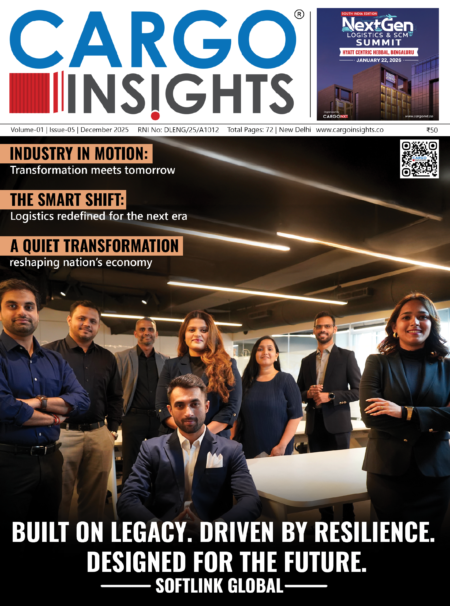
Subscribe to News
Get the latest sports news from NewsSite about world, sports and politics.
IMPORTANT PAGES
ADVERTISING OPTIONS
Company name: SDDB Branding Solutions Private Limited
CIN: U74110DL2016PTC307365
GSTIN: 06AABCU9994R1Z5
Subscribe to Updates
Get the latest creative news from Cargo Insights about logistics news, transport news and government logistics.