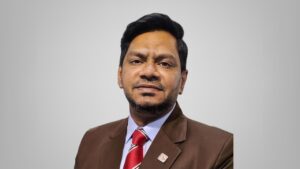


Union Minister, Shri Nitin Gadkari delivers the opening address at the 3rd BRICS Transport Ministers’ Meeting in Nagpur, calling for collective solutions to shared transport challenges under India’s BRICS Chairship.
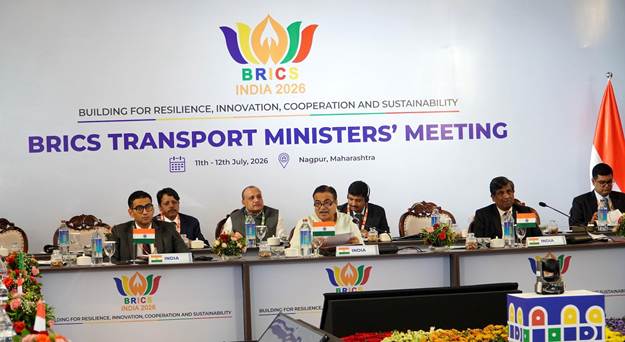
Union Minister for Road Transport and Highways, Shri Nitin Gadkari delivered the opening address at the 3rd BRICS Transport Ministers’ Meeting in Nagpur on July 11, 2026, under India’s BRICS Chairship. Welcoming Transport Ministers, Heads of Delegation, senior officials and delegates from BRICS member countries, Gadkari described the meeting as a significant step towards strengthening transport cooperation among emerging economies.
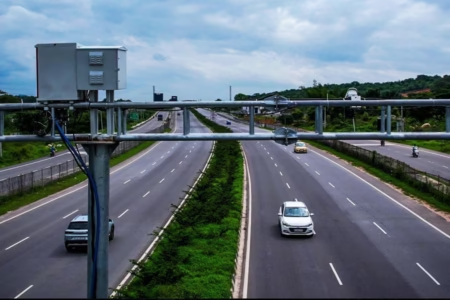
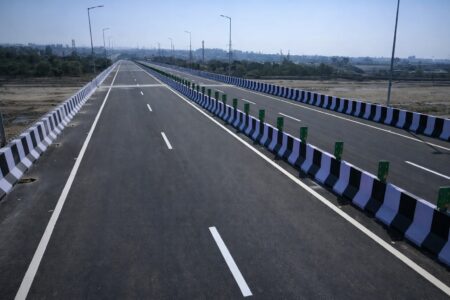
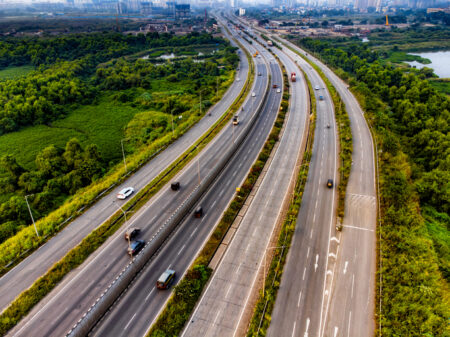
India’s BRICS Chairship is guided by the theme “Building for Resilience, Innovation, Cooperation and Sustainability,” reflecting a people-centric approach inspired by the philosophy of Vasudhaiva Kutumbakam. Gadkari noted that BRICS, representing nearly half of the world’s population, is uniquely positioned to lead the development of transport systems that are cleaner, safer, smarter and more efficient. He highlighted India’s development of the world’s second-largest road network, significant expansion of access-controlled expressways and multimodal connectivity, and cited projects including the Delhi–Dehradun Economic Corridor, the Sonamarg Tunnel and over 10,000 km of Greenfield Expressways as evidence of India’s commitment to combining infrastructure development with environmental sustainability and technological innovation. The Hybrid Annuity Model was highlighted as a successful framework for mobilising private investment in infrastructure.
Shri Nitin Gadkari also highlighted India’s railway modernisation through near-complete electrification of the broad-gauge network, expansion of Vande Bharat services, progress on the Mumbai–Ahmedabad High-Speed Rail Corridor and the new Pamban Bridge. He cited the Maritime Amrit Kaal Vision 2047, digital initiatives including e-Navik and e-Samudra and the Green Shipping initiative as steps towards strengthening maritime infrastructure and logistics efficiency. On sustainable mobility, he referenced the deployment of electric buses, the Green Urban Mobility Scheme, the UDAN initiative and the PM Gati Shakti National Master Plan. He noted that road safety and sustainability remain central to India’s transport strategy, highlighting the PM-RAHAT scheme for cashless treatment of road accident victims and the use of recycled plastic waste, municipal waste, fly ash, steel slag, bamboo crash barriers and end-of-life tyres in road construction. Gadkari called upon BRICS nations to work collectively on infrastructure financing, congestion, emissions, road safety and last-mile connectivity, and reaffirmed India’s readiness to deepen cooperation through knowledge sharing, capacity building and joint research in green hydrogen, electric mobility, alternative fuels, digital transport systems and sustainable multimodal infrastructure.
Source: Press Information Bureau (PIB)