


Union Minister of Ports, Shipping and Waterways, Shri Sarbananda Sonowal chairs review meeting as the Centre circulates the Draft National Water Metro Policy 2026 for inter-ministerial consultation.
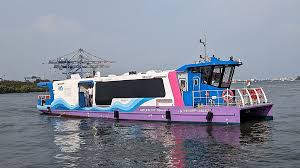
The Ministry of Ports, Shipping and Waterways (MoPSW) has advanced plans to roll out Water Metro services across 18 cities nationwide, with the Draft National Water Metro Policy 2026 simultaneously circulated for inter-ministerial consultation. Shri Sarbananda Sonowal chaired a review meeting on the initiative on May 18, 2026, building on the success of the Kochi Water Metro as the template for national scale-up.
Phase I cities include Guwahati, Srinagar, Patna, Varanasi, Ayodhya and Prayagraj, while Tezpur and Dibrugarh in Assam have been proposed for Phase II. The Inland Waterways Authority of India (IWAI) had entrusted Kochi Metro Rail Limited (KMRL) with conducting feasibility studies for all 18 cities on February 25, 2025. Site visits have been completed for all 18 locations, draft feasibility reports submitted for 17 cities with Lakshadweep pending, and feasibility reports for Srinagar, Patna, Guwahati, Varanasi and Ayodhya already accepted.
He stated that the proposed Water Metro systems are “significantly less capital intensive as they utilise existing waterways with minimal civil infrastructure,” offering “faster construction timelines, lower land requirements, and reduced operational costs particularly through the adoption of electric and hybrid ferries.”
The development framework covers vessels, pontoons, jetties, bunkering and charging infrastructure, terminals, passenger amenities and navigational aids. Multiple funding models are under consideration including joint Centre-State funding, fully State-funded projects, Public-Private Partnerships and fully Centre-funded initiatives.
Planning criteria prioritise cities with populations exceeding one million, demonstrated transport demand and suitable continuous or semi-continuous waterways, though these criteria may be relaxed for projects that significantly reduce road congestion, improve connectivity to remote or water-locked areas, or enhance flood resilience. Sonowal also called for state government consultation on the draft policy and stressed the importance of reflecting India’s maritime heritage in the design of terminals and associated infrastructure.
Source: Press Information Bureau (PIB)