



The UAE’s shock exit from OPEC effective May 1, 2026 could bring long-term oil price relief for India but near-term pressure remains tied to the Strait of Hormuz crisis.
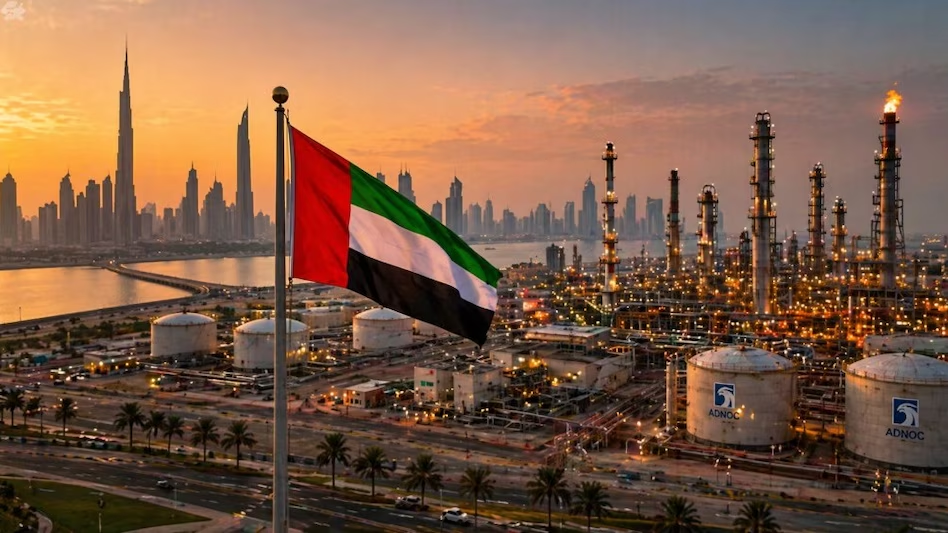
The United Arab Emirates announced on April 28, 2026 that it will exit OPEC and OPEC+ effective May 1, ending nearly six decades of membership and stripping the cartel of its third-largest producer. The UAE’s OPEC membership originated through the Emirate of Abu Dhabi in 1967.
Energy Minister Suhail Al Mazrouei said the decision was taken after a comprehensive review of production policy and capacity, and that the exit timing was chosen to have minimum impact on prices and fellow members.
The UAE, which holds a pumping capacity of approximately 4.8 million barrels per day and ambitions to reach 5 million barrels per day by 2027, said the move aligns with its long-term strategic and economic vision. Rystad Energy’s head of geopolitical analysis Jorge Leon said the departure removes one of the core pillars underpinning OPEC’s ability to manage the market, describing the cartel as now “structurally weaker.”
For India, the world’s third-largest crude oil importer dependent on imports for roughly 85% of its energy needs, the development carries significant implications. Brent crude was trading at around $111 per barrel on April 29, 2026, with the dominant market driver remaining the ongoing closure of the Strait of Hormuz.
The rupee slipped to 94.81 against the US dollar in early trade on April 29, weighed down by elevated oil prices and month-end dollar demand. Anindya Banerjee, Head of Research for Currency and Commodities at Kotak Securities, told ANI that once the West Asia situation stabilises and oil flows normalise, the UAE’s exit from OPEC would be “bearish for oil prices” as the UAE holds significant spare capacity that had been taken offline under OPEC agreements.
Banerjee also noted that the development could accelerate India’s oil-for-rupee trade framework with the UAE, describing it as a step towards broader de-dollarisation of global energy trade.
Source: Al Jazeera / Bloomberg / CNBC / The Week / The Tribune (ANI)