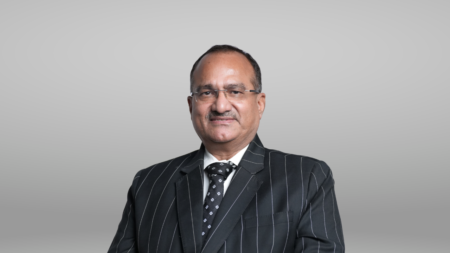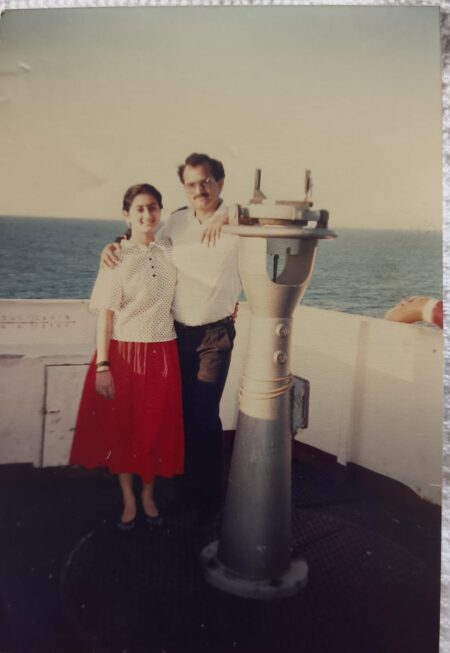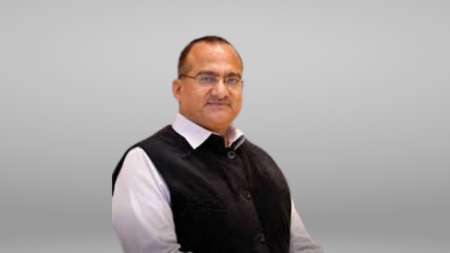




From carrying container fittings through the night as a ragged cadet to standing alone on a bridge as an Exocet missile found the ship ahead: the years that made Capt. BVJK Sharma were not the years anyone would have chosen. They were the only ones that could have worked.
The missile had found ballast instead of vapour. That single fact was the distance between six months in the Gulf and nothing at all.
Signing off MV Nalanda at Kandla in late 1982, Sharma carried home something the sea gives only to those who have genuinely faced it: the quiet, unshakeable knowledge that he could hold when everything around him was breaking. He was twenty-one years old. He had already survived a Pacific storm that sank another ship. He had held a hatch cover together for three days tighting the hatch cleats and tieing up with bottle screws and wire rope while the ship was rolling, pitching, yawing and taking in seas. He did not know yet that the sea had barely introduced itself.
From Boy to Man
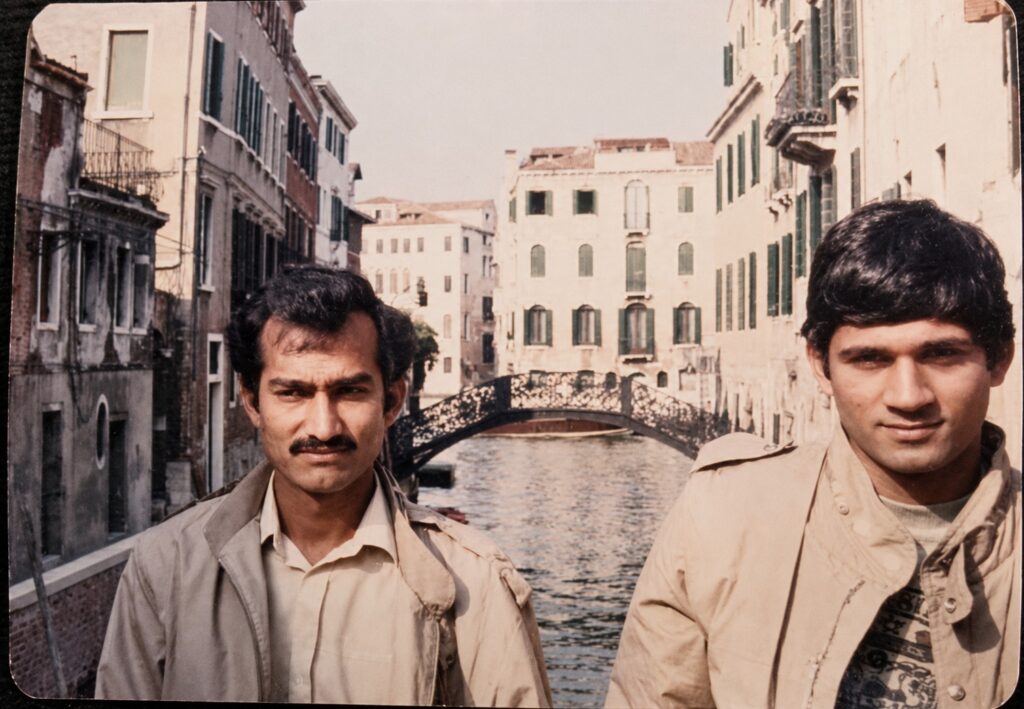
1983. Second ship. MV Vishna Pankaj, a container liner trading in West Coast India, Europe, the United States. Sharma boarded as a cadet. What that title actually meant was this: cadets replaced crew, did the physical work of seamen, stood navigational watches and handled cargo, all simultaneously and all in addition to whatever formal training the company felt like providing that week.
Senior cadets were waiting for him. For 72 hours, without sleep and with barely enough food to keep standing, he was made to carry heavy container fittings from Hatch No 1 all the way to Hatch No 5 and back. His batchmates, who had already survived this ritual themselves, could not intervene openly. They helped him quietly, in the margins, the way people do when the system demands cruelty but the individuals inside it refuse to be cruel. On the third day it stopped. He was formally inducted into the gathering of all cadets. No ceremony. No speech. Just an ending that meant he had passed something unwritten and permanent.
The liner years that followed, first on MV Vishna Pankaj and then on MV Vishna Pallan between 1983 and 1985, were the years that completed his education in a way no classroom ever could. He crossed continents. He worked hard and partied hard. He learnt things good and not so good, as he put it with characteristic understatement. His final posting as a cadet was on MV Vivekanand, a crude oil tanker, where he crossed the line from trainee to responsible officer and discovered, among other things, that crude oil is cleaned using crude oil itself, that the sea runs on paradoxes and that the men who master it learn to think in them.
Rs 15 and a Banana for Dinner
In 1985, Sharma passed the Foreign Going Second Mate Examination, clearing written, verbal, visual and physical tests in one attempt. It should have felt like arrival. Instead, SCI had walked into a recession and there were no jobs for fresh officers. The bond he had signed was eventually dissolved with an NOC from the company and he was released. Free. And entirely on his own.
What followed was months of daily job hunting across Mumbai on a budget of Rs 15. Local train from Andheri to Churchgate every morning, Monday to Saturday. Walk from VT to Ballard Pier to Colaba to Nariman Point to Churchgate. Breakfast at the railway station, Rs 5. Lunch at the Ballard Pier MPT canteen or a grilled veg sandwich when the canteen ran out of options, Rs 5. Monthly train pass, Rs 5. A banana for dinner on most nights. On lucky evenings a senior officer who happened to be ashore would offer dinner. He did not turn those offers down.
No one in his family carried enough influence in the shipping market to make a call on his behalf. He went every day anyway. Because what else do you do when you have nothing but the discipline the sea gave you.
The War Zone
The first real offer came in 1986. It was not comfortable. It was from Transocean, a position aboard MT Alvand – a very large crude oil carrier of the National Iranian Tanker Company, plying between Khor Fakkan and Bandar Abbas in the Persian Gulf. The Iran-Iraq War was at its most brutal. Merchant ships were being targeted. The route Alvand ran was not a trade lane. It was a gauntlet. She was one of the largest VLCCs afloat at 2,40,000 metric tonnes. The radio room was manned by the Iranian Navy. He took the job. His family did not know.
Life aboard Alvand during those six months operated on a logic that had nothing to do with normal seafaring. The crew wore life jackets 24 hours a day, 7 days a week. Waterproof pockets were stitched inside those jackets, certificates and cash sealed carefully inside, ready for the water. Every day they assessed which side of the ship was safer depending on where the threat was coming from and positioned themselves accordingly. Missiles used by the enemy were either heat-seeking, vibration-seeking or radar-guided. Based on whatever alert came in, the crew would switch off radars, cut engines and create a dummy flare on the forecastle, hoping to send any incoming ordnance toward nothing or atleast away from the Engine room.
On one occasion, travelling north from Bandar Abbas to Khor Fakkan in a convoy of five ships escorted by Iranian naval vessels, Sharma was alone on the bridge. He was the Third Officer, on the 8 to 12 watch. The Captain had gone below for breakfast. The code name “Shabad” came through the radio room: standby warning, immediately upgraded to red alert (105). There was no time to call the Captain. There was no time for anything except instinct.
He switched off the radars. He set the echo sounder to alarm at less than 20 metres water depth. He reset the course using the depth contours, put the engines to half ahead and used starboard steering to drop speed and hug the coastline, taking terrestrial cross bearings from familiar mountain peaks to hold his position on the course. Then he informed Captain and announced on the public address system for all on board to immidiately ship to starboard side shelter as enemy hit is imminent. By those actions, MT Alvand fell from number one in the convoy to number three. Twenty minutes later, the ship that had overtaken them on the sea side and became number 1 was now occupying the position they had vacated, was struck by an Exocet missile.
Sharma had already broadcast the warning over the address system. Iranian radio room officers heard it and came to argue with him. They demanded to know why he had taken such action without orders. The Captain, furious on the same question when he came up, went quiet the moment he saw the other ship burning.
He later heard the ship had suffered heavy damage but did not sink. Their own ship was also struck, a missile into the ballast tank on the port side. Due to the water inside and something that can only be called grace, it did not explode. An empty crude oil tank filled with hydrocarbon vapour is as good as a bomb. The missile had found ballast instead of vapour. That single fact was the distance between six months in the Gulf and nothing at all.
It was his third encounter with possible death. He was still counting.
During a loading operation at Khor Fakkan with all lights extinguished and crude oil flowing at 10,000 cubic metres per hour, communication possible only by torch using Morse code, Iraqi helicopters came in low and began strafing. Sharma ran inside and pressed against the land side. Two Filipino crew members from a neighbouring vessel, who had come out to check their fishing lines because warnings had become so routine they no longer felt dangerous, were caught in the open. He saw them get hit when the firing resumed. He saw them die, hanging on the railings, the sea going on below them as if nothing had happened at all.
At the end of six months, the vessel reached Dubai anchorage. He signed off. On coming ashore, an agent handed him his mail. It was the first communication he had received. His family had known nothing. There was hardly any communication during those months at war. For the first time in his life, he later reflected, he had earned what he called the real hard money.
Where the Sea Stopped and Life Began
The next job search, back in Mumbai, was different. He had experience now and enough in his pocket to not be desperate. He joined the Klavness (Ex Denholm) Group through the JM Baxi office as Third Officer on tankers and bulk carriers. Was promoted to Second Officer in the same company and found himself in 1988 aboard Ga Chau, heading to South Africa.
In Durban, an Indian family came aboard and invited the officers ashore. It was Apartheid-era South Africa. He did not know the rules. He walked into a whites-only club and was thrown out. Indians, being classified as British subjects, had some leeway in those spaces, but only some. The Naidu family, Andhra people settled in Durban for generations, organised a party ashore. He went with the Captain. The following morning the Captain pulled him aside and told him he had hit a jackpot: the family would offer partnership in their business if he stayed back and married their daughter. He was working 12-hour cargo shifts and sleeping four hours a night. He refused politely, saying he had no such plans or intentions. In retrospection, he remains aghast at what made them think he would agree just because he was Telugu.
Back in Mumbai in 1988, his closest cousin R.S. Sarma was on top of the world. He had found his match, a woman named Sundari, and was keen on me coming over and meeting Sundari as soon as possible. Sharma signed from M.V Ga Chau, came to Mumbai and went to Matunga to meet her. Sundari had a sister. Her name was Bhanu.
It was Maha Shivratri day. R.S. Sarma suggested dinner at a Udipi restaurant in King Circle, walkable from Sundari’s residence. Udipi is special for South Indian delicacies. Probably both girls were fasting given the occasion. They all agreed to join anyway. Sundari had grown up playing with her uncle, her father having died of a brain tumour when she was only four years old. Her mother Lalitha suffered from Retinitis Pigmentosa. Sundari and Bhanu had been largely self-dependent from very young ages. Bhanu had been working since she was 13 and started learning music from age of four.
Sharma found her independent. He found her bold. To his surprise, she was not what he had expected someone raised in an orthodox South Indian household to be. Both got into conversation and opened up. She sat next to him. Sundari and her companion teased her about it. She did not bother.
A mere handshake changed frequencies.
He went to Calcutta shortly after to register for the Chief Mate examination. MMD Calcutta offered him an earlier date due to a cancellation. There was a waiting list. He grabbed it. He started preparing immediately, not realising until it was too late that he was going to miss R.S. Sarma and Sundari’s wedding on 8th April 1988. R.S. Sarma was upset. He passed the exam and returned to Mumbai via Jamshedpur, carrying a certificate in one hand and the quiet knowledge in the other that something had shifted at a table in King Circle that no examination could have prepared him for.
The command years were ahead. And somewhere between the sea and the shore, so was the rest of his life.