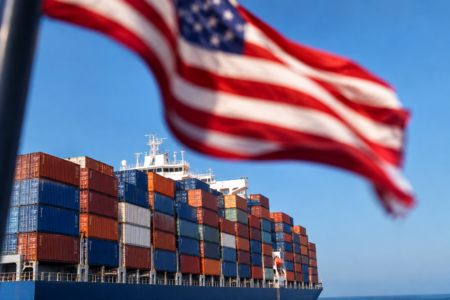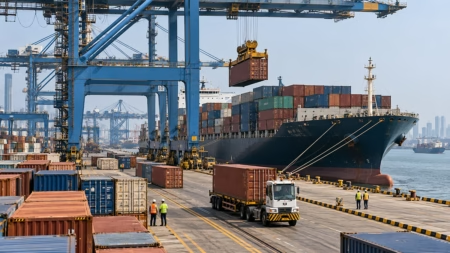





India’s strategic positioning in global trade is undergoing a significant transformation. As advanced economies like the United States, European Union, and the United Kingdom seek to diversify their supply chains, India emerges as a preferred destination, bolstered by proposed free trade agreements (FTAs).

Authored by: Ms. Smitha Shetty, Director – Centralised Global Operations – Achilles Information Limited
While these developments present immense opportunities for Indian businesses, they also usher in heightened scrutiny. International partners are increasingly emphasizing adherence to stringent labour laws, environmental standards, and ethical business practices. In this context, on-site social audits become indispensable tools for Indian companies to demonstrate compliance, gain visibility into their operations, and build trust with global partners.
The Power of Social Audits: Transparency, Compliance, and Trust
Social audits offer more than just compliance checks. They are in-depth, on-the-ground evaluations that assess labour conditions, workplace safety, environmental practices, and overall ethical conduct across supply chains. Unlike self-reported data or surface-level reviews, social audits involve facility inspections, confidential worker interviews, and detailed documentation assessments offering a 360-degree view of operational realities.
This level of visibility is vital. It builds confidence among international buyers, regulators, and stakeholders, demonstrating that Indian suppliers are aligned with domestic regulations and with evolving global ESG (Environmental, Social, and Governance) standards.
More importantly, social audits uncover what’s often missed: risks that sit below the surface. Unsafe working conditions, informal employment practices, or discriminatory policies can damage a company’s reputation and stall international partnerships. Addressing these issues proactively doesn’t just protect the brand – it drives real improvement.
Take the Achilles Ethical Business Programme as an example. Recent findings from the programme revealed that 33% of workers reported receiving employment terms informally, while 32% of those in UK construction had no formal conditions of work. These are not just statistics; they’re indicators of systemic gaps that demand attention. And they reinforce the value of rigorous auditing.
Enhancing Supplier Development and Sustainability
Beyond compliance, social audits serve as catalysts for supplier development, particularly for small and medium-sized enterprises prevalent in India’s supply chains. Audited suppliers often report enhanced operational efficiency and market competitiveness. They provide actionable insights that enable suppliers to improve their policies, procedures, and overall operational standards.
Turning Compliance into Competitive Advantage
Beyond regulatory compliance, social audits can serve as a lever for supplier development, especially for the small and mid-sized enterprises that form the backbone of India’s industrial landscape. Audits often identify operational inefficiencies and policy gaps, giving suppliers a clear path to improve. The result? Stronger capabilities, greater competitiveness, and better alignment with global procurement standards.
A robust audit process doesn’t just flag what’s wrong. It helps businesses build what’s right.
Risk-Based Auditing: Focus Where It Matters Most
A key evolution in audit methodology is the shift toward risk-based approaches. Rather than spreading resources thin across every supplier, companies can prioritize high-risk areas, whether due to geography, industry, or past performance. This focus ensures that auditing delivers the highest impact where it’s most needed.
In India, where supply chain diversity and complexity are vast, a risk-based audit model is crucial. It allows businesses to identify hotspots be it labour violations or environmental compliance and act swiftly. As India moves closer to finalizing FTAs with Western economies, this level of preparedness becomes a competitive differentiator.
Building India’s Reputation as a Trusted Global Partner
India’s integration into global supply chains is no longer a question of “if,” but “how well.” Trade agreements will open doors, but it’s up to Indian businesses to walk through them equipped and credible.
Social audits offer a practical, powerful tool to achieve this. By embedding transparency, accountability, and ethical rigour into everyday operations, Indian companies can lead with confidence and build enduring trust.
The message to the world is clear: India is not just open for business it is ready to lead responsibly.