




Iran’s repeated attacks on ships in the Strait of Hormuz over the past week have driven maritime risk to a worst-case scenario, with ship transits falling to a three-week low.
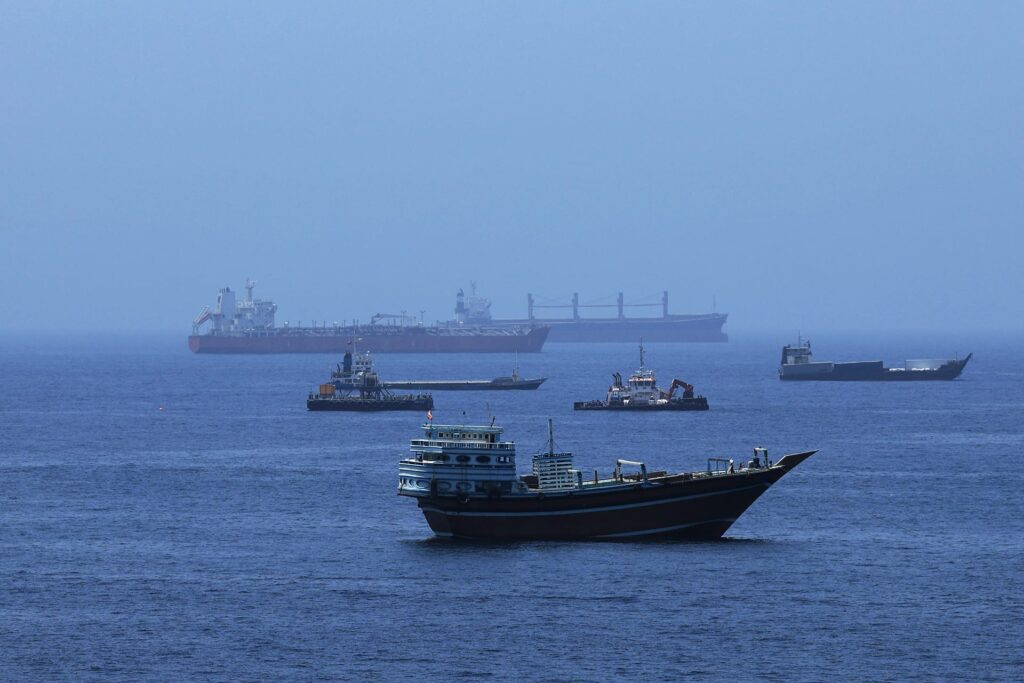
The security situation in the Strait of Hormuz has returned to a worst-case scenario for oil tankers following repeated Iranian attacks on ships over the past week, according to Dimitris Maniatis, Chief Executive Officer of Athens-headquartered maritime risk services firm Marisks, speaking at a Lloyd’s List Intelligence briefing.
At least nine ships have come under attack since July 6 as Iran attempts to force vessels to navigate Hormuz through its territorial waters rather than a route along Oman’s coast protected by the US military, according to data from the International Maritime Organization. One seafarer was killed and three were injured in an attack on the crude oil tanker Al Bahyah off Oman’s coast, while eleven mariners were injured the same day in an attack on the crude oil tanker Mombasa B. Jakob Larsen, Chief Security Officer at BIMCO, said the Iranian attacks had used anti-ship missiles and that the traditional route through the middle of Hormuz remained too dangerous due to the threat of mines.
Ship transits through the strait fell to eight on Thursday, down from 15 the previous day and far below the more than 100 daily transits recorded before the US and Israel attacked Iran on February 28, according to trade intelligence firm Kpler.
The US military reimposed its naval blockade against Iran this week and disabled an unladen oil tanker, the Curacao-flagged M/T Belma, after it ignored multiple warnings while transiting international waters towards Iran’s Kharg Island, according to US Central Command. President Donald Trump said Hormuz was open to all ships except those of Iran. The escalation follows a dispute between the US and Iran over how Hormuz is supposed to reopen under the memorandum of understanding signed on June 17, which promised safe passage to vessels but did not define which lanes they should use. Iran and its Houthi allies in Yemen are also threatening to shut down ship traffic in the Red Sea. Larsen told CNBC the situation appeared to be on a path of escalation and might well grow worse with time.
Source: CNBC