



Freight forwarders are increasingly evaluating technology platforms beyond automation and efficiency, with cybersecurity, data protection and operational resilience becoming key decision factors.
Technology buying decisions in the freight forwarding sector are evolving as companies move beyond traditional evaluation parameters such as features, pricing and implementation timelines. Modern freight platforms are now assessed on capabilities including automation, integrations, cloud access, AI capabilities, customer portals, ecosystem connectivity and their ability to support increasingly digital logistics operations.
With freight management systems becoming central to business operations, platforms now manage critical information including shipment records, customer data, commercial documents, freight rates, customs information, invoices, approvals and operational history. This has increased the importance of cybersecurity, data governance and business continuity when selecting technology partners.
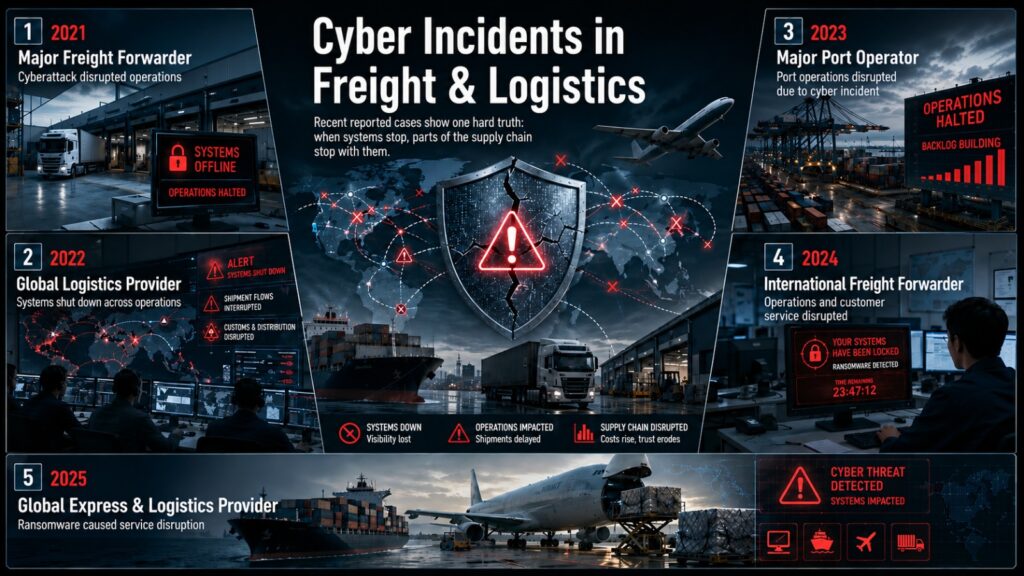
A cyber incident can impact multiple areas of freight operations, including shipment visibility, documentation processes, billing activities and customer confidence. As logistics ecosystems become more connected through cloud platforms, APIs and external integrations, the security standards maintained by technology providers are becoming an important part of a forwarder’s overall risk management approach.
Technology evaluation is increasingly focusing on questions around data encryption, user access controls, multi-factor authentication, API security, vulnerability management, system recovery and data handling practices. The growing use of artificial intelligence in freight platforms has also highlighted the need for transparency around how customer data is processed, stored and protected.
Amit Maheshwari, Founder & CEO, Softlink Global, said, “When a freight forwarder selects a technology platform, it is not simply choosing software. It is entrusting years of shipment history, customer information, financial data and commercial intelligence to that provider. Protecting that information is therefore not another software feature. It is one of the basic responsibilities of the technology partner.”
As freight operations continue to digitise, technology platforms are becoming a critical component of operational resilience. Forwarders are increasingly looking beyond automation capabilities and assessing how securely platforms manage data, protect integrations and support business continuity.