

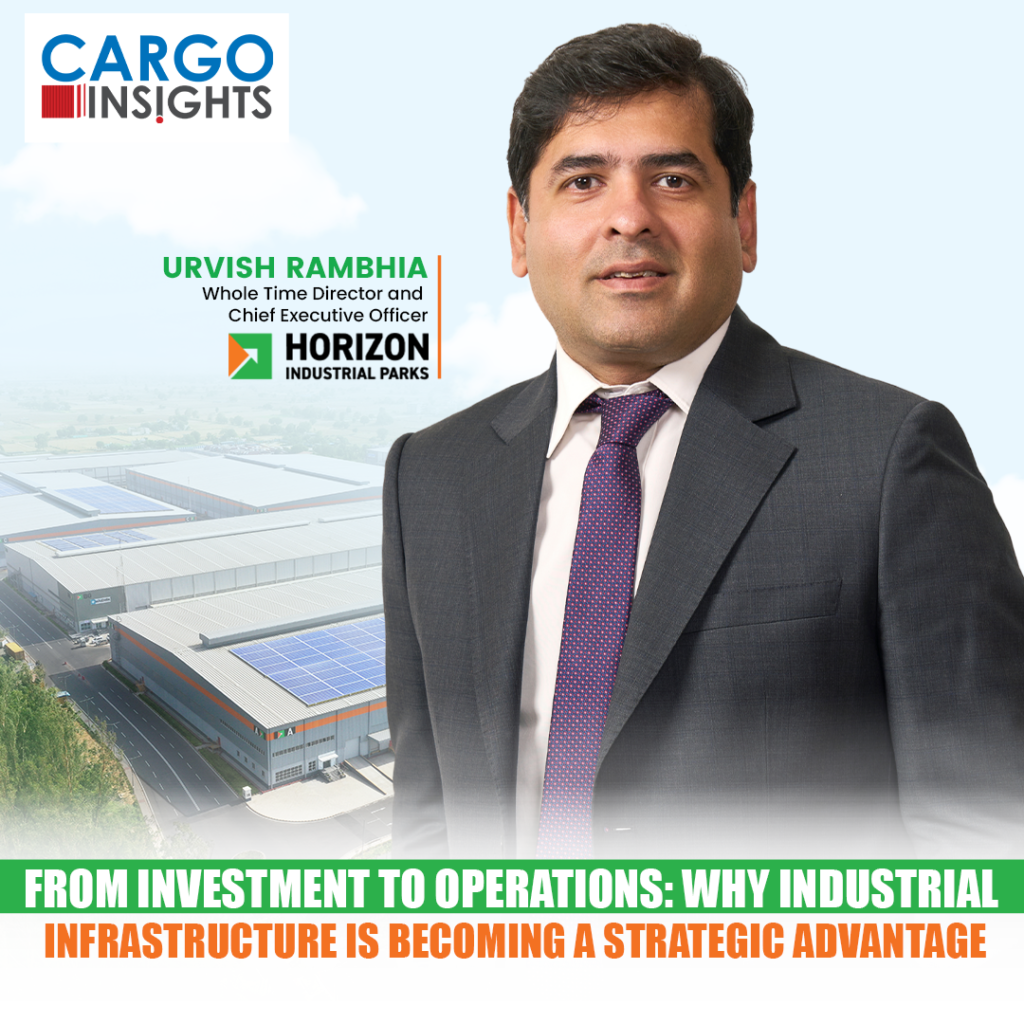
Horizon Industrial Parks has grown from 6 million sq. ft. in 2021 to 61 million sq. ft. of leasable area across 46 parks and 10 markets in 2026. But for Urvish Rambhia, Whole-time Director and CEO, the more important measure is what that infrastructure enables. In this conversation, he explains why industrial real estate is moving from the provision of just the space towards faster commencement of operations, technically adaptable facilities, deeper urban use cases and, ultimately, integrated business parks built to grow with their customers.
Complexity is the real test of infrastructure
A manufacturer can have capital approved, equipment ordered and customers waiting yet still be months away from production. The gap between intent and output is often filled with decisions that sit outside the production line: land, design, utilities, documentation, fit-outs, power and the coordination of teams that may be spread across countries.
Urvish sees that gap as the real opportunity for industrial infrastructure. For him, customer-first is not a slogan about service. It is a practical question: how much friction can be removed between a company deciding to expand and the day its operations begin?
Speed Is Built Before Construction Starts
That thinking starts with the physical product. Location, design, infrastructure quality, modularity and amenities are planned around how customers operate today and how their requirements may evolve. But Urvish is equally focused on what happens around the asset: due diligence, commercial closure, internal customer processes, documentation, and the speed at which technical questions can be understood and resolved.
His point is that agility depends on capability. A team can want to move quickly, but if it does not understand the customer’s technical and commercial language, friction remains. Horizon’s emphasis, therefore, is on building teams that can work across those requirements in a relatively non-bureaucratic way.
The outcome Urvish keeps returning to is faster commencement of operations. Plug-and-play infrastructure matters because it shortens the journey to go-live, but so does the organisation behind it.
Complexity Without Losing Time
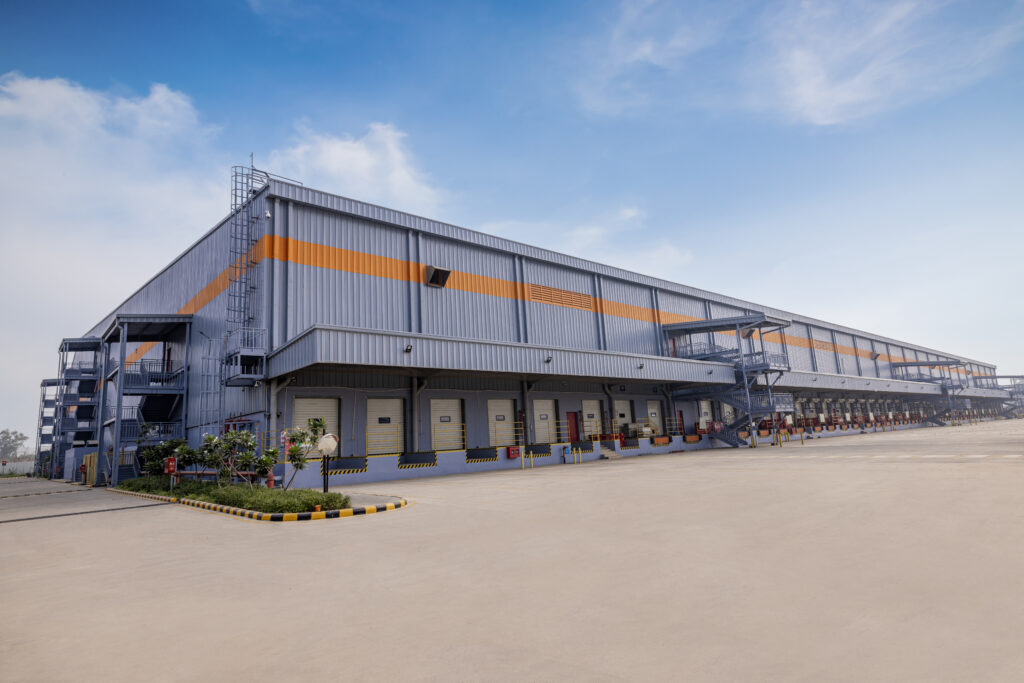
SIG Combibloc is the clearest example. At Horizon Industrial Park Bhayala near Ahmedabad, SIG is developing its first aseptic carton manufacturing facility in India across 32 acres, with about 8 lakh sq. ft. planned over four phases. Phase I spans ~3.5 lakh sq. ft. and brings together printing, production, finishing, warehousing, utilities, offices and support functions. Dry access was provided in nine months, and the phase was handed over in 12.
The schedule alone does not explain the project. Horizon’s team studied SIG’s manufacturing processes outside India, while the facility demanded specialised foundations, clear spans of up to 50 metres, heavy-duty structures, tailored utilities and high-capacity HVAC. Horizon also created a temporary on-site office for SIG’s engineering and operations team so design and construction questions could be resolved as the project progressed.
For Urvish, the lesson is not that every factory should be built to the same timetable. It is that speed becomes meaningful only when it survives complexity.
Horizon’s another customer pushes that argument further. The requirement involved a technically complex facility for which there was no template in India, around 20 MW of power, specialised fit-outs, phased deliveries and land held for future phases. Horizon also structured a balance-sheet solution around parts of the fit-out requirement. Multiple customer teams across geographies were involved, with the facility itself expected to evolve as new products came on stream.
In both cases, flexibility was not a late adjustment. It was designed into the commercial, technical and real-estate solution from the beginning.
Scale Without a Fixed Playbook
The same logic shaped Horizon’s own expansion. Urvish says the strategic choice came first: Horizon wanted to create a scaled pan-India platform, and to do it relatively quickly. What was not obvious was the route.
Industrial and logistics real estate was still a young institutional sector, without a single established formula for building national scale. Horizon therefore developed capabilities across land acquisition, licensing and greenfield development while remaining open to inorganic consolidation, brownfield acquisitions and redevelopment. The strategy, Urvish stresses, was clear from day one. Flexibility was required because there was no established template for getting there.
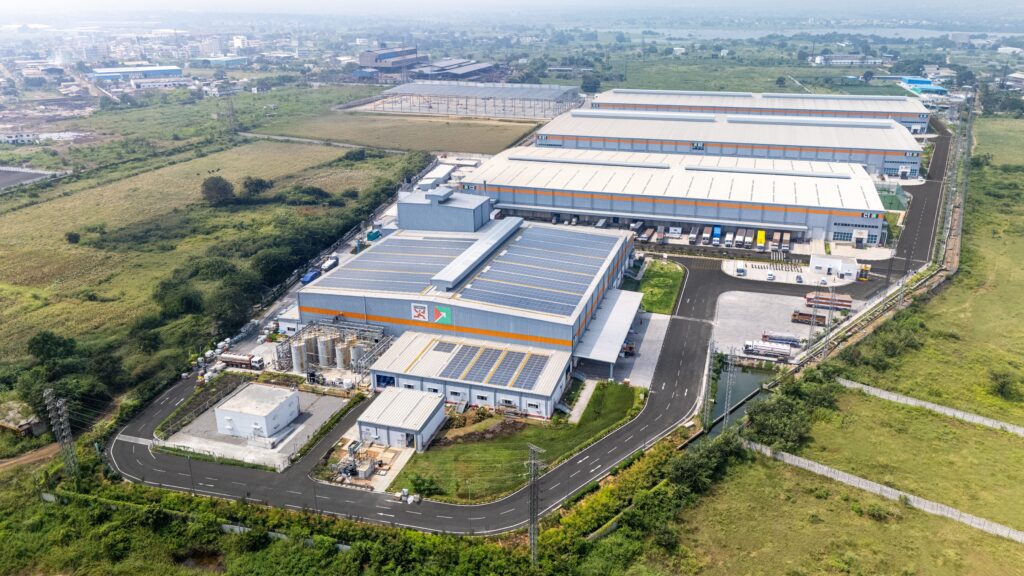
Horizon’s Goa asset shows how that thinking can work in practice. Horizon has repositioned acquired facilities through upgrades to roads, stormwater infrastructure, power, roofing, flooring and common areas rather than treating redevelopment as a cosmetic exercise.
The distinction is important. The strategy was not flexible because the destination was unclear. The destination was clear; the route remained open.
Why “Built Space” Is Not a Small Problem
Urvish also resists the tendency to dismiss industrial developers as providers of “just built space”. For many manufacturers, even reaching an operating-ready building requires capabilities they may not want to recreate internally: land acquisition, licensing, construction, power and water infrastructure, fire and EHS systems, digital connectivity and project execution.
An institutional park can bring those pieces together in a more coordinated format. Built-to-suit and plug-and-play models then go further by tailoring the building around the process, while fit-out support, utilities and expansion options reduce the amount of infrastructure the customer must assemble independently. Horizon’s current offering explicitly combines custom factory development with internal infrastructure and fit-out solutions designed to reduce upfront capital requirements and accelerate operations.
The same base must still work across very different industries. Urvish does not describe Horizon as an expert in every manufacturing process. Instead, the aim is to create a sufficiently high-grade, fungible infrastructure and real estate ready for customization, as required.
That can mean overhead cranes for an automotive or engineering operation, specialised floor loads, different clear heights, FM Global fire requirements, cold-storage infrastructure or process-specific utilities. The principle is fungibility: build the underlying infrastructure to a standard that can accommodate a broad spectrum of corporates from a wide range of sectors, then engineer the exceptions around the customer.
Sustainability Moves from Features to Performance
The sustainability conversation is evolving in a similar direction. Renewable energy solutions, water recycling and green certifications increasingly form the baseline. Urvish believes the next differentiation will come from the outcomes those systems can deliver.
Energy is one priority. Horizon’s ambition is to move towards 100% round-the-clock renewable power through a combination of on-site generation, off-site renewable supply and, as economics improve, battery energy storage. That remains a direction of travel, not a current portfolio-wide achievement. Today, Horizon reports 35-40 MWp of rooftop solar in different stages of commissiong and a long-term operational net-zero pathway.
Water follows the same progression. Recycling wastewater for non-potable use is one layer. Urvish sees the next step as combining recycling with rainwater harvesting, recharge pits and ponds so that sites can move towards net-zero or, eventually, net-positive water outcomes. Horizon currently reports treatment of 100% of greywater on-site, more than 430 recharge pits and ~6 acres of pond area.
The more distinctive issue is heat stress. Large industrial parks are workplaces as much as physical assets. Better insulation, cool or reflective roofs, lower heat-absorbing materials, trees and shaded walkways can reduce heat gain and improve conditions for employees moving through large sites. Horizon’s climate-risk work already identifies heat stress and water scarcity as physical risks, with cool roofs, enhanced insulation and permanent shade among the mitigation measures being considered.
The thinking now extends further. Premium industrial developers may eventually compete on climate resilience as a service: assets prepared for heat, flooding, water stress and power disruption; 24/7 clean-energy matching rather than annual renewable offsets alone; EV truck and van charging at scale; asset-level carbon data that customers can feed into their reporting systems; and circularity infrastructure that makes packaging, returns and waste streams easier to manage. Zero waste to landfill remains another direction of travel.
The gap, then, is not more sustainability features. It is integration. Customers will increasingly look for a performance ecosystem spanning power, data, resilience, carbon, mobility and resource use.
InCity Reveals the Demand That Was Already There
Horizon’s InCity experience has challenged another assumption: that urban industrial infrastructure is mainly about last-mile delivery.
Urvish’s observation is that these activities already existed inside cities, but often in poor or unsuitable real-estate formats. Horizon entered the segment largely through an e-commerce and quick-commerce lens. As the portfolio developed, the possible use cases widened.
Horizon now publicly positions its InCity centres for urban fulfilment, cold storage, cloud kitchens, storage and assembly, experience centres and R&D. Its network comprises 17 centres with approximately 6 million sq. ft. of leasable area.
The logic is proximity, but not only to consumers. Some businesses need to stay close to talent, technical teams or customer-facing functions without paying for conventional commercial space or operating from low-quality industrial galas.
That creates a middle layer in urban real estate. A cold-storage operator running from reefers, a cloud kitchen requiring compliant spaces with utilities, or an R&D operation needing both office and technical space; each require something different from a conventional warehouse, mall or office.
For Urvish, this is the larger lesson from InCity: once better institutional infrastructure exists, the use cases deepen. The market is not simply moving warehouses closer to consumers. It is giving urban operational businesses a better format in which to exist.
Designing for the Customer They Become Next
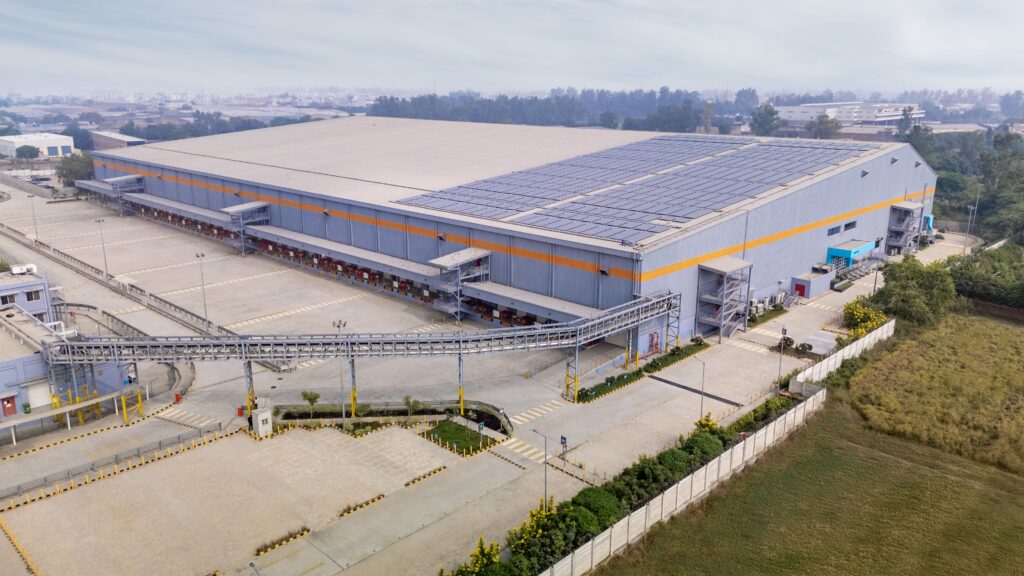
That idea of optionality also shapes how Urvish thinks about large industrial parks. A customer may begin with one factory, then add capacity, introduce another product line or require another building. The infrastructure must accommodate not only the first requirement but the possibility of what follows.
This is where his language shifts from industrial or logistics parks to ‘business parks’. The proposition combines real estate and infrastructure with renewable-energy solutions, fit-outs, expansion possibilities, professional asset management and a more complete employee environment. Workforce amenities, skills, food, hospitality and other support infrastructure become part of the operating ecosystem rather than peripheral additions.
Urvish’s shorthand is that businesses should be able to “store, build, assemble and breathe” within these environments. It also leads directly to how he describes the legacy Horizon wants to build: the evolution of industrial parks into integrated business parks.
That is a broader ambition than adding more services to a warehouse. It changes the unit of value. The building remains essential, but it sits inside a system designed to help a company commence operations, absorb complexity, expand and adapt.
As Indian manufacturing becomes more sophisticated, industrial infrastructure will increasingly be judged less by how much space it provides than by how much friction it removes. For the customer, the real advantage begins when the park stops behaving like real estate alone and starts working as part of the business.