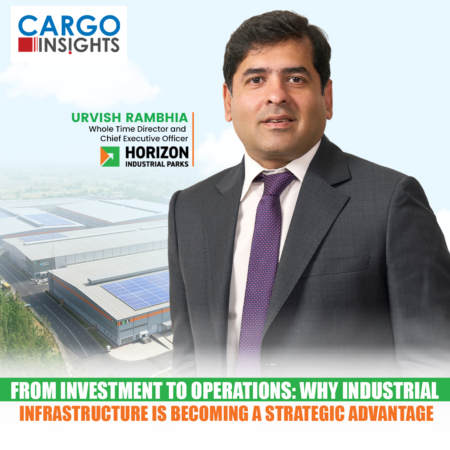


From 6 MSFT in 2022 to around ~58 MSFT across 10 markets today, Horizon has emerged as one of India’s fastest-growing industrial platforms. Yet scale is only part of the story. In this conversation, Pooja Malik, Chief Leasing Officer, Horizon Industrial Parks, explains why proximity, compliance and purpose-built infrastructure are becoming central to manufacturing resilience.
Every supply chain is eventually tested. A highway closes, a rail route is disrupted or a facility becomes temporarily inaccessible. Businesses that recover fastest usually do so because of decisions made long before disruption occurs: where to locate, how to build and whom to partner with.
For Pooja Malik, Chief Leasing Officer, Horizon Industrial Parks those decisions increasingly revolve around infrastructure. Manufacturers today look beyond land and rental costs towards industrial ecosystems that strengthen resilience, accelerate commissioning and support long-term growth. That shift, she believes, is reshaping how industrial infrastructure is planned, developed and evaluated across India.
Proximity as a Resilience Lever
For Malik, proximity is not simply about speed. It creates optionality. By positioning manufacturing, inventory and distribution facilities across industrial clusters and demand centres, businesses reduce their dependence on a single transport corridor or operating location. If a highway closes, a rail route is disrupted or a regional warehouse becomes temporarily inaccessible, inventory already positioned within the network can be redirected through alternative transport corridors, while orders are fulfilled from another distribution location.
Proximity also improves inventory planning. Shorter and more predictable replenishment lead times allow businesses to position stock closer to demand while reducing reliance on large, centralised buffer inventories. Distributing inventory across multiple locations also limits the operational impact of disruptions at any single facility.
Horizon has adopted the same philosophy. Its industrial parks are located across established manufacturing clusters, while its in-city centres serve major consumption markets, enabling customers to expand across geographies with a single infrastructure partner. Nearly 44% of Horizon’s incremental leasing since 2023 has come from existing customers, reflecting the value occupiers place on a connected pan-India platform.
For Malik, proximity is therefore not just a logistics advantage. It is a strategic capability that enables businesses to adapt, expand and maintain continuity in an increasingly uncertain operating environment.
Compliance Built In, Not Bolted On
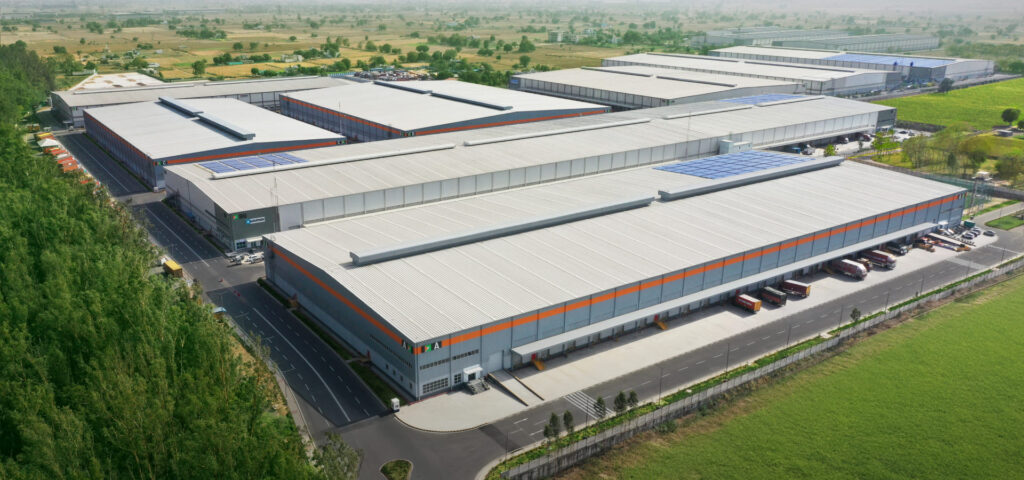
The second theme Malik raises is compliance, and specifically what happens when it is handled before a manufacturer arrives on site. When land, power and safety requirements are built into an industrial project from the start, the time to go-live reduces significantly for the manufacturer. Land titles and zoning are already cleared by the developer. Permits for environmental and fire safety clearances are already secured. Power and water provisions are already in place. These remove delays that would otherwise hold a manufacturer back, freeing them to focus on running their operation rather than chasing approvals.
Malik points to a broader shift happening at policy level too. Integrated industrial parks, aligned with government efforts to build coordinated industrial infrastructure, increasingly offer one-stop clearance systems, ready infrastructure, trained labour pools and built-in safety systems. Compared with a standalone factory, where approvals and utility connections can hold up commissioning for months, these integrated ecosystems let businesses become operational far more quickly.
That readiness becomes particularly valuable during expansion or recovery. When manufacturers already have access to compliant, plug-and-play infrastructure, they can commission new capacity or resume operations far more quickly than if they first had to secure land, utilities and multiple regulatory approvals. By treating compliance as something built in rather than sorted out later, Malik argues recovery time shrinks, and operational continuity holds firm.
What Built-to-Suit Facilities Reveal About Manufacturer Thinking
The changing role of infrastructure is equally evident in customer demand. Approximately 50% of Horizon’s operational portfolio is leased to manufacturing companies, with most facilities delivered as built-to-suit developments rather than standardised warehouses. According to Malik, manufacturers increasingly want infrastructure engineered around their production processes because facility design directly influences productivity, quality, safety and future scalability.
Yazaki illustrates this trend. The automotive wiring harness manufacturer has expanded with Horizon across three facilities in Hosur, Farukhnagar and Chengalpattu. At Chengalpattu, Horizon delivered a 3,48,800 sqft built-to-suit manufacturing facility planned around Yazaki’s production workflow. Dedicated utilities, efficient material movement and integrated support infrastructure enabled production to begin without extensive post-handover modifications.
A similar approach is evident at JOST Werke AG, which established its first India manufacturing facility at Horizon Industrial Park Oragadam. The original 2,06,000 sqft built-to-suit facility was later expanded by another 25,000 sqft. Its specialised layout, crane infrastructure and process-led design were developed around JOST’s manufacturing requirements, demonstrating how infrastructure can scale alongside production.
For Malik, these examples reflect a broader shift in capital allocation. Instead of investing management time and capital in land acquisition, approvals and construction oversight, manufacturers are directing greater investment towards automation, technology, product development and capacity expansion while partnering with experienced developers to deliver operationally ready infrastructure.
Industrial real estate is viewed as a strategic production asset. The objective is infrastructure that improves efficiency, supports expansion and strengthens long-term competitiveness.
Scaling from Six Million to Fifty-Eight Million Square Feet
Horizon’s own growth reflects many of the same principles. Expanding from 6 msft in 2022 to around ~58 msft across 10 markets required more than adding assets. It demanded an operating model capable of scaling while maintaining consistent quality and execution.
The company invested first in people, bringing together professionals with 250+ years of cumulative experience across development, leasing, marketing and operations. That expertise embedded proven practices, shortened the learning curve and provided leadership continuity as the platform expanded.
Horizon also empowered teams to make decisions while maintaining accountability through disciplined reviews of quality, execution and delivery timelines. Clear ownership became essential to maintaining consistency across multiple markets.
Long-term partnerships with vendors, contractors and execution partners strengthened delivery capability, while local sourcing and custom-designed pre-engineered building structures supported faster construction and the large unobstructed spans required for modern manufacturing and logistics operations.
The company standardised its legal, land acquisition, leasing, development, marketing and facility management processes. This enabled proven execution models to be replicated across markets while retaining the flexibility to respond to local customer and site requirements.
For Malik, experienced people, empowered teams, trusted partners and disciplined systems have been fundamental to scaling rapidly without compromising quality.
Manufacturing and E-commerce: Two Different Kinds of Growth
Looking ahead, Malik expects both manufacturing and e-commerce demand to grow, although their infrastructure requirements will continue to diverge. CBRE reports that e-commerce accounted for around 25% of warehousing leasing in H1 2025, more than doubling year on year, while manufacturing and engineering contributed around 19%. JLL expects manufacturing demand to rise to approximately 30% of total warehousing demand by 2028, supported by production-linked incentive schemes and continued industrial investment.
For Malik, the question is not whether one segment will replace the other, but how differently they operate. E-commerce and third-party logistics companies require high-throughput fulfilment centres close to consumption markets. Manufacturers, meanwhile, need facilities engineered around production processes, specialised utilities, material flow and future expansion.
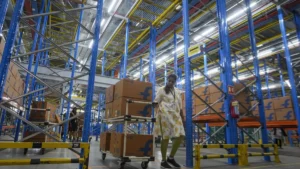
Horizon’s portfolio reflects this distinction. Horizon’s portfolio reflects this distinction. Its fulfilment centre for Scootsy (Swiggy) was purpose-built for quick commerce, incorporating cold room provisioning, enhanced dock infrastructure and upgraded power capacity to support high-throughput operations. By contrast, the facilities developed for Yazaki India and JOST Werke AG were engineered around complex manufacturing operations and long-term production requirements. Manufacturing and e-commerce will continue to expand, each requiring increasingly specialised infrastructure aligned with its operating model.
The Industrial Park of 2035
Asked to describe a future-ready industrial park, Malik points to one defining characteristic: an integrated cyber-physical ecosystem where physical infrastructure, digital technologies and sustainable utilities function as a single system.
Government policy is already moving in this direction, with industrial parks envisioned as sustainable ecosystems supported by green energy, underground utility corridors and planning aligned with the PM Gati Shakti National Master Plan. Across the industry, smart grids, artificial intelligence, IoT-enabled monitoring and circular resource management systems are improving operational efficiency and asset performance.
Progress, however, remains uneven. Many parks have adopted rooftop solar, water recycling and smart metering, but relatively few have integrated these capabilities into a single intelligent operating platform. Reliable utilities, digital connectivity and resource efficiency still vary across locations.
By 2035, leading industrial parks will offer far more than modern buildings. They will function as connected industrial ecosystems that improve productivity, sustainability and long-term operational performance.
Land, Location and the New Rules of Clustering
Site selection is becoming increasingly strategic as manufacturing, e-commerce and third-party logistics continue to expand. While e-commerce and logistics operators prioritise proximity to consumers, manufacturers place greater emphasis on supplier ecosystems, skilled labour, reliable utilities and multimodal connectivity.
This is why established industrial corridors such as Oragadam and Chakan continue to attract both production facilities and logistics operations. Bringing manufacturers, suppliers, logistics providers and distributors closer together improves coordination across the broader industrial ecosystem and strengthens supply chain efficiency.
Malik also sees growing occupier interest in Tier 2 and Tier 3 cities as consumption patterns evolve. Increasingly, businesses are selecting locations not only for connectivity but also for the long-term strength of the surrounding industrial ecosystem.
Closing the Gap Between Policy and Practice
India has established a strong policy framework through the National Logistics Policy and PM Gati Shakti, creating a coordinated approach to planning highways, railways, ports and industrial corridors. Recent DPIIT and NCAER estimates placing logistics costs at approximately 7.97% of GDP provide an important benchmark for measuring future progress.
The greater challenge lies in execution. While highways, dedicated freight corridors and multimodal infrastructure have advanced significantly, their benefits are often constrained by inconsistent feeder roads, gaps in local utilities and weaker last-mile connectivity to industrial sites.
Although single-window systems have improved approvals, implementation continues to vary across states and local authorities. Continued coordination between central and state agencies, together with investment in the links connecting industrial clusters with freight corridors, ports and railheads, will determine how effectively policy translates into operational efficiency.
Resilience Over Cost: What Customers Are Really Asking For
The clearest evidence of change, according to Malik, comes from customer conversations. A few years ago, discussions largely centred on rental economics and delivery timelines. Today, they begin with questions about business continuity, expansion flexibility, operational certainty and the ability to scale.
Occupiers are increasingly evaluating multi-location strategies, opportunities to expand within the same park, reliable utilities and infrastructure that can support future growth without disrupting existing operations.
At Horizon Industrial Park Bhayala near Ahmedabad, one of the park’s largest built-to-suit occupiers operates across almost the entire 39-acre development. For Malik, this reflects a broader shift in customer priorities. Rather than evaluating projects primarily on cost, businesses increasingly value infrastructure partners that understand their operations and can support long-term growth.
The trend extends beyond Horizon. Deloitte reports that 86.2% of manufacturers have actively worked to de-risk their supply chains over the past two years, while BCG notes that companies are diversifying manufacturing and distribution networks across multiple regions and, in some cases, building local supply chain capabilities to improve resilience and responsiveness.
Cost remains important, Malik concludes, but it is increasingly the baseline rather than the deciding factor. Today, customers evaluate whether an infrastructure partner can support operational continuity, future expansion and sustained business growth. That shift is evident not only in the questions they ask, but also in the investment decisions they make.