



CONCOR and VISL sign MoU to jointly develop a CFS near Vizhinjam port, boosting EXIM and multimodal logistics.
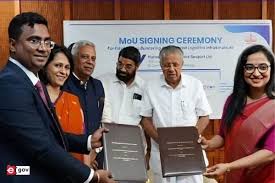
Container Corporation of India (CONCOR) and Vizhinjam International Seaport (VISL) have signed a Memorandum of Understanding (MoU) to explore strategic logistics collaboration, including the development of a Container Freight Station (CFS) near Vizhinjam International Seaport in Thiruvananthapuram, Kerala.
The MoU was signed on 23 February 2026 and outlines plans for VISL to provide land for the proposed CFS on mutually agreed terms, while both organisations will jointly develop and operate the facility. The planned CFS is expected to feature a customs-bonded area, warehousing, container handling and storage yards, import–export cargo handling infrastructure, weighbridges, rail siding, and other allied facilities to enable seamless end-to-end logistics services.
The signing ceremony took place in the presence of Pinarayi Vijayan, Hon’ble Chief Minister of Kerala; V N Vasavan, Hon’ble Minister for Cooperation and Ports; and Kowsigan, Secretary (Shipping & Ports), Government of Kerala. Senior CONCOR officials present included Sanjay Swarup, CMD, and G Gayatri, Area Head (South).
The MoU was formally signed by A. Vijuvin, Cluster Head – Chennai, on behalf of CONCOR, and Divya Iyer, Managing Director, on behalf of VISL. Following the MoU, both parties will enter into a definitive agreement to finalise detailed terms and conditions of collaboration.
The partnership reflects a shared vision to strengthen multimodal logistics capabilities and enhance cargo handling efficiency at Vizhinjam, which is being developed as a major deep-water transshipment hub and a gateway for global maritime trade. The collaboration is expected to support the creation of an integrated logistics ecosystem, contributing to regional and national economic growth.
The initiative further reinforces CONCOR’s commitment to expanding rail-led multimodal logistics infrastructure and supporting the evolving requirements of India’s EXIM trade through strategic port-linked logistics development.
Source: Maritime Gateway