



The World Trade Report 2026 warns that erosion of the multilateral trading system could cost the global economy up to 10 per cent of real GDP, while stronger cooperation could raise global GDP by 2.9 per cent.
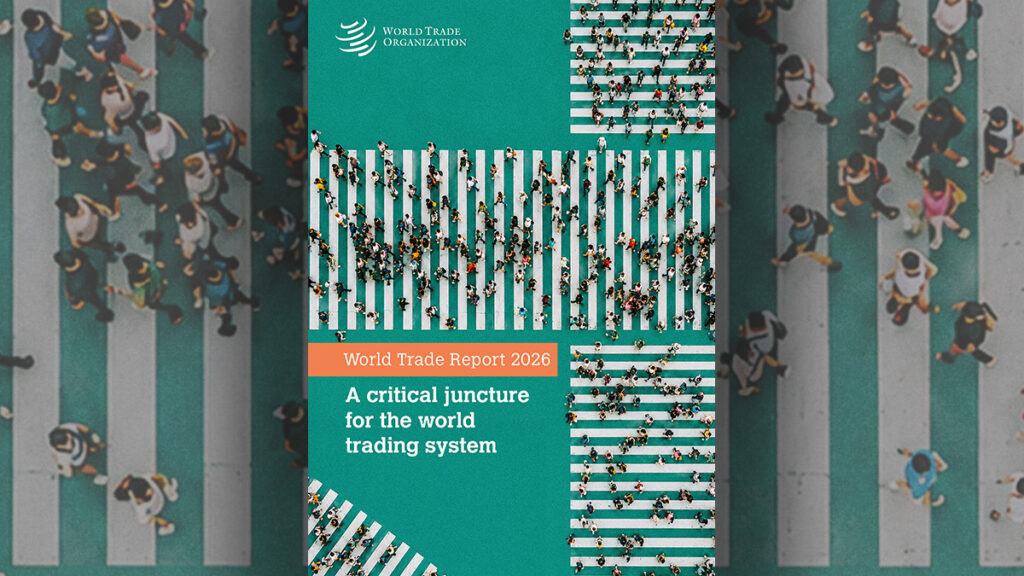
The World Trade Organisation has published its World Trade Report 2026, titled “A Critical Juncture for the World Trading System,” presenting three scenarios for the future of global trade. A strengthened multilateral framework could raise global GDP by 2.9 per cent and global exports by 17.9 per cent by 2050 relative to the baseline trajectory, while least-developed countries, which currently account for less than 1 per cent of world trade, could see GDP gains of 7.7 per cent. High-income economies stand to gain approximately USD 1.7 trillion in 2023 dollars. By contrast, a geo-fragmented world organised around geopolitical blocs could result in GDP and export declines of 5.1 per cent and 18.6 per cent respectively, while a world where multilateral cooperation is replaced by a network of free trade agreements could see declines of 6.9 per cent and 26.9 per cent respectively. The report estimates the opportunity cost of moving from strengthened multilateral cooperation to erosion of trade rules at roughly 5 to 10 per cent of global real GDP.
WTO Director-General Ngozi Okonjo-Iweala said approximately 72 per cent of global merchandise trade still takes place under WTO most-favoured-nation terms and that the founding logic of the system, that all economies are better off cooperating rather than acting unilaterally, remained as relevant as ever. She said WTO members were engaging actively on reform in recognition that the status quo was not an option. The report was launched on September 15 at the WTO Public Forum, with WTO Chief Economist Robert Staiger presenting key findings. The panel discussion featured Ambassador Kumar Iyer of the United Kingdom, Ambassador Manuel Teehankee of the Philippines, Dr Pinelopi Goldberg of Yale University, Dr Mona Paulsen of the London School of Economics and Andrew Wilson, Deputy Secretary General of the International Chamber of Commerce.
Source: World Trade Organisation