


From fire safety blind spots to design failures at the drawing board, India’s warehousing sector faces challenges that are entirely preventable, if the industry is willing to build differently.

Over the last few years, supply chain expectations have accelerated beyond recognition. Faster delivery, wider reach, lower cost, higher resilience, all simultaneously. But the reality on the ground tells a very different story. Warehousing today is no longer simply about storage. It is about enabling speed, absorbing variability, and reconciling increasingly conflicting operational demands. And yet, too many real estate developers and logistics park operators continue to be evaluated on cost metrics designed for a fundamentally different era.
The question this raises is not merely strategic. It is structural: are modern supply chains truly aligned with what they are demanding from warehousing, or is there a growing, dangerous disconnect between expectation and operational reality?
THE INFRA FIRST PRINCIPLE
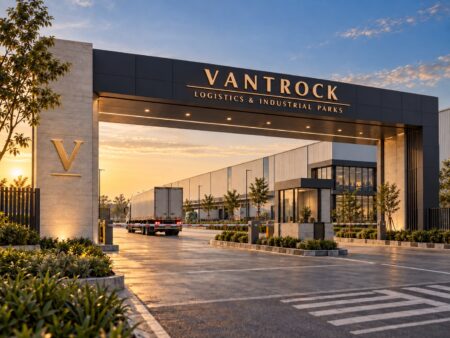
The answer lies in a principle I call infra first logistics. The premise is straightforward: when logistics infrastructure, whether a warehouse, a distribution centre, or a transhipment hub, is built to a genuinely fit-for-purpose specification, demand follows. Not the other way around. We see this consistently in the market. Grade A logistics parks command higher rental premiums than Grade B and C parks even when the latter sit closer to the city. Because occupiers understand that better infrastructure delivers better operational outcomes: higher capacity, greater storage density, improved operational efficiency, lower opex, and higher workforce productivity.
DESIGN FAILURES ARE PREVENTABLE
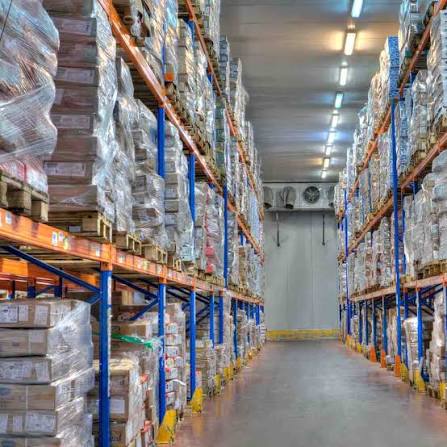
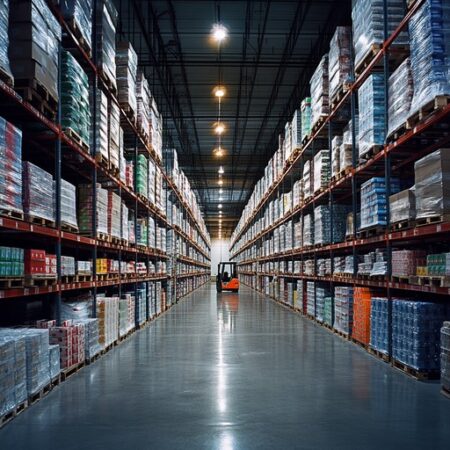
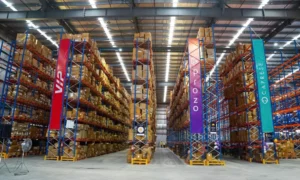
The design decisions made at the drawing board determine whether a facility can handle peak volumes or collapse under them. These failures are rarely dramatic. They are cumulative, quietly compounding, and entirely preventable. The most common are poor dock configuration, misaligned entry and exit points, inadequate floor flatness tolerance, poor load-bearing capacity, and wrong joint detailing that restricts racking positions and shortens facility life. But the deepest failure is designing in isolation of use. A warehouse cannot be designed without an understanding of the operations it must serve: the commodity, the movement patterns, the peak cycles, the equipment. The answer is warehouse versatility, engineering the highest common factors of design, including floor specs, clear heights, column grids, dock ratios, and utility provisions, that make a facility genuinely fit for multiple industry categories. Built in from the first line on the drawing, not retrofitted as an afterthought.
THE COMPLIANCE BLIND SPOT
Fire safety compliance exposes perhaps the most dangerous gap. In India, a fire NOC is issued on an empty warehouse and rarely re-validated once racking goes in, commodity mix changes, or storage heights increase. Post-fitout, AMC discipline collapses: sprinkler heads go unreplaced, pressure goes untested, and no authority enforces re-inspection. This is not a peripheral issue. It is a systemic failure at the intersection of design specification, infrastructure quality, regulatory enforcement, and operational discipline.
THE ONLY STRATEGY IS INTELLIGENT TRADE-OFFS
There is no longer a single optimal strategy, only a series of trade-offs. Faster delivery requires inventory closer to the customer but brings duplication and complexity. Expanding into Tier 2 and Tier 3 markets unlocks growth but introduces challenges in infrastructure, talent, and service consistency.
The future of Indian logistics will not be defined by whether networks are centralised or distributed. It will be defined by how intelligently we design hybrid models that balance speed, cost, and resilience while remaining honest about the trade-offs each choice demands. Infrastructure quality, specification, geometry, and structural fitness are not premiums. They are the baseline for relevance. Build infrastructure that is truly fit for purpose, and demand will follow. After 34 years in this industry, I can say this with confidence: it always does.