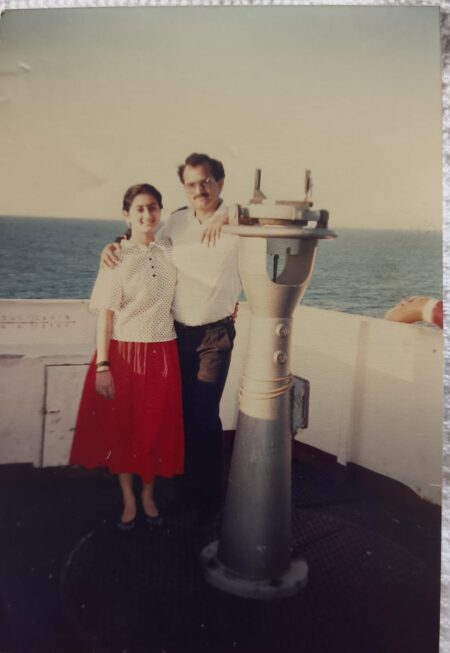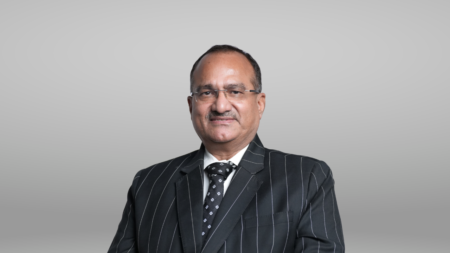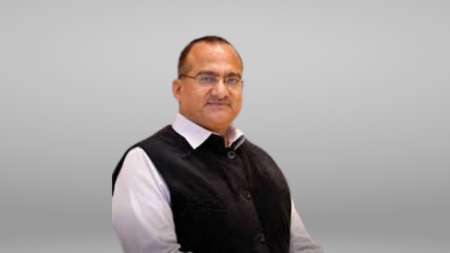




A near-death encounter with nature became one of Capt. BVJK Sharma’s greatest lessons, and the beginning of a journey that would help shape Mundra, Goa, Jaigarh and Dharamtar.
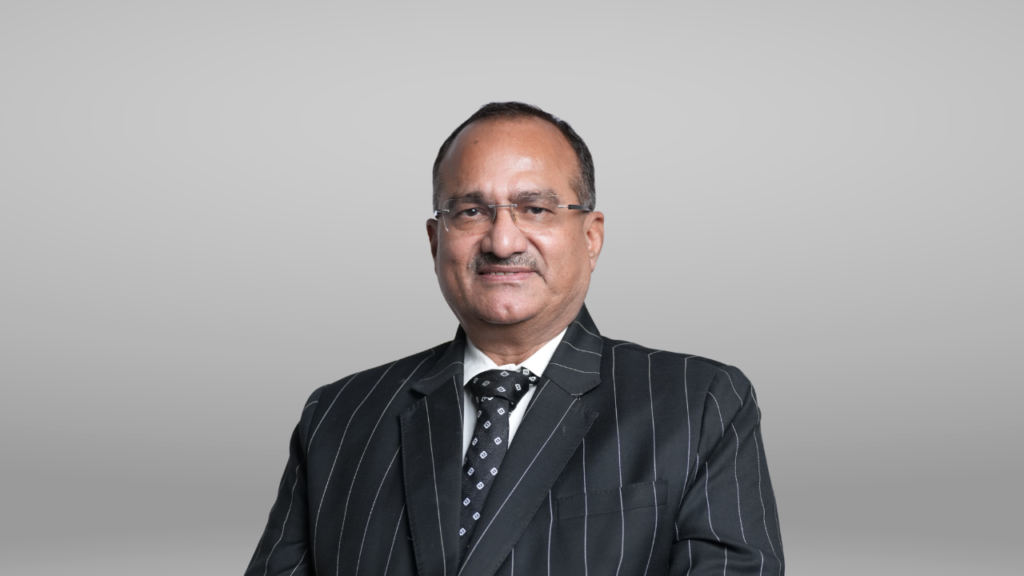
There are experiences in a career that teach more than any classroom ever can. For Capt. BVJK Sharma, one came in June 1998.
He was at Essar’s outer anchorage in Hazira, aboard a floating crane, when a severe cyclonic storm struck the Gujarat coast. Wind gusts touched nearly 200 km/hr. The crane rolled and pitched violently, its mast swinging so dangerously that Sharma and the men with him feared it could come crashing down on top of them. There was nowhere to escape, no vessel close enough to reach, no radio call that could summon help through wind of that force. They could only hold on, gripping whatever they could find, waiting out hours that felt considerably longer than they were.
When the storm finally eased, the devastation revealed the scale of what they had survived. The Tapti River had changed course entirely, cutting a new path through land that had held it for generations. Barges had broken loose near the jetty. One, carrying 33 hot rolled coils, sank at the river mouth, while two lives were lost in the anchorage. Sharma was sent to Kandla soon after to help manage the aftermath, working alongside officials in the chaotic days that followed, when nothing about the coastline matched what the charts still showed. It became one of the greatest learning experiences of his life. Nature cannot be conquered. It must be understood, respected and planned for. And when circumstances move beyond the plan, leadership means staying calm enough to find a way through them. That lesson would stay with him for the next two decades, surfacing again and again in moments that had nothing to do with weather at all.
Mundra: Building Where There Was Almost Nothing
His work at Hazira soon brought Sharma to Mundra. In October 1998, he travelled from Hazira to Kutch and was present on 7 October when MT Alpha-2 became the first vessel to berth at Mundra Port, a modest beginning for a facility that had almost nothing built around it yet. A meeting with Gautam Adani followed, and Sharma received his joining offer in January 1999. After completing three months’ notice at Essar Steel, he drove to Gandhidham in his red Zen in April 1999, initially leaving his family behind until he could find a home, staying in temporary accommodation while he searched.
Mundra was still finding its feet. Sharma initially took responsibility for marine operations, which soon expanded to dry cargo as the port’s ambitions grew faster than its systems could keep pace with. The team wrote the port’s first SOPs from scratch, developed Mundra Creek, undertook dredging and worked out loading and tidal procedures that had never existed before because the port itself had never existed before. Mundra also had to compete with its established neighbour, Kandla, which had decades of relationships and infrastructure that a young private port could not simply match on paper.
Sharma believed the opportunity lay not merely in berthing ships but in handling and storing customers’ cargo efficiently, treating the port as a service rather than a facility. Mundra began attracting business through dependable turnaround and guaranteed handling, the kind of reliability that eventually persuades sceptical shippers to give a new port a chance. Within a year, he was promoted to General Manager with responsibility for dry cargo, a reflection of how quickly the port’s ambitions, and his role within them, were expanding.
Rebuilding From Zero
Nature tested Sharma once more on 26 January 2001. The Kutch earthquake struck at 8:46 am. Sharma was at home with his younger son Peeyush. His building cracked as furniture swung violently, and he managed to get everyone into the open within minutes, working purely on instinct in the seconds before the shaking fully registered. His Gandhidham flat, purchased and insured only shortly before the earthquake, was eventually declared unsafe and demolished, a loss made worse by the timing: the insurance cover had lapsed with the home loan only weeks earlier, an administrative coincidence that turned a natural disaster into a financial one as well. Sharma found himself restarting with no home and no bank balance, moving his family into a hired shared bungalow in Adipur while they rebuilt what the earthquake had taken. The cyclone had taught him to respect uncertainty. The earthquake taught him something harder still, that even after losing almost everything, one can rebuild.
The Berth Nobody Wanted to Take
That same year came a very different test. On 19 August 2001, a large vessel was scheduled to berth under exceptionally challenging draft conditions, well beyond what the facility had been designed to handle. Both senior captains at the port declined the assignment, unwilling to take on a manoeuvre that carried real risk of damage to vessel, jetty or crew.
Sharma and Capt. David took it on themselves. With no tug of sufficient power available, they hired an offshore support vessel as a substitute and planned a parallel berthing during a narrow slack-tide window. Every precaution that could be taken on the jetty was taken, evacuation plans included, before the operation began. Gautam Adani monitored the operation from Singapore. The vessel came safely alongside.
For Sharma, the episode reinforced an enduring principle: courage is not the absence of risk. It is understanding the risk, preparing for it and then accepting responsibility for the decision.
A Call That Changed Everything
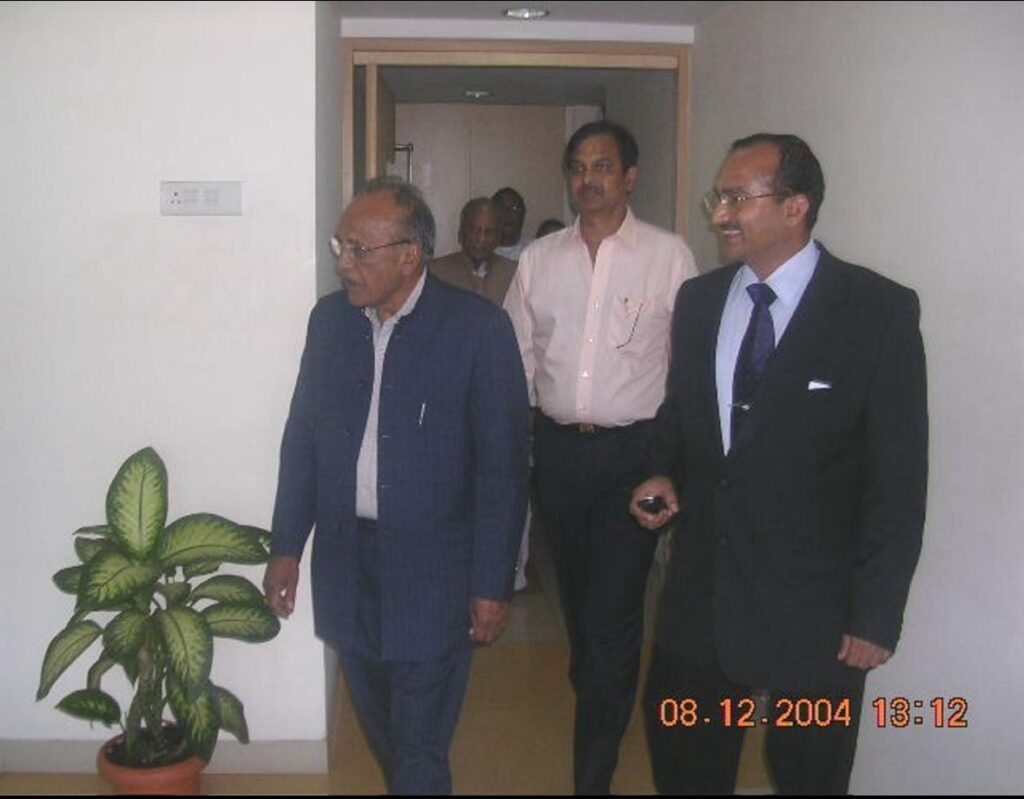
In February 2003, Sajjan Jindal visited Mundra with his elder brother, Prithviraj Jindal. What began as a routine port visit eventually became a career-changing conversation. Weeks later, during a drive in Mumbai, Jindal offered Sharma the opportunity to join his ports business in Goa as Joint MD and CEO. Sharma went home, discussed it with Bhanu and accepted.
On 28 August 2003, he joined South West Port Ltd, later JSW Infrastructure. The Vasco terminal was still under construction and faced local opposition, environmental challenges and logistics constraints that would have discouraged a less determined project team. Sharma began putting together a technical team while engaging with the surrounding community directly, spending as much time in local meetings addressing concerns about the coal terminal as he did on the engineering itself.
The Port Had to Connect to the Hinterland
One of his earliest interventions involved freight strategy. Sharma pushed for Panamax rather than Handymax vessels, a change that saved the company an estimated $27 million. Rail connectivity was another constraint, and one considerably harder to solve through a single decision. Working with Indian Railways, banking engines and new operating procedures were introduced for the Braganza Ghat section. Eventually, South West Port could handle eleven rakes a day.
Jaigarh: An Impossible Coastline Becomes a Port
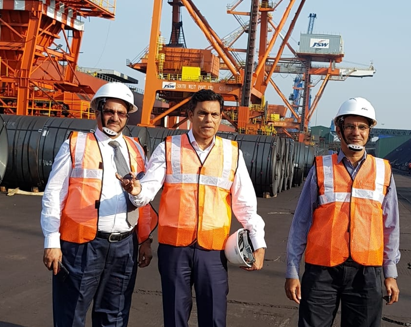
In 2005, Sajjan Jindal sent Sharma to Ratnagiri to examine a difficult coastal site being considered for sale. Sharma left his vehicle almost two kilometres away because the approach road was unmotorable, and climbed down steep, rocky terrain, slipping and cutting his palms along the way. He spent two hours studying the sheltered bay, walking its length in every direction. Nearby stood a centuries-old Shiva temple, where he stopped to seek blessings before making the difficult climb back. Then he called Mr. Sajjan Jindal.
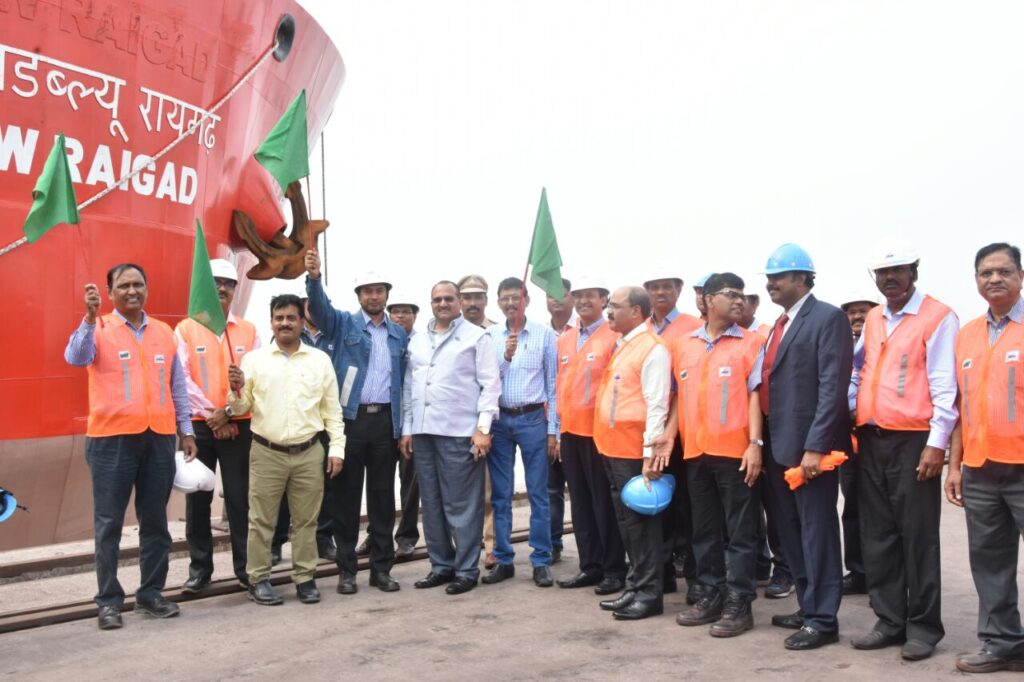
Instead of selling the land, he argued, JSW should retain it and build a port and power plant there themselves. What followed were years of technical and economic feasibility studies, engagement with the Maharashtra Maritime Board and state government, and a difficult public hearing process that initially failed under sustained local resistance. Only after months of direct community engagement did the project move forward. On 22 August 2009, JSW Jaigarh Port was inaugurated. Where others had seen an inaccessible coastline, Sharma had seen a gateway.
Dharamtar: Feeding the Furnace
Another major challenge emerged after JSW Steel acquired the Dolvi steel plant in December 2010. Dolvi’s river-based location meant that its expansion could ultimately be constrained by logistics rather than by furnace capacity or market demand. Sharma and his team studied the Amba River and Dharamtar Creek from first principles: the tides, the bathymetry and seven shallow patches between the river mouth and the jetty that no conventional vessel could safely navigate at scale.
The solution was unconventional: an 8,000-tonne self-propelled Mini Bulk Carrier, twin-engine and purpose-built for the route. Four were initially designed and ordered from a Bangladesh shipyard; fourteen followed in total, sailing into Dharamtar for the first time in July 2013. Compared with the earlier Handymax-based movement through Mumbai Harbour, the MBC system saved roughly $4 per tonne, translating into savings approaching $144 million a year at the expanded plant scale, with the investment recovered within two years.
But the bigger achievement was the principle behind it: a steel plant’s capacity cannot be expanded independently of its logistics chain. The two have to be designed as one system.
Scaling a Multi-Port Business
Between 2014 and 2019, JSW Infrastructure went through a major transformation. Dharamtar’s development accelerated. Jaigarh expanded to handle Capesize vessels and secured rail connectivity with Konkan Railway. JSW expanded its presence at Paradip, entered Fujairah in the UAE through an operations and maintenance contract, its first step outside India, and developed LNG infrastructure at Jaigarh.
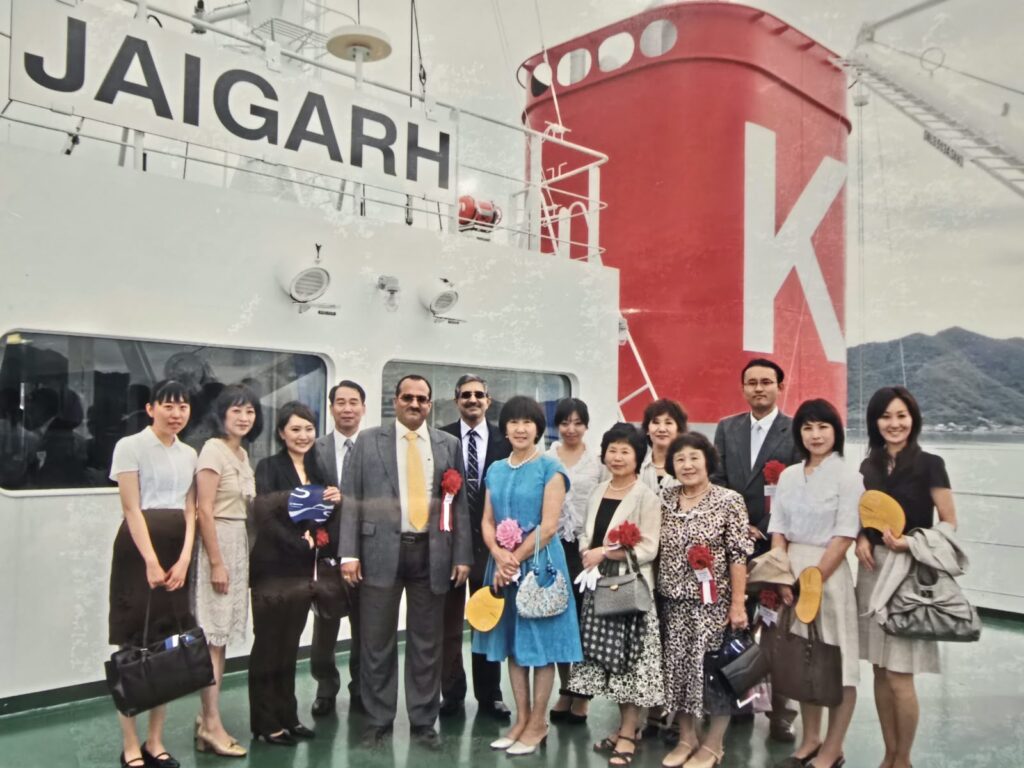
On 25 March 2017, Jaigarh Port was formally dedicated to the nation. A Capesize vessel carrying more than 200,000 tonnes of cargo was alongside that day, in the presence of then Maharashtra Chief Minister Devendra Fadnavis and a Union Minister. The individual projects were different, Mundra, Goa, Jaigarh and Dharamtar, each with its own geography, politics and engineering problems, but Sharma’s philosophy increasingly connected them. Ports were not standalone pieces of infrastructure. They were gateways connecting ships, railways, rivers, industries and markets.
The Captain Who Never Left the Bridge
In April 2019, Sharma moved on from JSW Infrastructure after sixteen years. By then the organisation had developed into a multi-port infrastructure business. But the numbers tell only part of the story. More than twenty years had passed since that terrifying night on the floating crane at Hazira, and the lesson remained as clear to him then as it had been in the storm itself.
A captain cannot command the sea. He cannot stop a cyclone or change the tide. His responsibility is to understand the forces around him, prepare his vessel and his people, stay calm when circumstances change and keep navigating towards the destination regardless of how far the original plan has drifted. Sharma carried those instincts from the bridge of a ship into Mundra, Goa, Jaigarh and Dharamtar. The scale changed. The responsibilities grew. The ships became ports. The ports became integrated industrial gateways. But the captain never really left the bridge.
Together, those experiences shaped a philosophy of infrastructure and leadership that Sharma carried into the next chapter of his career. And in April 2019, destiny called once again. After sixteen years at JSW, Sharma was returning to the Adani Group. The maritime chapter had prepared him for something even bigger. The captain’s journey was about to move, from the sea to the sky.