



Where repeatability is the aim, Shubhankar Chatterji, Executive Director Supply Chain, Cummins India, argues that a smart supply chain is not about more technology or dashboards but about making better decisions faster and turning them into measurable business results.

Alerts alone never create resilience; action does
From Tracking to Exceptions
Real-time visibility is shifting logistics from tracking shipments to proactively managing exceptions. Knowing where a shipment is, has value; knowing whether it will meet its commitment, why it may be delayed and what corrective action is possible is worth far more. The priority is end-to-end visibility rather than optimising individual transport legs, integrating shipment milestones, customs clearance, transport updates and warehouse readiness.
From Reporting to Prescribing
Data and advanced analytics must carry supply chains from reactive reporting to predictive and prescriptive decision support. Predictive analytics can flag deteriorating supplier reliability or materials at risk of shortage, but an alert alone does not create resilience; it must trigger defined actions, clear accountability and timely decisions. The objective is to shorten the time between identifying a threat and acting on it, and an end-to-end control tower with embedded analytics can significantly help.
Synchronising the Handovers
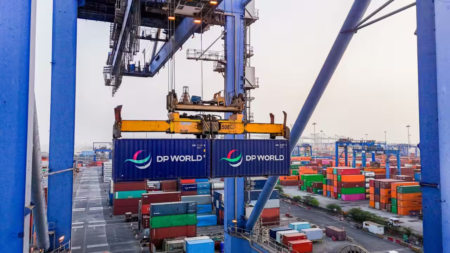
Multimodal efficiency depends on synchronising handovers rather than merely improving individual modes. Digital platforms can connect shipment documentation, estimated arrival times, terminal capacity, customs status and onward schedules, so that a change in a container’s arrival alerts the warehouse, transporter and next-mode operator. In India, stronger digital coordination across shippers, transporters, rail operators, ports and logistics providers can improve reliability.
Data as the Starting Point
The industry remains in transition, with data, phone calls and experience coexisting. Informal communication still resolves exceptions, especially where smaller partners have limited digital capability, but the problem arises when critical decisions depend entirely on phone calls, individual memory and manually consolidated spreadsheets. The goal is to make reliable data the starting point, with digital adoption extending to suppliers and partners. Advantage will come from converting data into timely action.