
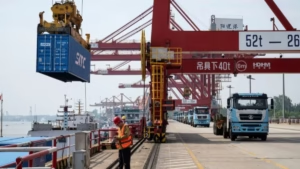




Union Budget 2026 reframes cargo and trade logistics as national economic infrastructure, with customs reform and multimodal freight emerging as the real levers of export competitiveness.

Capital expenditure is raised to a record ₹12.2 trillion
Capital expenditure for FY 2026–27 is increased to ₹12.2 trillion, signalling continued emphasis on infrastructure-led growth. For cargo and logistics, the key point is not the headline number but the operating outcome: sustained public capex typically improves corridor capacity, decongests nodes, and supports warehousing and industrial cluster expansion, all of which reduce end-to-end freight volatility.
A Coastal Cargo Promotion Scheme is introduced to drive modal shift
A Coastal Cargo Promotion Scheme is announced to incentivise modal shift and to raise the combined share of inland waterways and coastal shipping from 6% to 12% by 2047, according to coverage of the budget speech.
For operators, this is a structural signal. If the scheme rewards tonne-kilometres moved and includes containerised coastal services, it can reprice long-haul domestic freight economics for suitable commodities and lanes, particularly where road costs and congestion have become prohibitive.
A ship repair ecosystem is planned for inland waterways at Varanasi and Patna
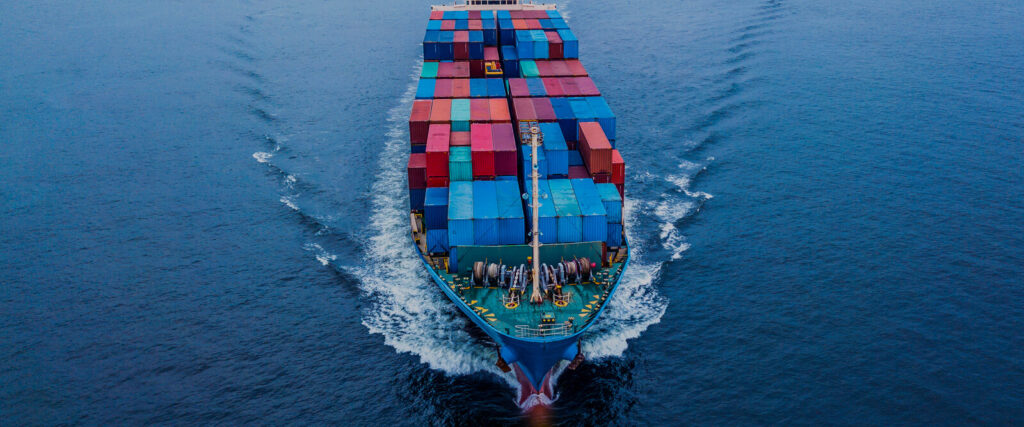
A ship repair ecosystem supporting inland waterways is set to be established at Varanasi and Patna, as reported in full-speech coverage.
This matters because inland water transport adoption is constrained less by route potential and more by operational reliability. Maintenance access and vessel uptime determine whether cargo owners commit recurring volumes rather than running pilot movements.
Customs duty rationalisation includes a cut on personal imports to 10%
A customs duty structure change is proposed to reduce the tariff rate on imports for personal use from 20% to 10%, framed as part of broader rationalisation.
For the cargo ecosystem, the broader relevance is the direction of travel. Rationalisation tends to reduce classification friction and dispute frequency, which influences dwell time variability at ports and air cargo terminals. For express and cross-border e-commerce channels, consumer-side duty clarity also supports volume stability.
Biopharma Shakti is launched with a ₹10,000 crore outlay and a drug regulator overhaul

A ₹10,000 crore Biopharma Shakti initiative is announced, alongside reforms to overhaul the CDSCO drug regulator to improve approvals and alignment.
This is an allied-industry freight driver with direct implications for logistics capability. Biopharma scale-up increases demand for validated cold-chain lanes, compliant temperature-controlled warehousing, higher share of air freight for time sensitive exports, and stricter predictability at customs for both inputs and outbound shipments.
India Semiconductor Mission 2.0 is launched with ₹40,000 crore
For freight forwarders and airport cargo operators, semiconductor supply chains shift the cargo mix towards high value, high security shipments and specialised handling. Tooling, equipment and sensitive components raise requirements for traceability, insurance discipline, controlled handling, and faster inland movement to reduce working capital exposure.
Electronics component manufacturing outlay is raised to ₹40,000 crore

The budget raises the outlay under the Electronic Component Manufacturing Scheme (ECMS) to ₹40,000 crore, as reported by multiple outlets.
This is a meaningful volume creator for domestic B2B logistics. Electronics localisation typically produces dense inter-cluster movements of sub-assemblies, higher reliance on time-defined distribution, and growing demand for bonded warehousing and vendor-managed inventory models for import-heavy inputs.
Rare earth corridors are announced across four states to deepen critical mineral supply chains

Dedicated rare earth corridors are announced for Odisha, Andhra Pradesh, Tamil Nadu and Kerala, aimed at strengthening domestic capability in critical minerals.
For cargo and EXIM, critical minerals are a logistics multiplier. They underpin electronics, renewables, defence and advanced manufacturing, and they tend to increase the movement of specialised inputs, processing equipment, and downstream components. This also expands the relevance of ports, ICDs and multimodal corridors linked to mineral and processing clusters.
What this means for the cargo and EXIM industry
The budget’s combined effect is a linked system: public capex expansion supports throughput capacity, coastal and waterways measures push modal diversification, and manufacturing programmes in biopharma and electronics change the value profile of trade cargo.
The near-term winners are likely to be operators with three capabilities: multimodal design, customs-led predictability, and specialised handling for high value and sensitive cargo. The medium-term winners will be those who anchor networks around emerging industrial corridors and align warehousing, air freight capacity, and coastal options to where new manufacturing volumes are being created.