

CBIC celebrated ten years of India’s Authorised Economic Operator Programme with reforms planned for the next decade.
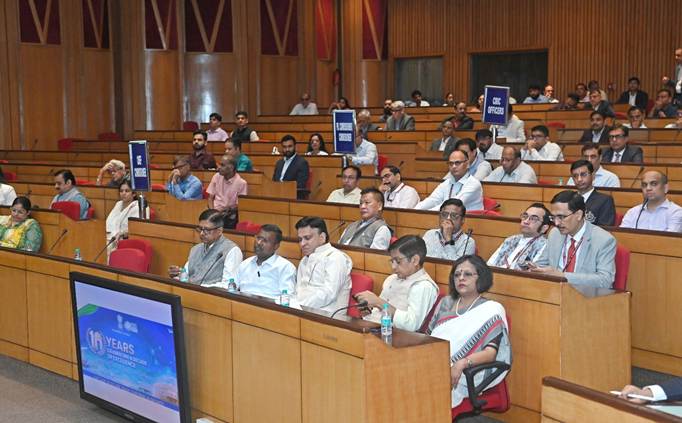
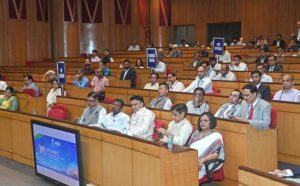
The Central Board of Indirect Taxes and Customs (CBIC) marked a decade of India’s Authorised Economic Operator (AEO) Programme with a commemorative event titled “AEO@10: Accelerating Growth, Enhancing Trust, Optimizing Trade” in New Delhi. The event brought together policymakers, industry leaders, logistics stakeholders, World Customs Organisation experts and Authorised Economic Operators to reflect on the programme’s achievements and discuss its future direction.
Addressing the gathering as Chief Guest, Shri Vivek Chaturvedi, Chairman, CBIC, said the AEO Programme had played a pivotal role in transforming India’s customs administration into a modern, trusted and facilitative system aligned with the World Customs Organisation’s SAFE Framework of Standards. He said the programme had become a cornerstone of India’s trade facilitation architecture by promoting voluntary compliance, strengthening supply chain security and enabling faster, more predictable cross-border movement of goods. He outlined five priorities for the next decade: technology-driven facilitation, radical inclusivity for MSMEs, seamless inter-agency coordination, global leadership through expanded Mutual Recognition Arrangements, and synergy across indirect tax verticals.
Shri Chaturvedi also announced the launch of a structured feedback response form on the AEO portal to enable continuous input from AEO entities and other stakeholders. Referring to Pillar 2 of the WCO SAFE Framework and the CBIC Citizens’ Charter, he said trade was an equal partner in building a trusted ecosystem and that feedback needed to be continuous. He also referred to the Eligible Manufacturer Importer (EMI) Scheme, highlighted by the Union Finance Minister in the Union Budget speech, as an important stepping stone that rewards early compliance and creates a pathway to higher AEO tiers.
Member (Customs), CBIC, recalled the shift of Customs from a transaction-centric approach to a risk-based and trust-oriented model since the introduction of the current AEO framework through Circular No. 33/2016-Customs. He said voluntary compliance promoted good governance and reduced supply-chain risk and transaction costs, and that supply-chain security remained central to the resilience of India’s trade ecosystem. He noted that discussions at the annual Customs Consultative Group meeting in Kolkata, along with trade representations, had informed several process improvements under consideration, including a unified Standard Operating Procedure for uniform processing across zones, a clear checklist for applicants and Zonal AEO Programme Managers, a single-deficiency approach, time-bound processing, copying of deficiency communications to applicants, a clarified position on financial solvency, and strengthened Client Relationship Managers and trained validators, in line with the National Trade Facilitation Action Plan. He added that documentation requirements under the EMI Scheme had already been rationalised through Circular No. 39/2026-Customs dated September 3, 2026, reducing the documents required from ten to three, effective September 15, 2026.
The event marked the launch of a commemorative publication, “A Decade of AEO in India: Celebrating Trusted Trade Partnerships,” documenting the programme’s evolution, milestones and impact over the past ten years, with contributions from CBIC officers, international partners, and trade and industry representatives. A stakeholder feedback survey on the AEO Programme was also announced to gather structured industry input for future reforms, and new AEO certificates were presented to select businesses.
In her welcome address, Dr Kavita Bhatnagar, Principal Commissioner and National AEO Programme Manager, highlighted the growth of the programme since its inception and stressed the importance of continued collaboration between Customs and the trade community. Representatives from industry bodies, including the Federation of Freight Forwarders’ Associations in India (FFFAI), acknowledged the programme’s contribution to improving ease of doing business, reducing transaction costs and enhancing supply chain predictability, while leading AEO entities shared experiences of expedited customs clearance, improved operational efficiency and strengthened global business confidence.
As of date, 5,967 entities, including importers, exporters, manufacturers, customs brokers, logistics operators and warehouse operators, have been certified under the AEO Programme across the T1, T2, T3 and LO categories. Over the past decade, the programme has expanded its coverage of the logistics chain, digitised application processes, established dedicated AEO Cells, and introduced facilitative provisions for MSMEs. CBIC remains committed to strengthening the programme further through stakeholder-centric reforms, technology adoption, international cooperation and continuous feedback from trade, in support of the Viksit Bharat @2047 vision and India’s position as a preferred destination for global trade and investment.
Source: Press Information Bureau