





Union Budget 2026-27 sharpens India’s Ease of Doing Business drive with tax certainty, digital customs, investor access and lower compliance.
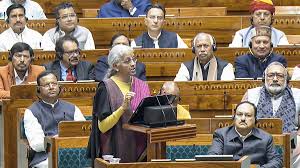
India’s Union Budget 2026–27 has placed Ease of Doing Business firmly at the centre of the country’s growth strategy, unveiling a wide-ranging reform package aimed at boosting investor confidence, reducing litigation, simplifying compliance and accelerating digital governance across trade, taxation and regulation
Announced on February 5, 2026, the budget reinforces ease of doing business as a key pillar of development, with a strong focus on digitised trade facilitation, tax certainty, trust-based customs systems and improved investor access. These measures build on a decade of sustained regulatory reforms designed to simplify procedures, enhance transparency and lower the cost of doing business in India.
The impact of past reforms is already visible. Between 2014 and 2025, India attracted USD 748.38 billion in foreign direct investment, marking a 143% increase over the previous 11-year period. The number of active registered companies has also risen sharply, from 1.55 lakh in 2020–21 to 1.98 lakh in 2025–26 (as of February 3, 2026), reflecting a growth of around 27% in just five years.
At the heart of the Budget’s business push is a major thrust on trade and logistics. A single, interconnected digital window will streamline cargo clearance approvals, while goods with no compliance requirements will be cleared immediately by Customs after online registration and duty payment. A Customs Integrated System (CIS) will be rolled out over the next two years as a unified platform for all customs processes. The government also plans to expand non-intrusive scanning using advanced imaging and AI, with the long-term goal of scanning every container at major ports.
Investor access has been widened through changes to the Portfolio Investment Scheme. Individual Persons Resident Outside India (PROIs) will now be allowed to invest in equity instruments of listed Indian companies, with the individual investment limit raised from 5% to 10% and the overall cap increased from 10% to 24%, deepening market liquidity.
Tax certainty is another major highlight. The Minimum Alternate Tax (MAT) is proposed to be made a final tax, with the rate reduced from 15% to 14%. Non-residents paying tax on a presumptive basis will be exempt from MAT altogether. The Budget also allows the use of MAT credit to offset up to one-fourth of tax liability under the new regime, and treats tax on buybacks for all shareholders as capital gains.
To reduce disputes and compliance pressure, the government has proposed integrated assessment and penalty proceedings through a single order, cut the mandatory pre-deposit during appeals from 20% to 10%, and removed interest liability on penalties during appeals. Taxpayers will also be allowed to update returns even after reassessment proceedings begin, subject to an additional 10% tax. Several minor offences have been decriminalised, penalties for technical defaults converted into fees, and prosecution provisions rationalised, including retrospective immunity for small foreign asset cases below ₹20 lakh.
Trust-based customs reforms received a significant boost. The duty deferral period for Tier 2 and Tier 3 Authorised Economic Operators (AEOs) has been extended from 15 to 30 days, enabling a “clear first, pay later” model. Advance rulings binding on Customs will now remain valid for five years instead of three. Trusted importers will face minimal verification, with factory-to-ship clearance enabled through electronic sealing. Customs warehousing will shift to an operator-centric framework with self-declaration, electronic tracking and risk-based audits.
Beyond the Budget, India’s Ease of Doing Business agenda continues to be strengthened through large-scale decriminalisation and digital reforms. The Jan Vishwas Act, 2023 decriminalised 183 provisions across 42 laws, while the Jan Vishwas Bill, 2025 proposes decriminalisation of 288 more provisions for Ease of Doing Business and 67 for Ease of Living. Since November 2025, over 47,000 compliances have been reduced nationwide, including simplification, digitisation, decriminalisation and removal of redundant rules.
Digital single-window systems have emerged as key enablers. The National Single Window System now integrates approvals from 32 central departments and 32 states, covering over 8,000 approvals and granting more than 8.29 lakh approvals since launch. Platforms like PARIVESH 3.0 for environmental clearances and e-Gram SWARAJ for grassroots governance are further improving transparency and speed.
Structural reforms across banking, insurance, labour and taxation are also reinforcing the business climate. The RBI has consolidated over 9,000 circulars into 238 Master Directions, the insurance sector now allows up to 100% FDI, public sector banks have sanctioned over ₹52,300 crore to MSMEs through digital credit models, and GST 2.0 reforms have simplified rates and expanded the tax base to over 1.5 crore registered taxpayers.
Taken together, the Union Budget 2026–27 and ongoing reforms signal a sustained, long-term commitment to making India a simpler, more predictable and globally competitive place to do business, aligned with the vision of Viksit Bharat @2047.
Source: PIB