


Container freight rates on Asia-Europe routes are softening as carriers shift capacity back through the Suez Canal amid Asian port congestion.
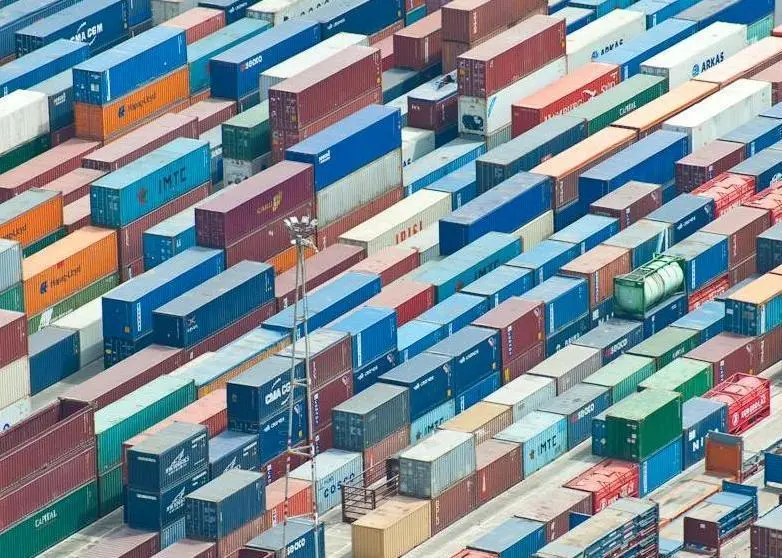
Asia-Europe container freight rates are falling as port congestion in Asia pushes carriers back toward the Suez Canal, according to Sogese’s September Europe Container Market Update. Drewry’s 3 September World Container Index put the Shanghai-Genoa rate at $4,368 per 40ft container, down 10% week on week, while Shanghai-Rotterdam fell 5% to $4,092. Blank sailings on the Asia-Europe trade are set to drop from four to one next week, an early sign of capacity returning to the market.
Andrea Monti, CEO of Sogese S.r.l, said the container market was becoming increasingly fragmented by trade corridor, with freight rates, cargo demand and available capacity moving in different directions across major routes. He said Asia-Europe rates had started to soften from their mid-year highs while transpacific markets remained firmer, prompting carriers to adjust individual services and vessel deployments rather than manage capacity uniformly across their networks. He added that the selective return of services through the Suez Canal was adding another variable, as shorter voyages could increase effective capacity on Asia-Europe routes even without new ships entering the market, making global fleet capacity a less reliable guide to capacity on specific trade lanes or through particular ports.
Recent service changes illustrate how carriers are reallocating capacity route by route. Ocean Alliance has revised its CPNW and MTE transpacific services, dropping Qingdao, Ningbo and Kwangyang from CPNW in favour of Kaohsiung and Yantian, while MTE drops Haiphong and adds Port Klang. Maersk’s seasonal TPX service, introduced in May to support peak-season demand between Vietnam, South Korea and the US West Coast, will conclude as scheduled at the end of the third quarter. COSCO and OOCL have expanded their Red Sea presence, launching a direct China-Jeddah service connecting Shanghai, Ningbo and Nansha with Saudi Arabia’s principal Red Sea gateway, alongside a separate seven-vessel Asia-Red Sea service linking Northeast Asia with Jeddah via Singapore and the Suez Canal.
Asian port congestion has reached 4.3 million TEU, according to Linerlytica data, higher than the 4.0 million TEU stranded at the peak of the pandemic. Cape of Good Hope diversions are absorbing between 5% and 7% of global container capacity, roughly 1.7 to 2.4 million TEU. MSC, Maersk and Hapag-Lloyd have all announced partial returns to Suez in recent weeks. Monti said congestion had become the more urgent variable, noting that carriers had been waiting for the security picture to stabilise before committing capacity back through Suez, but that the cost of waiting had risen faster than the risk of moving.
In the Western Ligurian port system covering Genoa, Savona and Vado Ligure, total container volumes fell 2.7% year on year in the first half of 2026 to around 1.45 million TEU, with gateway traffic up 1.6% and transshipment down 21.3%. Fedespedi’s first-quarter data shows a steeper national decline of 4.6%, with Trieste down 23.6%, Savona down 14.1% and Genoa down 4.9%, even as Italian exports grew 1.3% over the same period. Monti said the regional and national figures were both accurate but told different parts of the same story, with the regional numbers showing resilience in gateway cargo while the national numbers reflected how much of Italy’s position in Mediterranean routing was being decided elsewhere.
Gioia Tauro handled a record 4.5 million TEU in 2025, up 14% on the previous year, remaining Italy’s dominant transshipment hub. Tanger Med handled 11.1 million TEU in the same year, up 8.4%, according to its port authority. Monti said Gioia Tauro’s record year was genuinely good news, but noted that its nearest comparable competitor was now more than twice its size, describing it as a question about where Mediterranean transshipment investment was heading over the coming years.
Sogese’s base case for the coming months anticipates a gradual, congestion-driven return to Suez that releases effective capacity into the Asia-Europe market faster than carriers can absorb it through blank sailings alone. The report expects freight rates to soften progressively while remaining above pre-crisis levels, Suez services to expand selectively without a full network-wide return, and Asia-Europe capacity to increase gradually as vessel productivity improves. It also anticipates improved equipment availability across parts of Europe, carrier network adjustments remaining more tactical than structural, and some improvement in transit options for European shippers, though planning conditions are expected to remain fluid.