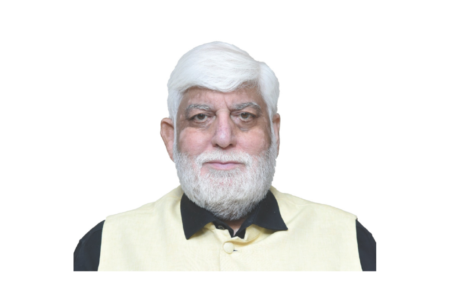





Magesh Ganesan, Chief Commercial Officer- Global HQ, ISS Global Forwarding, widens the lens to the forces shaping the industry. He began in cargo with Continental Carriers in 1991, moved to Dubai in 1995 to join Sharafship, then spent 20 years with DHL across the Middle East.

Adapting to customers beats clinging to tradition
The measure of success, he says, is simple: the company is still here, having weathered startup struggles, big-player competition, difficult markets and the challenge of retaining people, while taking care of its employees.
One solution among thousands
With around 50,000 forwarders in India, traditional forwarding leaves a company as one among 1,000. Ganesan describes building an organisation of 400 people in eight years against competitors with decades in the industry. A forwarder must be a solution to the customer, so the company listens, stays flexible and keeps its focus, relying on network and trusted partners rather than acting as a supermarket working with 20 agents in 20 countries. Its offering spans air, ocean, land, warehousing, cross-trade, project and military logistics, class one explosives and bulk, and perishables from Italy to the Middle East. What it sells, he says, is fresh air: it cannot be shown, only felt.
Disruption and alternatives
The pressure falls hardest on traders. A container from China to Dubai that once cost $600 to $1,200 now costs $9,000, and while manufacturers must still produce and absorb the cost, traders struggle to sell. People are exploring Africa, emerging markets, Eastern Europe and Asia. With Hormuz closed and the Red Sea affected, the question is whether land footprints can grow, which involves safety, insurance, infrastructure and local government support. There is talk of two new ports outside Hormuz, and even where a hub such as Jabal Ali cannot be accessed, alternatives are found.
The trade that never stops
Festive demand will not pause. People still eat, dress well and buy shoes and cars, from Diwali to Christmas and New Year. Trade becomes difficult and inflation bites, but the industry finds alternatives.