
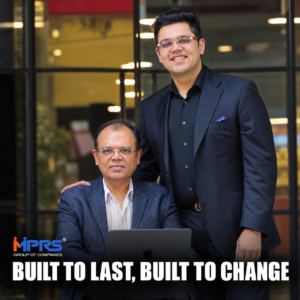



Inside MPRS’s quiet handover from a founder who built a company on trust to a next generation determined to scale that trust with data, without losing what made it work in the first place.

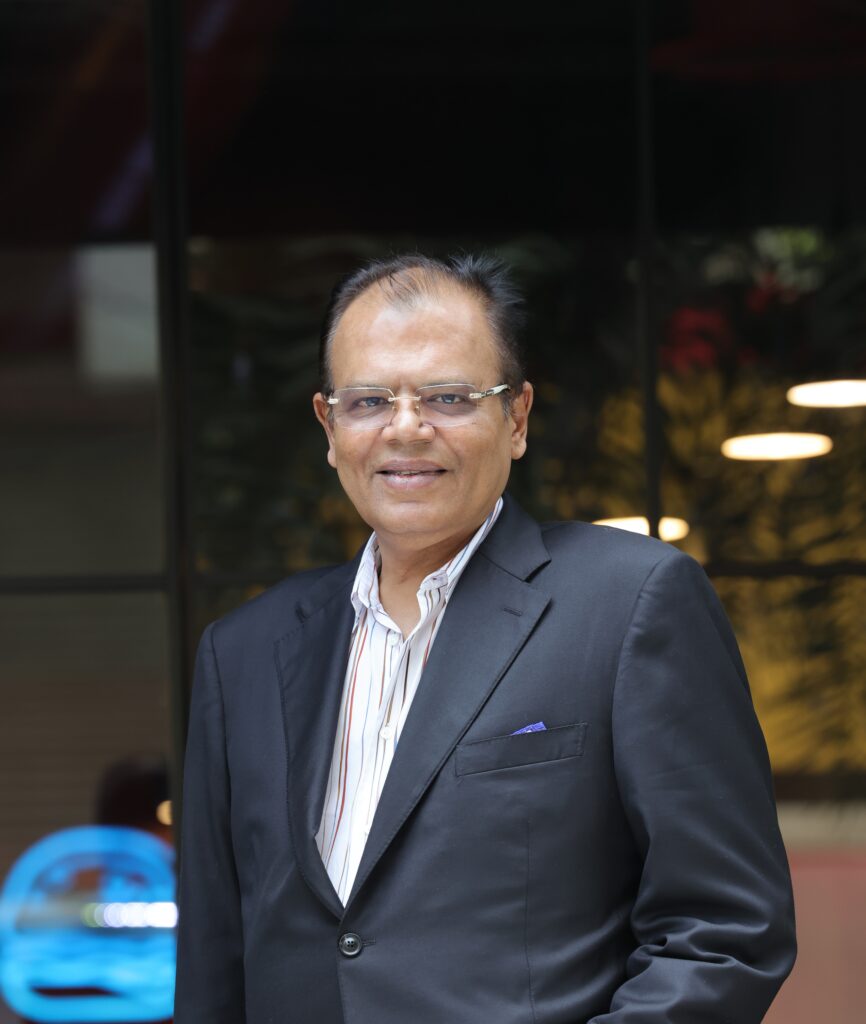
Some of the best decisions Mr. Shailesh Radia, Promoter, MPRS Group of Companies has made across two decades of building MPRS took no more than ten minutes, made on instinct about a person rather than weeks of analysis. “You can spend weeks negotiating a long-term rate contract,” he says, “but sometimes you make a hiring decision in ten minutes and live with it for ten years.” It is a company built less on process and more on a founder’s stubborn belief that people, chosen well and trusted early, are worth betting on quickly.
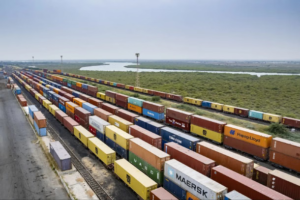
That belief is now being tested in a different way than Mr. Shailesh probably ever expected. MPRS, which began as one man’s attempt to build what he calls simply “a good logistics company and, more importantly, a name that people could trust,” today moves cargo across America, Africa, Europe, the Middle East and Asia-Pacific. Mr. Shailesh is no longer the only voice shaping where the company goes next, and his son, Mr. Yash Radia, Director, MPRS Group of Companies is now building its next chapter around AI-led forecasting, predictive pricing and blockchain-enabled documentation, tools his father’s generation never had access to. The question sitting quietly underneath almost every conversation at MPRS today is whether something as personal and unhurried as trust can actually scale alongside a company moving this fast into new geographies and new technology.
“I don’t think the objective is to remove human judgement. Quite the opposite. We are trying to give our people better information before they exercise that judgement.”
The Business Was Never the Hard Part
Mr. Shailesh is unusually candid about how unglamorous the company’s early instincts really were. “On day one, I don’t think I was thinking about building a legacy,” he says. “If I had used that word then, my team would probably have thought I had become too ambitious.” What MPRS had instead, in years when it had neither the network nor the recognition it enjoys today, was a willingness to pick up the phone whenever something went wrong and stay on the problem until it was solved, a discipline he still describes as the real business, far more so than any strategy document the company has written since.
The philosophy that grew out of those years is one Mr. Shailesh repeats almost like a rule of physics: “Business is easy. People are difficult. Choose the right ones.” He means it literally, pointing out that numbers are wonderfully uncomplicated, since two plus two will always be four, while people are thankfully not quite so cooperative, which is precisely what makes hiring the hardest and most consequential decision a growing company makes. Over the years, MPRS has more than once chosen a less experienced candidate over a more polished one on paper, betting instead on ownership and honesty over a well-built resume, and one early hire, Mr. Shailesh recalls, stood out not because she had an answer for everything, but precisely because she didn’t pretend to. “I don’t know, but I will find out,” she told him, and he still calls it one of the most powerful sentences anyone can say in business.
Believing a Global Company Could Come Out of India
It is easy, from where MPRS sits today, to forget how uncertain the original ambition actually looked. Mr. Shailesh describes a business environment when the company started that was still largely relationship-driven, in India where the logistics industry had nowhere near the technology infrastructure it has now, and where building an Indian logistics company with a global footprint was, in his own words, ambitious bordering on improbable. What India did have, he believed even then, was a deep, almost intuitive understanding of trade and relationships, and a talent for getting things done even when the textbook insisted it should be difficult. “Today, I don’t look at the vision as something extraordinary,” he says now. “India has the talent, the trade, the entrepreneurial spirit and the infrastructure to build globally relevant logistics companies. But twenty years ago, believing that and putting your own money, time and reputation behind it required a certain amount of stubbornness.”
What Scale Was Never Allowed to Change
Geography has changed considerably for MPRS, and so has scale. What Mr. Shailesh insists has not changed is accessibility, the idea that a customer with a problem should be able to reach someone who can actually do something about it, rather than being routed through five people first. Alongside it sits ownership, shaped by early years when there was nowhere to hide if a shipment had a problem. “A container may be one of thousands to us,” he says, “but for the customer, it could be the shipment that pays their salaries, fulfils an export order or keeps their production line running.” Technology has changed how MPRS communicates without replacing the relationships the company was built on, since a system can tell you a container is delayed but only a smart person can tell a customer why that delay matters.

“A customer should be able to enjoy their festive season without worrying about whether their cargo is moving. If we have done our job properly, the chaos is happening on our side of the phone, not theirs.”
The Next Generation Enters the Story
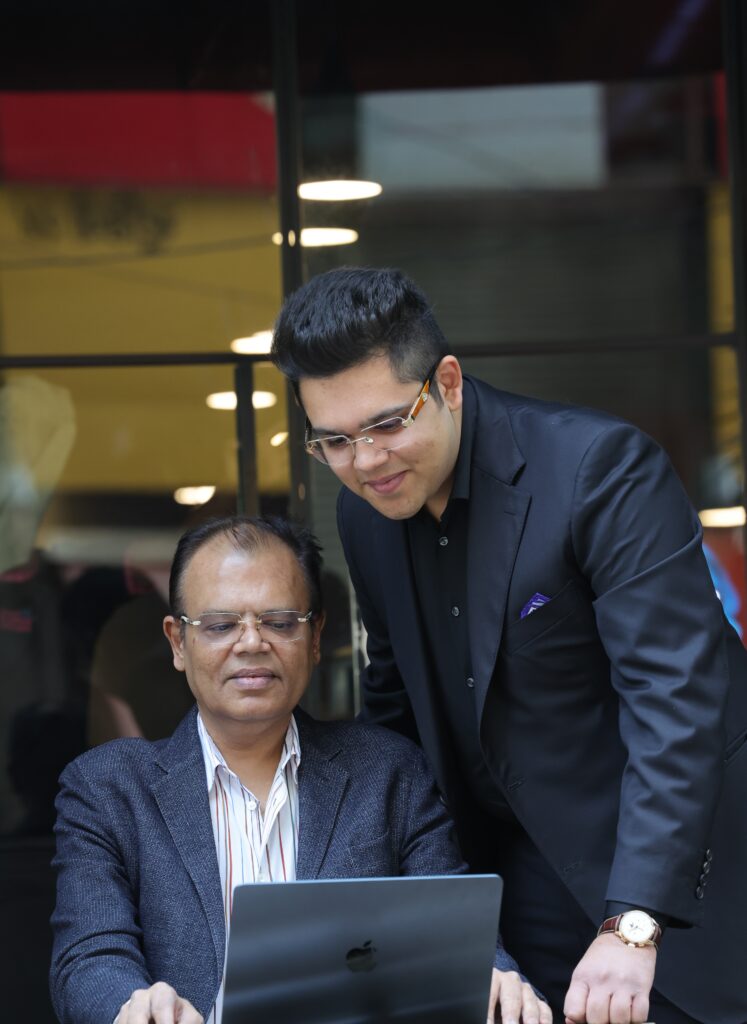
This is where Mr. Yash’s part of the story begins, framed not as a departure from his father’s philosophy but as its continuation with better instruments at its disposal. “I don’t actually see those two philosophies as being in conflict,” he says of the apparent gap between his father’s people-first instincts and his own push for AI-led, data-driven decision-making. “I think they are two sides of the same ambition.” His father’s generation, as he describes it, built MPRS by knowing people personally and understanding their businesses closely enough to anticipate problems before they surfaced, and his own generation now has the chance to do exactly the same thing with far richer information behind every judgement call.
What that looks like in practice is considerably less dramatic than the language surrounding artificial intelligence often suggests it should be. MPRS has built what it calls a Price Tracker, a tool that studies historical freight records to surface genuine pricing patterns rather than treating every rate movement as an isolated event. Rice, Mr. Yash points out, is a useful example, since it does not move evenly through the year, and watching those seasonal patterns closely enough lets a team recognise early signals of a shift before a customer even has to ask. “The system might tell us that freight prices are beginning to move in a particular direction,” he explains. “Our people then ask the question a dashboard cannot always answer: does this actually make sense?”
Even his most forward-looking ambitions circle back to the same instinct his father built MPRS on. Ask Mr. Yash where the next real differentiator in digital logistics will come from, and he does not reach for the idea of a bigger dashboard, arguing that visibility itself has quietly become infrastructure rather than a genuine point of difference. What customers actually want, in his reading of the industry, is fewer surprises and faster decisions, which means moving from tracking where a shipment is towards anticipating what happens next. “The next differentiator is not going to be who can show the most data,” he says. “It will be who can turn that data into the right decision, quickly enough for the decision to still matter.”
Reliability Across Cargo That Has Nothing in Common
MPRS today serves industries as different from one another as pharmaceuticals, agriculture and heavy engineering equipment, shipments that may technically travel inside the same kind of container while being, operationally, almost entirely different animals. Reliability, in Mr. Yash’s view, was never about applying one rigid process uniformly across every kind of cargo, but about building a process strong enough to recognise what is genuinely different about each shipment before that difference becomes a costly surprise. What ties them together is that reliability begins long before any cargo enters a container, with a genuine understanding of what the customer is actually trying to achieve. “I think the real test of reliability is not whether everything went according to plan,” he says. “The real test is what happens when the plan stops working, and whether the customer still feels protected, informed and confident that someone is taking ownership of their problem.”
Where Peak Season Tests Everything at Once
If there is one period that genuinely proves whether any of this philosophy holds up under pressure, it is festive season, when demand across categories like FMCG, confectionery, textiles and e-commerce arrive not gradually but in short, disorienting waves that can turn a normal week chaotic almost overnight. “Festive demand is a very good test of whether a logistics company is actually prepared or whether it is simply good at looking prepared,” Mr. Shailesh says. His rule for surviving those weeks intact is unglamorous but non-negotiable: forecast demand early using historical shipment patterns, make sure every link in the chain is ready before the surge arrives, and deliver bad news to a customer early rather than good news too late to help them. Peak-season capability, he says, can never be built in the middle of peak season itself, which is why the people, processes and vendor relationships that carry a company through those weeks all have to be in place well before the pressure arrives.
Where the Two Philosophies Actually Meet
Neither Mr. Shailesh pretends the handover currently under way at MPRS is a simple one, and Mr. Yash is candid that the company is in the exact phase every long-running family business eventually reaches, the point at which it has to decide what to protect from its own history and what to deliberately let go of. His answer to that tension is not really a compromise between two competing philosophies so much as a refusal to treat them as opposites. “My responsibility is not to preserve the company exactly as I received it,” he says. “That would actually be doing the previous generation a disservice. My responsibility is to understand why it became successful, protect the principles that made it successful, and then have the courage to change everything else when the market genuinely demands it.”
“I don’t think the objective is to remove human judgement. Quite the opposite. We are trying to give our people better information before they exercise that judgement.”
Built to Last, Built to Change
It is Mr. Shailesh, though, who offers the line that ultimately captures where MPRS actually stands today, caught between the company his generation spent thirty years building and the one his son is now building on top of it. Technology, he says, can absolutely be the engine driving the business forward, but an engine on its own does not tell you where to go, which is precisely why trust has to remain the one constant that does not change even as everything else around it does. That trust, he adds, is built in genuinely ordinary moments rather than grand gestures, a shipment delayed, a rate changing unexpectedly, documentation needing correction under time pressure. “The engine will keep changing. The technology will keep changing. The way we operate will keep changing,” he says. “The fuel cannot. For MPRS, that fuel is trust.”
The legacy, as Mr. Yash puts it in words that echo his father’s almost exactly, was never really the business either of them inherited. It is the one they choose, in ordinary moments and under real pressure, to leave behind, built to last precisely because it has never stopped being willing to change.