
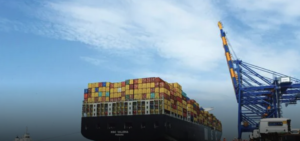




India’s next phase of supply chain resilience is being shaped by hybrid models, digital intelligence, and ecosystem collaboration. From procurement and manufacturing to patient-centric cold chains and tech networks, resilience is no longer reactive but deliberately designed into every layer.

Raj’s emphasis on agility and sustainability at the point of demand flows seamlessly into the broader question of supply chain design. Vimal Padmasanan, NPD Procurement Lead, Crompton Greaves Consumer Electricals, reflects on how hybrid models of Just-in-Time and Just-in-Case are redefining resilience at a structural level. For Vimal, the pandemic and subsequent geopolitical shocks marked a turning point in supply chain thinking. “The fragility of pure Just-in-Time was exposed, and resilience became the new priority,” he reflects. Companies are now embracing hybrid models that blend JIT’s efficiency with JIC’s buffers, stockpiling critical components, diversifying suppliers, and localising sourcing to protect continuity. The trade-off is clear: higher carrying costs and risks of obsolescence, but the payoff is a cushion against uncertainty. “It is about building flexibility into the system, even if it means accepting higher costs,” he adds.
Technology as the enabler
Digitalisation is the backbone of this shift. ULIP adoption has reduced predicted versus actual delay variance by up to 30%, enabling managers to act on real-time visibility across container movements, customs processes, and transport legs. “End-to-end tracking has cut volatility by as much as 25%,” Padmasanan notes, highlighting how safety stock can now be optimised without increasing stockouts. AI and ML further strengthen resilience by fusing historical sales, weather, and festival calendars to anticipate volatility. Reinforcement learning dynamically reallocates capacity, while prescriptive nudges automate contingency planning. “We are moving from reactive firefighting to proactive mitigation,” he explains.
Building trust and exploring new scenarios
Yet governance and data sharing remain hurdles. Fragmented standards, legacy systems, and reluctance to share sensitive data slow progress toward a unified control tower. At the same time, digital platforms are empowering MSMEs with compliance templates, IoT tracking, and marketplace integrations, opening doors to global buyers. Generative AI adds another layer of agility, rapidly creating sourcing scenarios, stress-testing networks, and visualising trade-offs. “GAI shortens decision cycles from weeks to hours; it accelerates resilience,” Padmasanan observes.
Hybrid supply chains balance efficiency with resilience to secure continuity
Patient-centric resilience in pharma

If hybridisation secures continuity at the macro level, resilience in pharma supply chains demonstrates its most human impact. For Sonik Sourabh, Senior Manager – Planning & Purchase, Tata MG, the most striking shift in recent years has been the move from distributor-led models to patient-led supply chains. “Direct-to-patient deliveries have changed the game, even in semi-urban and remote districts,” he explains. Decentralisation, district-level fulfilment points, validated passive packaging, and partnerships with local last-mile players are now essential. Cold chain integrity, he stresses, is less about perfection and more about predictability and preparedness in rural India.
Visibility and purpose-driven success
Real-time visibility has become the backbone of this transformation. IoT sensors, control towers, and route-level monitoring are no longer just compliance tools but operational decision enablers. Digital twins simulate risks across India’s diverse climate zones, allowing proactive interventions before losses occur. “Earlier, success meant no excursion reported. Today, success means the patient received a viable dose, on time, without therapy disruption,” Sourabh notes. This redefinition has driven investment in training, SOP digitisation, and ground-level ownership, ensuring every handler understands their role in a patient-critical ecosystem.
Tackling last-mile complexity
Managing high-value, short-shelf-life speciality drugs remains one of the toughest challenges. Practical solutions include tighter demand forecasting, shorter replenishment cycles, serialised track-and-trace, and secured, appointment-based deliveries. Smart packaging and geo-fenced handovers have reduced pilferage and wastage significantly. Looking ahead, Sourabh believes scaling globally compliant cold chains requires more than infrastructure; it demands digital capability, skilled talent, certified assets, interoperable platforms, and ecosystem collaboration. “Resilience in pharma supply chains is ultimately not about speed or cost; it is about trust, built one safe delivery at a time,” he concludCold chain resilience is trust, built one safe delivery at a time”
Resilient tech networks: Diversification to friend-shoring

From patient-led ecosystems, the narrative extends into technology networks where resilience must withstand geopolitical shocks. For Rajiv Ganju, Senior Vice President – Manufacturing & Global Supply Chain, Luminous Power Technologies, resilience in today’s volatile environment requires more than multi-sourcing. “Diversification alone is no longer sufficient,” he explains. Leading firms are embracing regionalisation and friend-shoring, strengthening ties with geopolitical allies while maintaining strategic buffer stocks for mission-critical components like power electronics and battery cells. India’s expanding manufacturing footprint, supported by policy frameworks and infrastructure, is becoming a vital node in these networks. “We are moving from brittle just-in-time to robust just-in-case,” Ganju reflects, underscoring how resilience now balances cost, service, and reliability.
Agile trade through bonded zones
Bonded manufacturing and warehousing zones are emerging as powerful tools to compress time and insulate risk. By staging imported sub-assemblies closer to final assembly, companies defer duties, optimise working capital, and reduce exposure to congestion or tariff volatility. Combined with digital customs interfaces and integrated planning systems, these zones shorten production-to-market cycles and enhance export competitiveness. “Bonded facilities are not just about cost; they are about agility,” Ganju notes.
Technology, circularity, and digital twins
For high-value, time-sensitive components, IoT-enabled tracking, GPS fleet management, and predictive ETA engines are cutting delays across India’s transport network. Infrastructure upgrades like Dedicated Freight Corridors and ULIP integration are further improving reliability. At the same time, Ganju stresses the importance of circularity: serialised tracking, automated triaging, and certified refurbishment partners aligned with ESG mandates are now non-negotiable. “We have achieved a 100% success rate in used battery collection, supporting a cyclical economy,” he shares. Looking ahead, digital twins are enabling scenario modelling, capacity balancing, and supplier risk analysis, reducing reaction times and strengthening decision-making. “Virtual replicas allow us to stress-test resilience before reality demands it,” Ganju concludes.