




Kale Logistics Solutions is advancing AI-driven cargo innovation and strengthening digital communities; by 2026, the company will be steering the industry toward global expansion, touchless operations, and resilient supply chains built on trusted digital corridors.

Convergence of digital and physical automation is redefining efficiency benchmarks globally
2025 was a year of accelerated AI adoption and global uncertainty. Rajni Patwardhan, Head of Marketing, Kale Logistics, outlines three strategic priorities that will define the company’s trajectory into 2026. The first is strengthening the Cargo Community System (CCS) ecosystem with AI-led solutions such as automated documentation, predictive planning, and exception management, tools designed to deliver speed and reliability. The second is expanding the CCS framework to include shippers and consignees, ensuring that the entire supply chain is digitally connected on a single trusted platform. The third is accelerating global expansion into Asia-Pacific, Latin America, and Pacific Island economies, where community-based digitalisation has become a national priority.
Building resilient supply chains
Patwardhan emphasises that resilience in air cargo is built on standardisation, cybersecurity, real-time data flows, and interoperability. Kale’s platforms are homogeneous, modular, and aligned with global standards such as IATA CargoiQ, ICAO, WCO, and UN/CEFACT. This alignment ensures seamless data continuity across borders and partners, even during disruptions. With cybersecurity-by-design, cloud-native architecture, multi-node redundancy, and AI-driven anomaly detection, Kale enables airports and operators to withstand operational shocks, breaches, and geopolitical events, making them truly “disruption-tolerant.”
Touchless cargo: Beyond automation
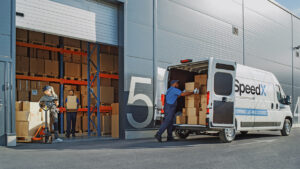
Touchless operations require more than digital data; they demand integration of physical automation with digital intelligence. Kale’s platform connects robotics, autonomous forklifts, OCR gates, weight/volume sensors, and smart ULD systems, creating a continuous digital handshake across warehouses, docks, and airside operators. By combining AI-driven pre-validation, IoT-triggered workflows, and paperless approvals, Kale is moving the industry from process automation to full orchestration, where cargo flows faster, with minimal human intervention and fewer errors. This convergence of digital and physical automation is redefining efficiency benchmarks across the cargo ecosystem.
Addressing structural and regulatory barriers
Despite rapid progress, Patwardhan acknowledges persistent hurdles. Fragmented systems, uneven mandates for digital documentation, limited cross-border interoperability, and slow adoption due to legacy infrastructure continue to challenge transformation. Cybersecurity governance gaps further complicate progress. Kale advocates harmonised standards, incentivised adoption models, and a strong regulatory push for digital-first compliance as essential steps to unlock the full potential of digitalisation. With industry collaboration and regulatory alignment, Kale believes the sector can overcome these barriers and accelerate toward a unified digital future.
The breakthrough metric for 2026
Looking ahead, community-wide technology adoption is identified as the breakthrough metric for cargo operators. Success will be measured not at the airline or handler level alone, but across the entire airport ecosystem. Adoption will unlock consistent data harmonisation, stronger cybersecure operations, and new digital business models. Kale underscores that technology must be embraced not as a cost burden, but as a long-term investment driving efficiency, compliance, and competitiveness. For Kale, the measure of success is not just digitalisation itself, but the collective transformation of the air cargo community into a truly connected, resilient, and future-ready ecosystem.