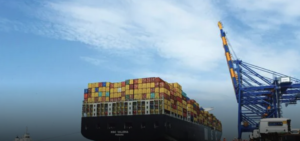




Industry expert Rajesh Menon offers a measured perspective on 2025 as India’s logistics inflexion, where converging policy execution, integrated infrastructure, and national-scale digitalisation repositioned logistics from a long-standing constraint into a strategic driver of India’s global hub ambitions.

By the middle of this decade, India’s logistics story underwent a quiet yet decisive transformation. Long marked by fragmented networks, modal imbalances, and high transaction costs, the sector entered 2025 on a distinctly different trajectory. What made 2025 stand out was not new announcements, but the visible convergence of policy intent, infrastructure execution, and digital integration. This alignment began transforming logistics from a chronic constraint into a strategic instrument, laying the foundation for India’s ambition to emerge as a globally competitive logistics hub.
Governance shift
At the core of this transition was a shift in governance philosophy. Logistics was no longer treated as a peripheral support function but recognised as a system requiring coordination across ministries, states, transport modes, and private players. This shift altered how projects were prioritised and executed. The year 2025 marked the point when this systemic approach began delivering measurable outcomes on the ground.
Gati Shakti execution
A central pillar of this change was the operational maturation of PM Gati Shakti. While earlier years focused on platform creation, 2025 saw it evolve into a true execution backbone. Ministries and states increasingly used geospatial data to sequence projects, resolve right-of-way issues, and align logistics infrastructure with industrial and urban planning. Infrastructure development began following a network logic, replacing fragmented project-by-project decision-making and improving inter-agency coordination.
Policy implementation
Simultaneously, the National Logistics Policy moved firmly into its implementation phase. By 2025, efforts around standardisation, process simplification, and institutional coordination were visible across states and central agencies. Several states rolled out logistics action plans aligned with national goals—an essential step in India’s federal system. The year marked a clear shift from reform intent to operational integration across multiple layers of governance.
Digital backbone
Digital transformation acted as the connective tissue binding these efforts together. With broader onboarding of ports, railways, customs, inland waterways, and private operators, e-logistics moved closer to seamless data exchange. Beyond transparency, improvements in cargo visibility, faster documentation, and early analytics adoption began reshaping supply chain management. India’s approach stood out for pursuing logistics digitisation at a national scale through public digital infrastructure, creating shared efficiency gains across the ecosystem.
Rail transformation
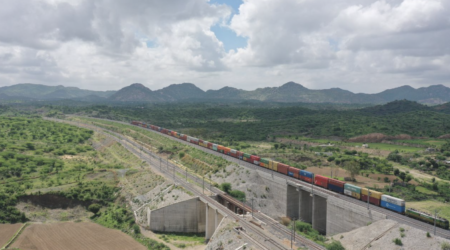
On the physical infrastructure front, 2025 was the year capacity investments began yielding visible performance gains. The operationalisation of Dedicated Freight Corridors improved freight speeds, reliability, and system efficiency by separating freight and passenger traffic. For shippers and planners, freight rail increasingly resembled a predictable utility rather than an uncertain alternative, strengthening confidence in long-haul rail solutions.
Integrated logistics parks
Progress in Multimodal Logistics Parks was equally significant. By 2025, several parks had moved from construction to operational readiness. Their value lay not just in warehousing but in co-located rail, road, storage, and value-added services. These integrated ecosystems began addressing first- and last-mile inefficiencies while anchoring regional manufacturing and consumption clusters more effectively than standalone facilities.
Port reorientation
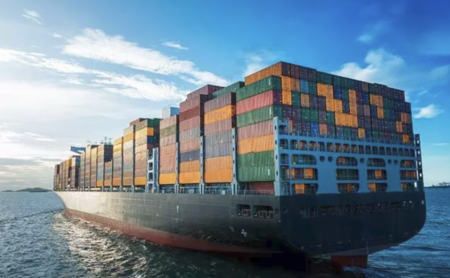
Ports in India experienced a subtle redefinition in 2025. Rather than standalone maritime assets, they increasingly functioned as gateways integrated with hinterland logistics networks. Improved rail evacuation, road connectivity, and coastal shipping strengthened port-led logistics. Policy reforms, financing via the Maritime Development Fund, and extended shipbuilding incentives attracted foreign interest, shifting focus from capacity creation to end-to-end cargo optimisation and reliability.
Waterways momentum
Another milestone was the growing commercial credibility of inland waterways. Cargo movement became more regularised and integrated with road and rail networks. Bulk commodities and selective container movements demonstrated waterways’ potential as cost-effective, lower-emission alternatives, gradually embedding them within multimodal strategies rather than treating them as niche options.
Fiscal confidence
Fiscal policy provided a stable confidence framework for these developments. Continued capital outlay under the National Infrastructure Pipeline signalled long-term commitment, strengthening private investment appetite across warehousing, terminals, rail sidings, and digital logistics solutions. Public-private partnership models gained traction where demand visibility, risk-sharing, and revenue mechanisms were more clearly defined.
Systemic convergence
What distinguished 2025 was the interaction between these elements. Digital platforms enhanced physical asset productivity, policy coordination reduced friction, and fiscal momentum created a virtuous investment cycle. Together, these forces began lowering logistics costs, improving reliability, and shortening delivery timelines, key prerequisites for global hub ambitions.
Bridge forward
Importantly, 2025 was not an endpoint. It functioned as an inflexion year, a bridge between reform architecture and performance outcomes. While challenges such as urban freight congestion, skills gaps, and deeper private-sector digital adoption remained, foundational systems were firmly in place. Post-2025, the focus increasingly shifts toward governance quality, data discipline, and operational excellence.
Narrative shift
In retrospect, 2025 may be remembered as the year India’s logistics narrative changed tone. The focus moved from catching up with global benchmarks to shaping a model suited to India’s scale and complexity. By aligning infrastructure, policy, and digital intelligence, India positioned itself not merely to move goods faster, but to move them smarter. As the country approaches 2026, the question is no longer whether India can become a global logistics hub, but how effectively it can leverage this transformation to redefine competitiveness in an interconnected world.