



DGCA warns Indian airlines to avoid Middle East airspace amid Iran-related military tensions until March 2, 2026.
India’s aviation regulator, the Directorate General of Civil Aviation (DGCA), has issued an urgent safety advisory warning of elevated risks to civil aviation operations across the Middle East and Persian Gulf airspace. The directive, dated February 28, 2026, follows a detailed review of the latest Conflict Zone Information Bulletin (CZIB No. 2026-03) released by the European Union Aviation Safety Agency (EASA).
The advisory comes in the wake of recent military strikes by the United States and Israel on targets within Iran and subsequent announcements of retaliatory action by Iran. DGCA has cautioned that the rapidly evolving security situation has created a high-risk operating environment for commercial aircraft.
According to the regulator, civil aviation faces multiple threats, including possible retaliatory attacks on military assets, the presence of advanced air-defence systems capable of engaging targets at all altitudes, and the risk of operational errors such as misidentification or interception failures involving civilian aircraft.
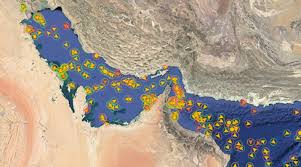
The high-risk zone spans all altitudes and flight levels across several Flight Information Regions (FIRs), including Tehran, Baghdad, Tel Aviv, Amman, Beirut, Kuwait, Jeddah, Emirates, Bahrain, Doha, and Muscat. These FIRs cover Iran, Iraq, Israel, Jordan, Lebanon, Kuwait, Saudi Arabia, the UAE, Bahrain, Qatar, and Oman.
DGCA has strongly advised all Indian air operators to avoid operations in the affected airspace at all levels, closely monitor updated Aeronautical Information Publications (AIPs) and NOTAMs, and continue adhering to earlier advisories related to Syrian and Yemeni airspace, which remain in force.
The safety advisory takes immediate effect and will remain valid until March 2, 2026, unless revised or superseded. Airlines have been asked to formally acknowledge the notice and confirm that their flight planning and operations teams have been briefed, as the regulator reaffirmed that passenger and crew safety remains the highest priority.
Source: PR