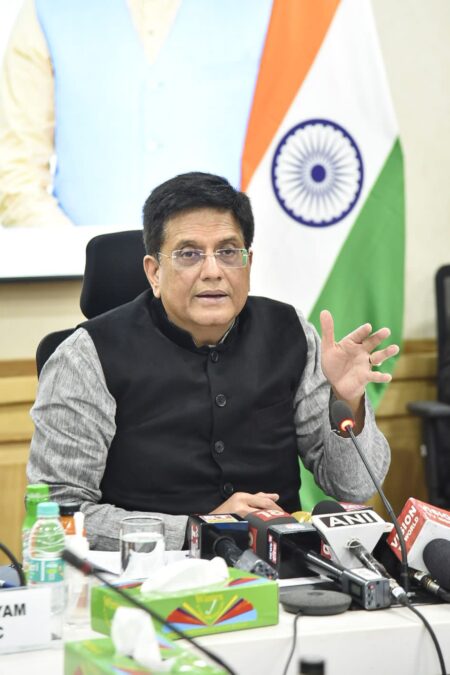




The National Traders’ Welfare Board met in New Delhi on September 25, 2026 to review GST, MSME finance, digital access and exports.
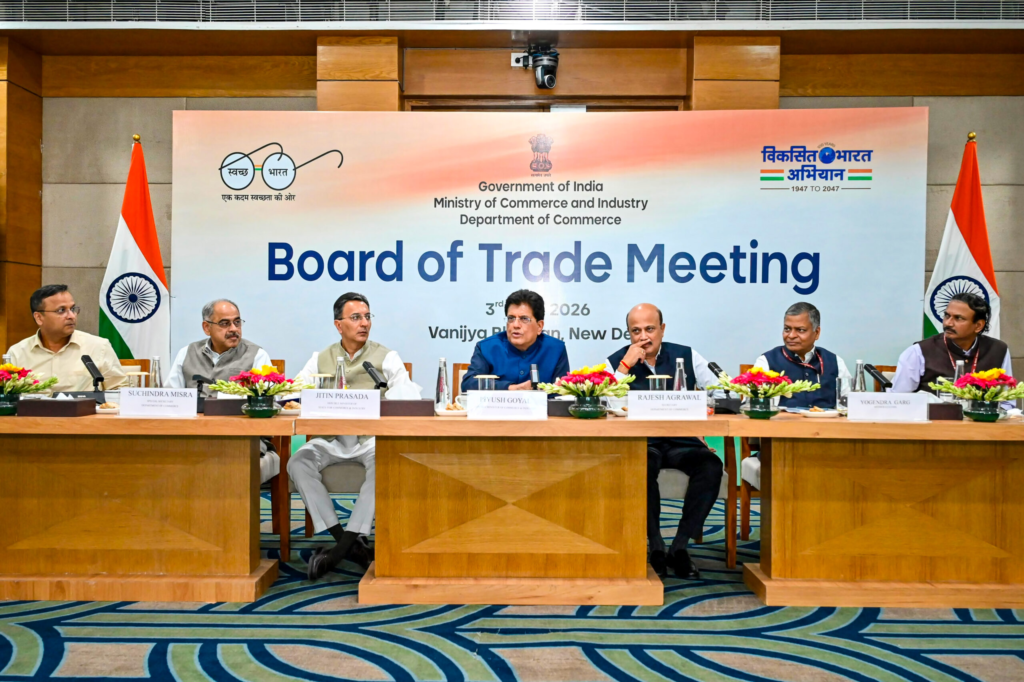
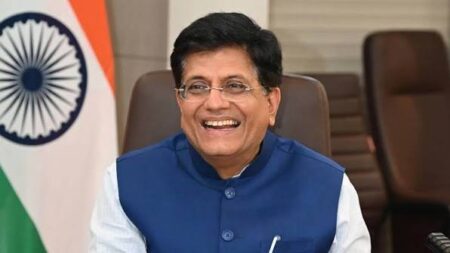
The 11th Meeting of the National Traders’ Welfare Board (NTWB) was held in hybrid mode at Vanijya Bhawan in New Delhi on September 25, 2026. The Board reviewed measures on trader welfare, Ease of Doing Business, digital empowerment, access to finance, Centre and State coordination and export promotion. Board Chairman Sunil J. Singhi chaired the meeting. Yuvraj Ravindra Patil, Director at the Department for Promotion of Industry and Internal Trade (DPIIT), welcomed members and outlined the Board’s mandate.
Members discussed GST matters including rationalisation, refund delays, lengthy audits, amnesty schemes, input tax credit anomalies and pending appeals. On MSMEs and finance, the discussion covered the inclusion of traders in MSME facilitation committees, a proposed centralised loan portal with 30-day timelines, reforms to the CIBIL score mechanism and traders’ grievance helplines. Members also raised timely payments to government contractors, safeguards against technical penalties and relaxation in loan repayment during lean periods.
On digital empowerment, the Board considered expanding ONDC and DigiDukaan to the district level, Women Entrepreneurship Facilitation Desks under NITI Aayog, POSH cells for grievance redressal and stronger cyber fraud redressal mechanisms. Mr Singhi cited the Jan Vishwas Act among the Government’s trader welfare reforms. He said State Traders’ Welfare Boards have been set up in Madhya Pradesh, Punjab, Uttar Pradesh and Tamil Nadu. He added that 100 consecutive virtual conferences had been held to strengthen Centre and State engagement.
The Board also discussed export promotion in connection with the India-UK Comprehensive Economic and Trade Agreement, which came into force on July 15, 2026. It also considered thematic committees and working groups to examine sector-specific issues. The meeting ended with the Board reaffirming its commitment to policy advocacy, digital empowerment, Ease of Doing Business reforms and stronger Centre and State coordination.
Source: Press Information Bureau