


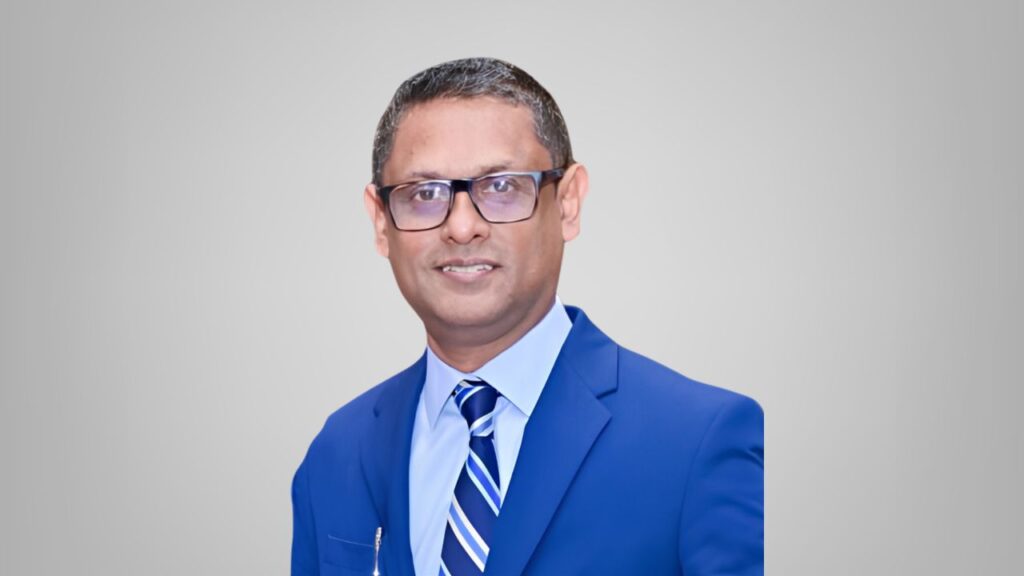
Rahul Bhowmick, Country Manager Director – India , India, ISS Global Forwarding, brings the view of a forwarder watching trade lanes shift in real time. On sustainable aviation fuel, he notes that sustainability targets are now a genuine consideration for global accounts, who increasingly ask forwarders directly about their carbon footprint.
Digital cargo systems are still mostly cosmetic
Sustainability Costs Global Accounts Now Demand
Rounding out the conversation, Rahul Bhowmick, Country Manager Director- India , India, ISS Global Forwarding, brings the view of a forwarder watching trade lanes shift in real time. On sustainable aviation fuel, he notes that sustainability targets are now a genuine consideration for global accounts, who increasingly ask forwarders directly about their carbon footprint. With airlines as their biggest vendors, Bhowmick says his organisation is prepared to absorb additional cost tied to sustainability programmes over the next five to ten years if that is what adoption requires.
The Corridors Carrying India’s Trade
On freight corridors, Bhowmick offers a nuanced read: the United States remains India’s most valuable air export destination even though GCC countries lead on cargo volume, largely due to perishables. He points to engineering and pharmaceutical exports into the US as needing more capacity, alongside an unexpected growth story in the cable business, driven by demand from data centres being built across America. His conclusion is that the India-US lane needs a genuine capacity infusion and a more rational freight cost structure to match.
An Honest Read on Digital Booking
His assessment of digital booking and visibility infrastructure is unusually direct: “Honest answer, it is a lot cosmetic,” he says, while acknowledging that airlines have made more progress digitising rates than forwarder platforms have, given the more variable nature of their product.
Early Movers Will Win the Next Decade
Looking ahead, Bhowmick believes the airlines and forwarders that separate themselves over the next five to ten years will be those who deliver seamlessly, invest early in Indian capacity, and follow through on commitments around visibility and transparency, positioning India’s growth from 3.5 to 10 million tonnes as a window that rewards early movers.
A Sector Converging on the Same Answer
Taken together, these five perspectives describe an industry approaching the same problem from different directions. An integrator wants complexity to disappear for the customer. An airport operator wants infrastructure built around the product rather than legacy process. A global logistics executive wants diversification robust enough to absorb geopolitical shocks. A technology innovator wants automation to remove friction that never needed to be manual in the first place. And a freight forwarder wants honesty about how far digital transformation has actually travelled, alongside the capacity investment needed to make the most of India’s shifting trade corridors.
None of them describe a finished job. Visibility infrastructure still breaks down somewhere along the chain. Paperless processes still meet resistance at security checkpoints. Fleet decisions on sustainable aviation fuel still sit with airlines rather than airports. Freight rates on India’s most important trade lanes still need rationalising. What emerges instead is a shared sense of direction: infrastructure, technology and operational ownership converging toward a system where the customer sees a single seamless movement, regardless of how many partners, modes and borders it crosses behind the scenes.
If India is to move from 3.5 million tonnes to the ten million tonnes envisioned for 2030, it will come from airports building integrated terminals, forwarders assuming end-to-end ownership, technology providers automating what should never have been manual, and logistics companies diversifying fast enough to absorb whatever disruption comes next. The leaders featured here are already building toward that future from their respective corners of the industry. The task now is making sure those efforts reinforce each other, rather than simply running in parallel.