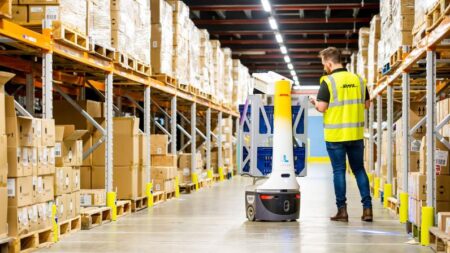





Verified supplier data and predictive intelligence enable organisations to see beyond tier-one suppliers, anticipate risk, and embed compliance into everyday operations. This strengthens trust and resilience across global supply chains.

“Verified supplier data is the connective tissue of trade.”
Digital intelligence and supplier transparency
Snippet: Verified data and predictive intelligence are strengthening resilience, compliance, and trust across interconnected global supply chains.
In the evolving architecture of global commerce, Smitha Shetty, Regional Director, APAC, Achilles Information, underscores how verified supplier data platforms are becoming the connective tissue of modern supply chains. As networks stretch across borders, independently validated information helps businesses see beyond tier-one suppliers, anticipate vulnerabilities, and act with confidence rather than react under pressure.
Real-time insight and AI
Shetty highlights how real-time analytics and AI are transforming sustainability and compliance from retrospective exercises into dynamic capabilities. Continuous monitoring of supplier performance allows organisations to detect anomalies early, prioritise interventions, and strengthen disclosures. Compliance frameworks are no longer box-ticking; they are embedded into operational performance, aligning resilience with responsibility.
For multinational organisations, regulatory complexity often creates friction. Shetty points to unified ESG and compliance datasets as a way to simplify alignment across regions. A single, harmonised dataset reduces duplication, supports clearer audit trails, and encourages SME participation, critical for continuity. Combined with pre-qualification and continuous monitoring, organisations can adapt quickly: scaling suppliers up or down, redirecting sourcing, or responding to disruptions with agility.
Transparency, trust, and predictive intelligence
Enhanced supplier transparency builds accountability and strengthens ethical and environmental standards across value chains. By reducing hidden risks, transparency fosters trust and supports stable trade flows, an outcome central to the global sync. Looking ahead, Shetty sees predictive intelligence as the next frontier. AI-enabled platforms will move beyond describing risk to anticipating it, integrating procurement, sustainability, and risk functions into a unified capability. Intelligence, she notes, will be embedded into the very fabric of global supply chains.

Digital transformation in supply chains
From control towers to predictive analytics, digitalisation is rewriting the speed and resilience of modern supply chains.
In the global sync of trade, Pallavi Nigam, Head, Projects & Digital – India Supply Chain, illustrates how digitalisation is turning execution into a touchless, accelerated process. Order-to-cash cycles that once took nearly 40 minutes now close in under 10, proving how technology is collapsing inefficiencies and unlocking new value across networks.
Nigam points to the rise of logistics control towers, digitally integrated platforms that monitor every movement from plant dispatch to last-mile delivery. With advanced visibility at each touchpoint, organisations gain foresight into risks and the agility to respond before disruptions ripple across the chain.
AI: The next frontier
Artificial intelligence remains at a nascent stage in FMCG supply chains, but its potential is already visible. Predictive analytics, IoT integration, and cold chain compliance are early applications, laying the groundwork for smarter, more resilient ecosystems. Nigam notes that scaling AI across supply chains will take two to three years, but its trajectory is clear: intelligence will become inseparable from operations.
Partnerships driving agility
Industry collaborations and conferences are proving vital in shaping adoption. By testing technologies through proof-of-concepts and scaling only those that deliver measurable value, supply chains are embedding digitalisation not as a trend but as a discipline. Nigam’s journey, from procurement to digital transformation, reflects how supply chain professionals are evolving into architects of resilience.
“Order to cash now closes in under 10 minutes.”