




Preferential US access for Bangladesh, especially in textiles, could challenge India after parallel trade deals.
India may face heightened competitive pressure in the US market following the conclusion of a US–Bangladesh trade deal, finalised just days after Washington wrapped up trade negotiations with New Delhi. A comparison of the two agreements highlights the United States’ differentiated trade approach towards the two South Asian economies and the potential implications for Indian exporters.
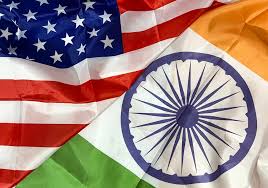
Under the interim US–India trade framework, India agreed to eliminate or reduce tariffs on a broad range of American industrial and agricultural products, including wine and spirits. In return, the US committed to lower reciprocal tariffs on Indian exports from 25% to 18% and removed the additional 25% tariff earlier imposed on Indian goods.
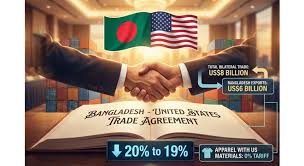
In contrast, the US–Bangladesh agreement grants preferential market access to Dhaka. Reciprocal US tariffs on Bangladeshi exports have been reduced to 19% from 20%, while zero-duty access has been extended to select products, most notably textiles and apparel, subject to specific conditions. Bangladesh has also undertaken deeper regulatory commitments, including alignment with US safety and FDA standards, freer cross-border data flows, reforms in labour rights, stronger environmental safeguards, and enhanced intellectual property protection.
A key divergence lies in agriculture. While India has taken a calibrated approach to protect sensitive farm sectors and has not opened dairy and several agricultural products, Bangladesh has opted for a more liberal stance. Dhaka has committed to import around $3.5 billion worth of US agricultural products, including wheat, soya, cotton, and corn, signalling a decisive opening of its domestic market.
The impact is likely to be most pronounced in textiles and apparel, one of India’s key export sectors. After the US imposed tariffs of up to 50% in August, Indian exporters received partial relief with duties being lowered to 18%. However, under the US–Bangladesh deal, certain Bangladeshi textile and apparel products made using US-origin materials will gain zero-duty access to the US market. Despite securing lower duties on US cotton imports, India has yet to obtain similar preferential treatment for its textile exports.
The two agreements also differ on energy commitments. The Trump administration has asked India to directly or indirectly halt purchases of Russian oil and has indicated that US authorities will monitor India’s energy imports, although no specific purchase targets have been set. Bangladesh, on the other hand, has committed to buy US energy products worth an estimated $15 billion over 15 years, providing Washington with a clearer long-term assurance.
Taken together, the contrasting terms of the two trade arrangements suggest that while India has secured tariff relief, Bangladesh’s preferential access, especially in textiles, could intensify competition for Indian exporters in the strategically important US market.
Source: The New Indian Express