




A decadal analysis by Rubix Data Sciences reveals a broadening but still heavily concentrated economic map, with the South emerging as the fastest-growing regional engine.
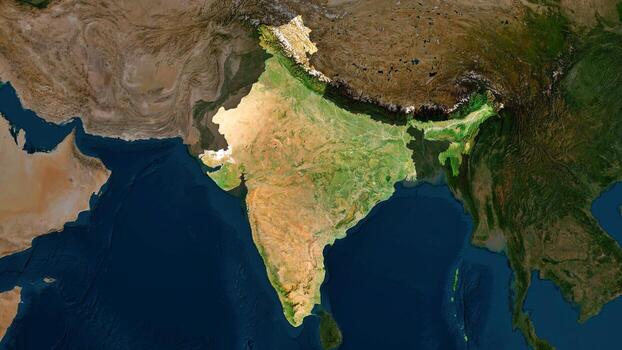
India’s top ten states account for nearly 70% of the country’s economic output, according to a new report by Rubix Data Sciences titled ‘State of the States: Assessing State-level Performance: Driving India’s Economic Transition’. The report covers the period from FY15 to FY25 across ten macroeconomic and development indicators.
The southern region contributed approximately 31% to national GDP in FY25, marginally ahead of the northern region’s 30%. Four southern states, Tamil Nadu, Karnataka, Telangana, and Andhra Pradesh, ranked among the top ten GDP contributors, with their combined share rising from 25% to 27% over the decade. Karnataka led with a 7.8% average real growth rate, followed by Telangana at 7.1%, Andhra Pradesh at 6.9%, and Tamil Nadu at 6.8%. Maharashtra remains the single-largest state contributor at 13%, though its share has moderated from 15% in FY15.
On the investment front, Uttar Pradesh, Maharashtra, and Gujarat accounted for nearly 30% of India’s total capital expenditure in FY25, with the top ten states controlling 67% of national capex. Goods exports remain highly concentrated, with Gujarat, Maharashtra, and Tamil Nadu alone accounting for 61% of India’s total. The South’s export share, however, has grown significantly from 26% to 33% over the decade.
One of the report’s standout findings is the transformation of the BIMARU states. Bihar and Madhya Pradesh nearly tripled their GSDP between FY15 and FY25, while Uttar Pradesh has emerged as a national leader in capital expenditure and domestic tourism.
Mohan Ramaswamy, Founder and CEO, Rubix Data Sciences, said India’s growth story is fundamentally a state-level story, and that how effectively emerging states convert current investment momentum into durable industrial capacity will define the country’s next growth phase.