




WEF warns of a permanent shift to volatile global supply chains, urging firms to prioritise resilience over low costs.

The World Economic Forum (WEF) has released its 2026 Global Value Chains Outlook, signaling a fundamental transition into an era of structural instability. Released ahead of the annual summit in Davos, the research indicates that geopolitics, aggressive industrial policies, and the energy transition have permanently reconfigured how goods move internationally.
According to the study, 75 percent of corporate executives now view resilience as a primary growth driver rather than a secondary concern. This shift follows a year where tariff escalations rerouted over $400 billion in trade flows, and shipping costs spiked by 40 percent. Manufacturing output in advanced economies has also cooled to its lowest levels since 2009.
Key factors of change:
- Policy proliferation: More than 3,000 new trade measures were enacted globally in 2025, a threefold increase compared to the previous decade.
- Operational agility: Success is no longer measured solely by cost-cutting but by “optionality”, the ability to pivot manufacturing quickly during crises.
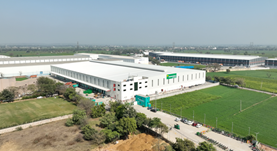
- Regional reliability: The report cites Tamil Nadu as a benchmark for stability. The Indian state’s predictable regulatory environment allowed the Vietnamese manufacturer VinFast to complete a massive electric vehicle facility in 17 months, significantly faster than the industry average.
WEF Managing Director Kiva Allgood noted that volatility is now a structural condition. Consequently, national competitiveness is increasingly defined by a territory’s ability to offer a stable investment climate amidst global fragmentation.
SOURCE – BUSINESS STANDARD