


Sarjak Container Lines (SCL), one of India’s leading project logistics, maritime and container logistics groups, released a ground-level market intelligence report on Day 43 of the US-Israel war on Iran, warning that global freight pricing has undergone a permanent reset.
Authored by Chairman & Managing Director Ashish Sheth, the report draws on live rate data from Freightos, SCFI, Kpler, and Xeneta and is addressed directly to shippers, carriers, and supply chain decision-makers navigating an increasingly volatile market.
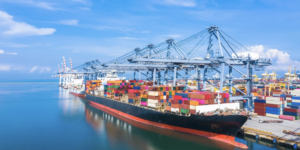
The human cost of the conflict on global trade is stark. Strait of Hormuz transits have collapsed from 135 to 140 vessels daily to fewer than 16, triggering rate surges of 20–40% across major routes. Shanghai to Jebel Ali container rates have more than doubled, while the Shanghai Containerised Freight Index has risen 28.3% since strikes began, with Middle East routes up 40.8% week on week.
The ceasefire that conditionally reopened Hormuz on April 8 expires in approximately ten days, with no replacement framework in sight. US-Iran talks in Islamabad collapsed on April 12 without a deal, leaving 600 vessels carrying USD 4 billion in cargo stranded in the Gulf. Sheth warns that regardless of outcome, a congestion surge is near-certain in May–June 2026 as stranded vessels are released simultaneously, overwhelming port infrastructure at Mundra, Colombo, and Singapore. SCL warns there is no framework to replace it, no deal in sight, and 600 vessels with 135,000 TEU of cargo, USD 4 billion in value, currently stranded in the Gulf.
India, however, stands at a rare strategic crossroads. Indian-flagged vessels remain among the very few permitted to transit Hormuz under IRGC clearance, and ports including Hazira, Mundra, and Kochi are already functioning as relay hubs. Sheth argues India has a narrow 60-day window to institutionalise this advantage, warning that inaction will see Gulf shipping business flow permanently to faster-moving competitors.