




Minister Sonowal highlights the Northeast’s transformation, citing expanded rail/air links and major investments as key to regional growth.
Union Minister Sarbananda Sonowal asserted that India’s Northeast is undergoing a profound historical transformation. He credited Prime Minister Narendra Modi with successfully reshaping a region previously known for neglect into one of the country’s most dynamic growth frontiers. In his media address regarding the decade of development, Minister Sonowal asserted that the Northeast was no longer peripheral but now resided at the heart of the country’s national policymaking.
He underscored that the current administration’s governance has driven simultaneous progress across infrastructure, economic reform, cultural revitalisation, and peace-building initiatives.
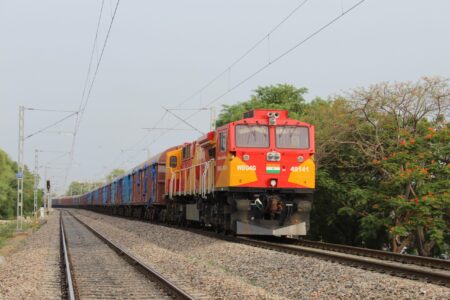
The Minister pointed out that the region had previously suffered from “seven decades of underinvestment and under-representation” but is now formally recognised as India’s Ashtalakshmi, reflecting its increasing strategic, cultural, and economic importance. Sonowal specifically highlighted connectivity as the cornerstone of Modi’s vision for the Northeast. Over the past decade, broad-gauge rail networks have been extended to Arunachal Pradesh, Tripura, Manipur, and Mizoram, granting remote inland areas access to freight and passenger transport.
Furthermore, over 11,000 kilometres of national and strategic highways have been upgraded; this includes key routes such as the Shillong–Nongstoin–Tura stretch and capital access roads to Kohima, Itanagar, and Gangtok, many of which are scheduled for completion in 2025. Air connectivity has also doubled, increasing from nine regional airports in 2014 to nineteen today, thereby significantly boosting accessibility.
Sonowal confirmed that the Prime Minister’s vision has also generated considerable investment. Noteworthy projects include India’s inaugural bamboo-based ethanol plant at the Numaligarh bio-refinery, which is creating fresh income streams for local farmers. A ₹22,594-crore expansion has also successfully tripled the refinery’s capacity, firmly establishing the Northeast as a crucial energy hub.
Moreover, the planned ₹27,000-crore semiconductor facility at Jagiroad is forecast to produce 15 billion chips annually and generate 27,000 new employment opportunities, signifying a major advance for high-tech manufacturing in the region.
The Minister also observed that the region has achieved long-term stability, citing successful peace accords with Bodo, Karbi, Bru, and various other groups. This stability has been further supported by a 75 percent reduction in the application of the Armed Forces Special Powers Act (AFSPA) since 2014.
Minister Sonowal concluded that, under the overarching Act East Policy, the Northeast is clearly developing into India’s primary logistics and cultural conduit to Southeast Asia. Integrated check posts, improved border infrastructure, and comprehensive multimodal transport links – incorporating waterways, highways, and rail – are collectively fostering new opportunities for trade, tourism, and broader regional cooperation.
SOURCE – MARITIME GATEWAY