



The rupee hits a record low as US tariffs and trade deadlock strain EXIM margins and supply chain stability.
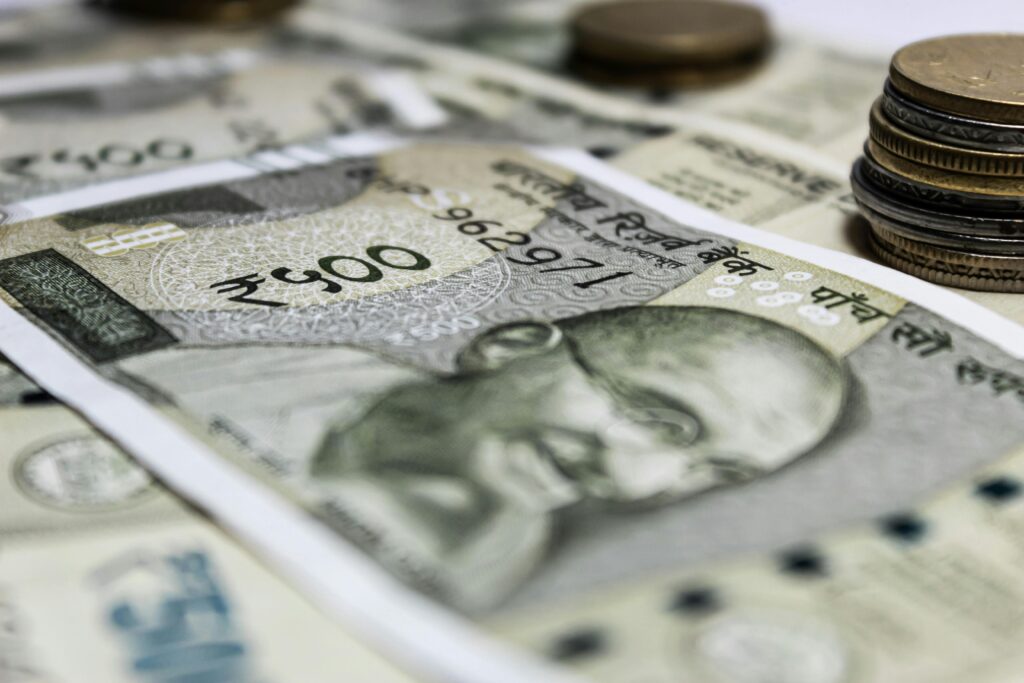
The Indian rupee has breached the psychologically significant barrier of 91.00 against the US dollar, marking an all-time low. This sharp depreciation is the direct result of a deepening trade crisis between New Delhi and Washington, where a stalemate in bilateral negotiations has left punitive 50 percent tariffs on Indian goods in place. For the domestic logistics, EXIM, and supply chain sectors, this convergence of currency weakness and protectionist trade policy represents a significant structural challenge to operational stability.
The current crisis stems from a series of escalations that began in early 2025. Following the implementation of a 25 percent reciprocal tariff in April, the US administration imposed an additional 25 percent penalty in August, citing India’s continued purchase of Russian crude oil and strategic energy alignment. This brought the total duty to 50 percent for critical export categories, including:
- Textiles and apparel: Account for nearly 30 percent of exports to the US; margins are now under severe pressure.
- Engineering and auto components: High exposure in the American replacement market, where Indian goods have lost their price advantage.
- Marine products: Frozen shrimp exports, which dominate the US market, are facing competition from Latin American suppliers with lower tariff hurdles.
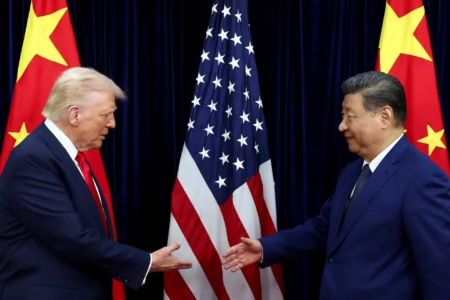
Despite five rounds of intense negotiations, talks remain in a stalemate. The primary point of discord is the “Farmers vs. Farmers” conflict: Washington is demanding greater market access for American dairy, corn, and genetically modified (GM) crops, while New Delhi remains firm on protecting its 700 million agricultural workers from subsidised imports. Consequently, a comprehensive trade deal is not expected before March 2026.
The record-low rupee is a double-edged sword for the EXIM community. While a weaker currency theoretically makes exports cheaper, the gain is largely offset by the 50 percent tariff wall. Conversely, the cost of imports has surged, leading to “imported inflation.”
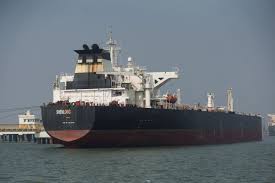
- Logistics costs: Since fuel and international freight settlements are typically dollar-denominated, the 6 percent annual slide in the rupee has driven up the landed cost of crude oil and maritime transport.
- Supply chain disruption: Manufacturers in the automobile and electronics sectors, which rely on imported components, are facing a “margin squeeze.” Lead times and inventory costs have risen as firms attempt to recalibrate their sourcing away from the US.
In response to the “US-minus” trade reality, the Indian government and private sector are accelerating a major strategic shift.
- Market diversification: Exporters are aggressively pivoting toward the United Kingdom, the European Union, and the Gulf Cooperation Council (GCC) countries. The gems, jewellery, and marine sectors have already shown early signs of resilience by finding alternative demand centres in Hong Kong and the Middle East.
- Logistics efficiency: To cushion the tariff shock, the Ministry of Road Transport and Highways is working to reduce domestic logistics costs from 14 percent to 9 percent of GDP by late 2025. Initiatives like the Allcargo Extended Reach (AER) network are expanding last-mile connectivity to ensure that even remote regional hubs remain integrated into the formal economy.
- Digital and multimodal integration: The adoption of AI-led planning and intelligent routing is helping logistics providers mitigate the impact of rising operational costs through better vehicle utilisation and route optimisation.
While the immediate environment remains volatile, the Indian economy maintains a projected 6.6 percent GDP growth. The focus for 2026 will be on building “tariff-neutral” supply corridors and deepening regional partnerships. The resilience of India’s supply chain will depend on its ability to transition from a low-cost export model to an agile, technologically advanced logistics hub capable of navigating a fragmented global trade landscape.
SOURCE – BUSINESS STANDARD