



AI-led cleaning and 500+ Gati Shakti cargo hubs to boost passenger comfort and freight growth.
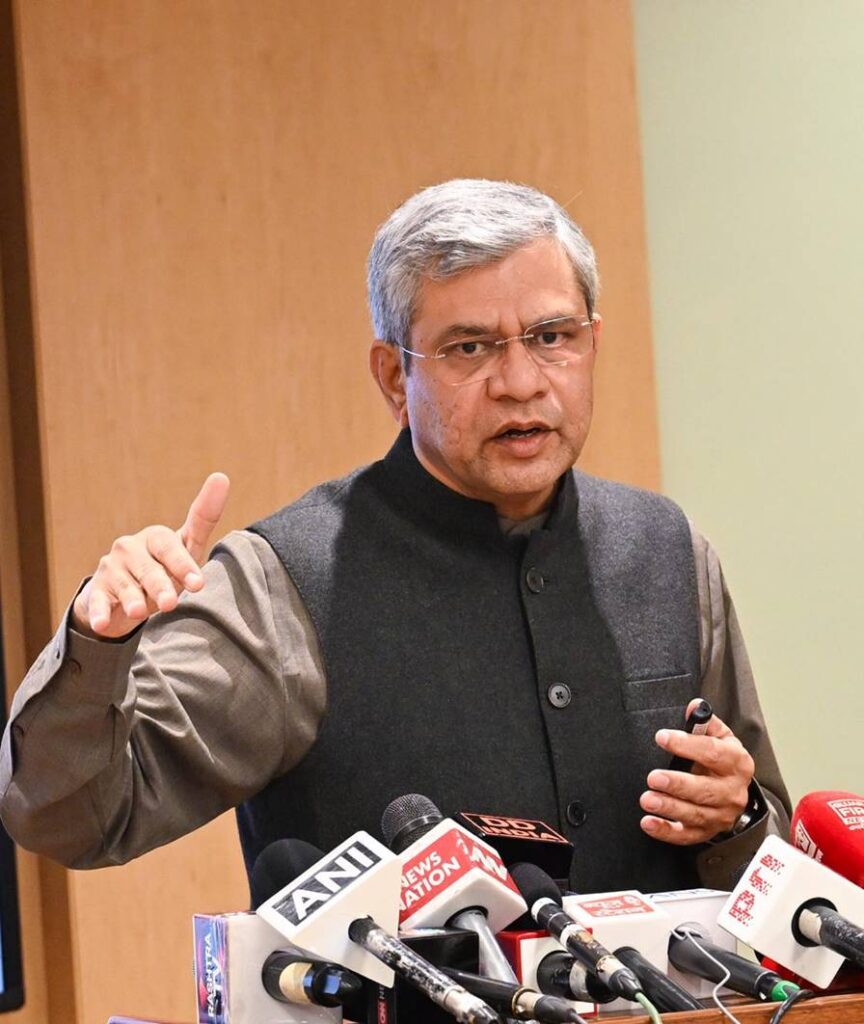
In a major reform drive aimed at transforming passenger experience and rail-based logistics, Indian Railways has approved two new initiatives under its ambitious “52 reforms in 52 weeks” programme for 2026. The announcement was made by Union Minister for Railways, Information & Broadcasting and Electronics & IT, Ashwini Vaishnaw, who said implementation will begin immediately.
Highlighting the outcomes of continuous reform, the minister noted that Indian Railways has emerged as the world’s second-largest cargo carrier, supported by new-generation trains, improved systems and modern operational practices.
End-to-End Cleaning, Including General Coaches
The first reform focuses on significantly improving on-board services, with special emphasis on general coaches. From 2026, Indian Railways will introduce continuous, end-to-end cleaning of long-distance trains, replacing the earlier “Clean Train Station” model that was limited to select stations and largely focused on reserved coaches.
For the first time, general coaches will be fully integrated into the cleaning framework. Toilets, garbage bins, cabin interiors, water availability and minor electrical or mechanical issues such as lighting failures will be addressed continuously throughout the journey, ensuring a cleaner and more comfortable travel environment.
Around four to five high-footfall, long-distance trains per zone have been identified for rollout over the next six months, with 80 trains already selected in the first phase. The programme will be expanded across all Indian Railways trains over the next three years based on operational learning.
A single professional service provider will be appointed under clearly defined Service Level Agreements to handle linen management, cleaning and related services. Cleaning frequency will be dynamically adjusted for peak and non-peak hours. AI-enabled war room control centres will monitor cleaning through image-based assessment, with strict action for non-compliance. Route-specific, multi-tasking teams capable of handling minor repairs alongside cleaning will deliver integrated on-board services.
Gati Shakti Cargo Terminals to Scale Up Freight Capacity
The second reform builds on the Gati Shakti Cargo Terminal (GCT) Policy introduced in 2022, which reduced approval timelines from nearly six years to about three months. Under that policy, 124 multi-modal cargo terminals were developed, with an estimated traffic potential of 200 million tonnes and annual revenue potential of ₹20,000 crore.
Following extensive stakeholder consultations, the enhanced reform aims to scale the number of Gati Shakti Cargo Terminals to over 500 in the next five years. Existing terminals will be upgraded into “cargo plus processing” hubs, enabling activities such as cement grinding and bagging, foodgrain processing, and container stuffing and destuffing within terminal premises itself.
Underutilised goods sheds will be redeveloped as GCTs, while legacy sidings can migrate to the simplified framework. Railways will also offer optional maintenance of short connecting tracks and electrical systems on a payment basis, improving safety and clarity of responsibility. Expanded common-user facilities, standard layouts with automatic approvals, multi-terminal connectivity safeguards and a dispute-prevention mechanism have been introduced to encourage private investment.
Contract tenure for cargo terminals has been extended from 35 to 50 years, supporting long-term infrastructure development. The ministry estimates that these reforms could generate an additional ₹30,000 crore in revenue over three years. Recent bulk cement reforms have already shown strong results, with monthly tonnage more than doubling and logistics costs reducing by up to 30% in Jammu & Kashmir and nearly 50% in Mizoram.
More Reforms Ahead
The minister said seven more reforms are in advanced stages, with two expected this month and three in early March, alongside preparatory work on another 30–40 initiatives. With simultaneous reforms in passenger services and freight logistics, Indian Railways has set the stage for a year of deep structural transformation.
Source: PIB