



Piyush Goyal: Indian industry must be competitive, innovative, and build resilient supply chains; calls for prompt payments to MSMEs.
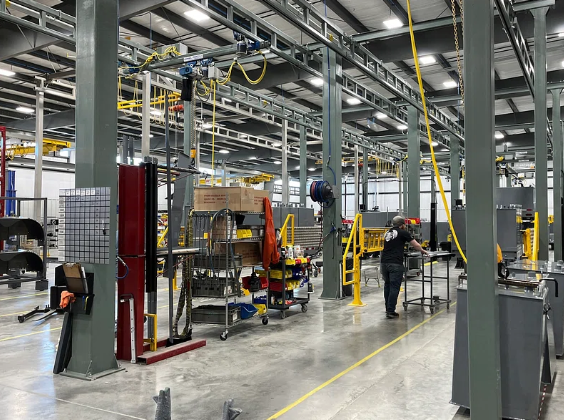
Speaking at the Confederation of Indian Industry’s (CII) IndiaEdge event in New Delhi today, Union Minister of Commerce and Industry Piyush Goyal emphasised the significance of innovation, quality, design, sustainability, and efficiency as major drivers of India’s manufacturing competitiveness.
The government, led by Prime Minister Narendra Modi, is working with a clear vision to assist the nation’s economic prosperity, according to Goyal. He noted that India’s manufacturing production has expanded into emerging sectors including electronics, white goods, chemicals, and petrochemicals, citing recent growth trends in manufacturing, services, and agriculture.
The Minister emphasised how important it is for business to continue being competitive and adaptable to world events. He warned against becoming overly dependent on particular regions and noted that recent interruptions have highlighted the significance of robust supply chains. He underlined the importance of identifying areas that require increased control over supply chains and local capacity.
Industry cooperation is essential for increasing manufacturing production, according Piyush Goyal, who also pointed out that more manufacturing will hasten the expansion of services. He continued by saying that India must continue to be receptive to competitive tactics inside its own economy while simultaneously bolstering its position in international markets.
The Minister noted that a number of states, such as Odisha and Uttar Pradesh, have seen tremendous development recently, which has led to fewer migrants and more local possibilities. He urged business to offer recommendations for streamlining processes, enhancing legal frameworks, and fortifying the production environment. He mentioned the government’s continuous efforts to update legislative frameworks, eliminate outmoded rules, and facilitate compliance, such as the implementation of the four labour codes. According to him, the codes would improve formalisation, guarantee minimum salaries, bolster social security, and improve workplace safety. Twenty-three states have created equivalent regulations.
Piyush Goyal emphasised the significance of making payments to MSMEs on schedule, stating that doing so would greatly reduce cash flow issues and promote MSME production and expansion.
The Minister also highlighted the nation’s long-standing emphasis on Swadeshi and independence, pointing out their importance in bolstering homegrown industrial capacities. He stated that in order to realise the national objective of Viksit Bharat 2047 and further the vision of Atma Nirbhar Bharat, industry and the government must work together.
SOURCE – PIB