




Five foreign freighters to begin NMIA operations from May, ahead of the August shutdown at Mumbai airport.
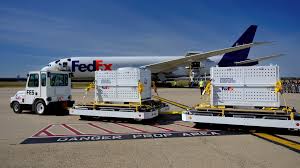
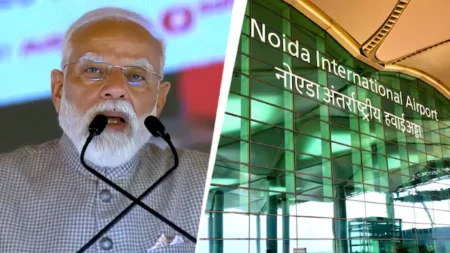
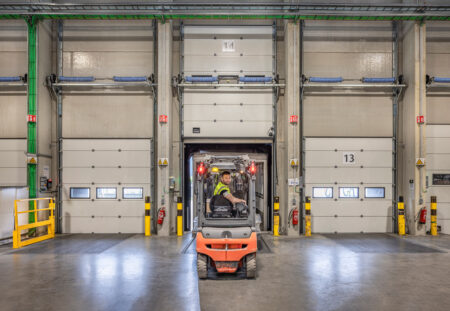
Global cargo operators FedEx and Aerologic, a joint venture between DHL and Lufthansa Cargo, are among five foreign freighter airlines set to begin cargo operations at Navi Mumbai International Airport (NMIA) from May, nearly three months before freighter flights are suspended at Mumbai’s Chhatrapati Shivaji Maharaj International Airport (CSMIA) from 1 August.
According to cargo industry officials, other airlines starting freighter services at NMIA include Challenge Air Cargo, Atlas Air and Teleport. NMIA, which commenced operations in December last year, is expected to absorb significant cargo traffic as Mumbai airport undertakes major runway, taxiway and apron repairs.
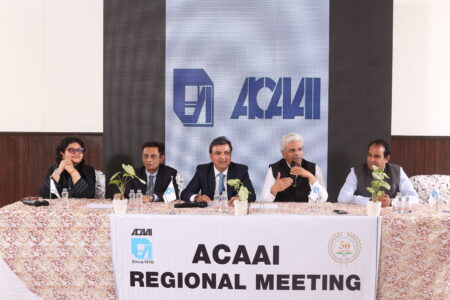
The transition is driven by the planned complete reconstruction of Apron G at CSMIA, used exclusively for freighters, scheduled from August 2026 to May 2027, necessitating a temporary halt to cargo aircraft operations. The move had earlier raised concerns from the Air Cargo Agents Association of India (ACAAI), which warned exporters could divert shipments to Delhi or Bengaluru if capacity constraints persist.
NMIA is operated by Adani Airports Holding, part of the Gautam Adani-led airport business. The operator has indicated that international passenger flights are expected to begin by Q1 FY27, a factor ACAAI has flagged as critical for seamless cargo movement. Industry practice often requires balancing cargo between freighters and passenger aircraft, especially when freighter payload limits are reached.
India’s airports collectively handle an estimated 3.3–3.7 million tonnes of air cargo annually, according to EY. Mumbai airport alone has a cargo capacity of about 1.45 million tonnes, operating at 62% utilisation, as per a September 2025 compliance report. Key international cargo partners serving India include FedEx, Challenge Air Cargo, Aerologic, Turkish Airlines, Qatar Airways and Singapore Airlines.
NMIA’s cargo handling capacity is planned to scale up significantly, from 0.5 million metric tonnes in the initial phase to 3.2 million metric tonnes in the final phase, under a five-phase development plan. The first phase itself is designed to handle 0.5 million metric tonnes of cargo.
Industry experts note that NMIA’s strategic advantage lies in its proximity to India’s largest port ecosystem, enabling sea–air logistics, faster export cycles and reduced dependence on a single congested western gateway. However, exporters may face higher initial costs during the transition from Mumbai to Navi Mumbai.
Mumbai International Airport (MIAL) has stated that the suspension of freighter operations is unavoidable due to infrastructure constraints, ongoing passenger traffic and limited land availability. While ACAAI has urged a reconsideration, warning of potential impacts on export growth and freight rates, airport authorities have maintained that NMIA’s timely readiness will help ensure continuity of cargo operations during the upgrade period.
Source: MINT