

2,200L LNG systems enable 40% diesel substitution, advancing cleaner rail mobility.
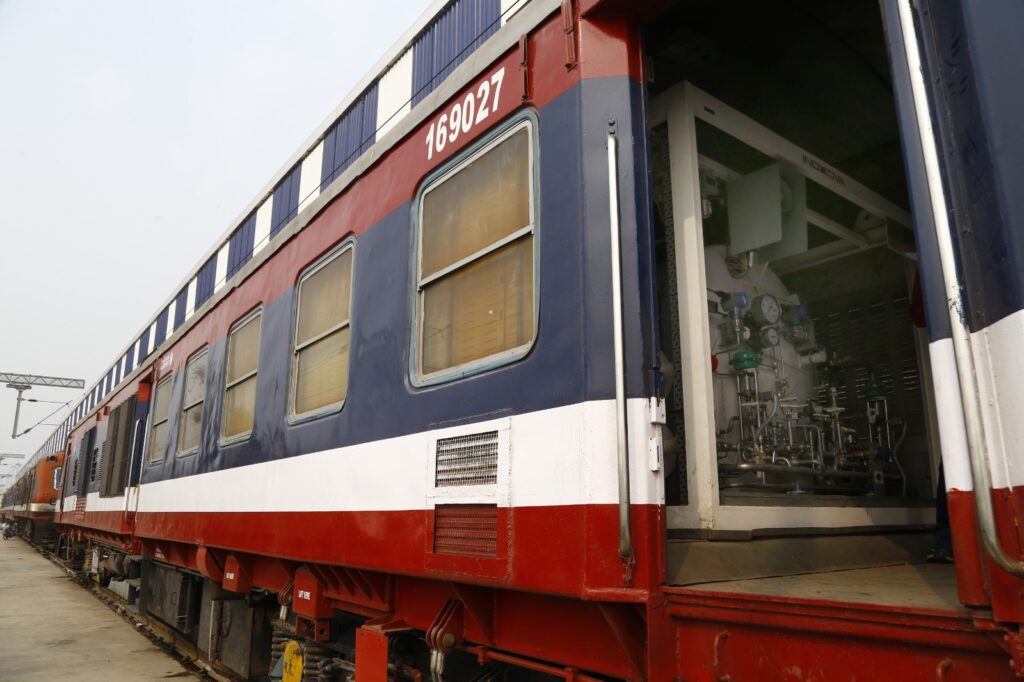
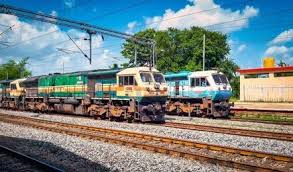
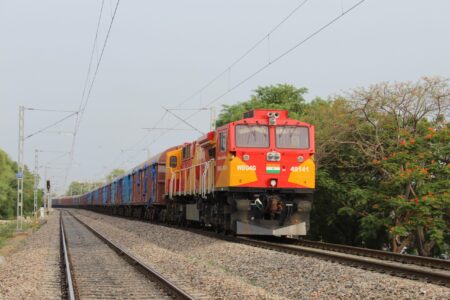
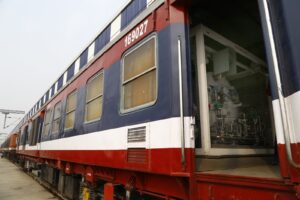
Indian Railways has achieved a key milestone in its clean energy transition with the successful operation of India’s first LNG–diesel dual-fuel DEMU train at Sabarmati, Ahmedabad. The trial has been enabled by INOX India (INOXCVA), which supplied advanced 2,200-litre LNG receiving, storage and regasification systems for integration into 1,400 HP Driving Power Unit Cars (DPUs) of Diesel Electric Multiple Unit (DEMU) trains.
The introduction of LNG as an alternative fuel allows up to 40% substitution of diesel, significantly improving fuel efficiency and reducing greenhouse gas emissions. The initiative is expected to benefit DEMU services operating on short- and medium-distance routes, where these trains are widely deployed across the country.
The dual-fuel programme was conceptualised by the erstwhile Indian Railways Alternative Fuels Division (IRAOF) to convert an initial batch of 10 DPUs from conventional diesel operation to a cleaner LNG–diesel hybrid configuration. INOX India earlier delivered two LNG systems that underwent extensive trials and certification at the Sabarmati Division. Following their successful performance, Indian Railways is now set to induct additional units, with INOX India ready to supply them under the ongoing contract.
Commenting on the development, Deepak Acharya, Chief Executive Officer, INOX India Ltd, said the ability to replace nearly 40% of diesel with LNG marks a decisive step toward decarbonising large-scale rail mobility while enhancing operational efficiency. He added that LNG represents a strong transition fuel for Indian Railways, with liquid hydrogen emerging as a future pathway for zero-emission rail traction.
INOX India is currently the sole manufacturer and supplier in India to have successfully delivered, tested and validated cryogenic LNG systems for rail applications. The LNG fuel tank system was supplied to Indian Railways through CLH Gaseous Fuel Applications, which also carried out the engine conversion from standalone diesel to dual-fuel LNG–diesel operation.
With plans under consideration to double the on-board LNG capacity, the dual-fuel DEMU trains could operate over longer distances in the future. The deployment positions LNG-based propulsion as a practical solution for improving energy efficiency, reducing emissions and strengthening India’s pathway toward environmentally responsible and sustainable rail operations.
Source: PR