



389 km rail expansion to cut logistics costs, oil imports and CO₂, boosting mobility nationwide.
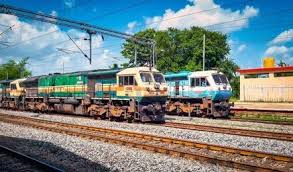
The Cabinet Committee on Economic Affairs (CCEA), chaired by Prime Minister Narendra Modi, has approved three major multitracking projects of the Indian Railways at an estimated cost of ₹18,509 crore. The projects will add about 389 km to the existing rail network across 12 districts in Delhi, Haryana, Maharashtra and Karnataka and are targeted for completion by 2030–31.
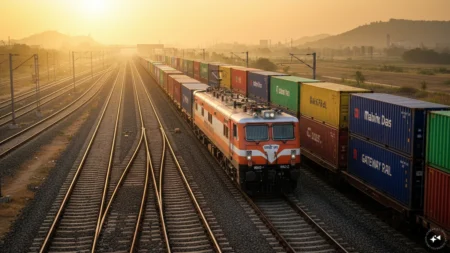
The approved projects include the Kasara–Manmad 3rd and 4th lines, Delhi–Ambala 3rd and 4th lines, and Ballari–Hosapete 3rd and 4th lines. Together, they are expected to significantly enhance line capacity, ease congestion and improve operational efficiency and service reliability across some of the busiest and most freight-intensive corridors of Indian Railways.
A key outcome of the initiative will be improved travel convenience and a sharp reduction in logistics costs, while also supporting India’s sustainability goals. Enhanced rail capacity is projected to shift substantial freight from road to rail, reducing oil imports by around 22 crore litres and lowering CO₂ emissions by nearly 111 crore kg, equivalent to planting about four crore trees, reinforcing railways as an energy-efficient and environment-friendly mode of transport.
Planned under the PM Gati Shakti National Master Plan, the projects focus on integrated, multimodal planning to enable seamless movement of people, goods and services. Improved connectivity will benefit approximately 3,902 villages with a combined population of about 97 lakhs, while also strengthening access to key tourist destinations such as Trimbakeshwar Jyotirlinga, Shri Mata Vaishno Devi Katra/Srinagar, and Hampi, a UNESCO World Heritage Site.
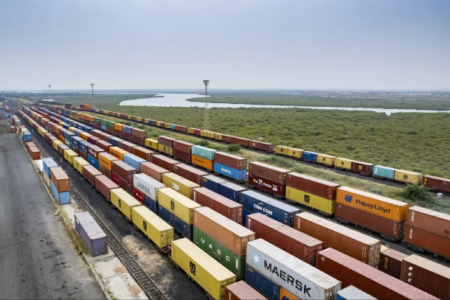
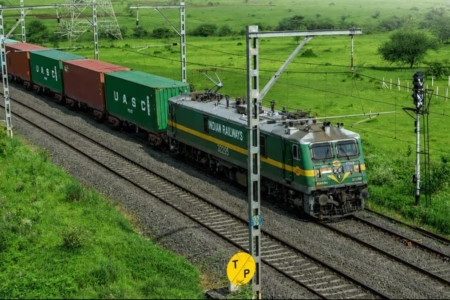
From a freight and logistics perspective, the routes are critical for the movement of coal, steel, iron ore, cement, limestone, containers, foodgrains, sugar, fertilisers and petroleum products. Capacity augmentation is expected to generate additional freight traffic of about 96 million tonnes per annum (MTPA), improving supply chain efficiency across multiple sectors.
Source: PIB