



NITI Aayog unveils green roadmaps for India’s cement, aluminium and MSME sectors to reach net-zero goals by 2070.
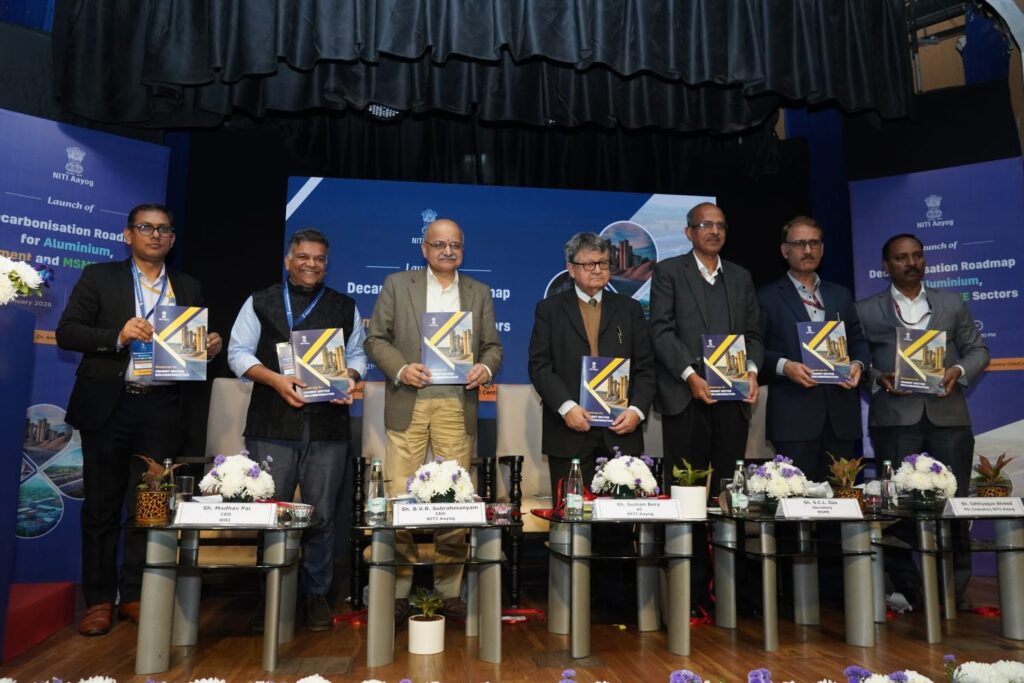
NITI Aayog has unveiled comprehensive decarbonisation roadmaps for the cement, aluminium, and MSME (Micro, Small, and Medium Enterprises) sectors. These strategies aim to balance India’s target of a $30 trillion economy by 2047 with its 2070 net-zero climate pledge.
The reports forecast a massive scale-up in production, which will directly dictate future freight demand:
- Cement Expansion: Output is expected to leap from 391 million tonnes (2023) to approximately 2,100 million tonnes by 2070. For logistics providers, this represents a five-to-sevenfold increase in the movement of building materials.
- Aluminium Surge: Production is set to grow from 4 million tonnes to 37 million tonnes by 2070. Given that India currently exports nearly half of its primary aluminium, this growth implies a significant spike in both domestic industrial transit and international port-bound cargo.
A central theme is the “greening” of the supply chain to maintain global competitiveness:
- MSME Export Viability: MSMEs contribute over 45 percent of India’s exports. The roadmap warns that high carbon intensity could lead to future international trade restrictions. Consequently, transitioning these 69 million units to green electricity and energy-efficient equipment is vital for cargo firms handling export-bound goods.
- National Oversight: NITI Aayog has proposed a National Project Management Agency (NPMA). This body will oversee green transitions within industrial clusters, likely leading to the development of “Green Freight Corridors” between these hubs and major ports.
The decarbonisation levers mentioned will create demand for new types of specialised transport:
- Alternative Fuel Logistics: The cement sector will prioritise Refuse Derived Fuel (RDF) sourced from municipal waste. This creates a new logistics requirement for transporting processed waste from urban centres to industrial plants.
- Carbon Capture Infrastructure: The scaling of Carbon Capture, Utilisation, and Storage (CCUS) technology suggests a future need for transporting captured CO2 or the specialised chemicals and equipment required for these facilities.
- Energy Sourcing: The aluminium sector’s shift involves moving toward Renewable Energy-Round the Clock (RE-RTC) and eventually nuclear power, indicating a long-term decline in traditional coal-hauling for captive power plants in favour of infrastructure for clean energy.
With the manufacturing sector’s GDP share targeted to rise from 17 percent to 25 percent, the logistics industry must prepare for “Viksit Bharat” by investing in high-capacity, low-emission transport assets. The integration of “cluster-based frameworks” suggests that cargo companies should focus their infrastructure investments around these designated industrial MSME zones.
SOURCE – PIB