



India’s air cargo and logistics ecosystem is entering a phase of maturity, driven by stable trade lanes, smarter capacity planning, and greener operations. AI, automation, and connected platforms are now enabling predictive, resilient, and profitability-led supply chains from air corridors to last-mile returns.

Air Cargo’s new flight path
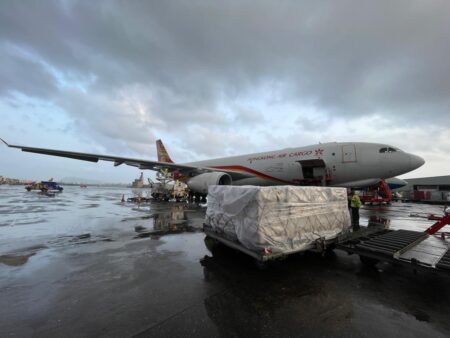
Nishit Kadia, CEO of Shree Shakthi Air Cargo, reflects on 2025 as the year India’s air cargo corridors found a renewed sense of stability. “Trade lanes didn’t just shift, they matured,” he notes. Middle Eastern hubs strengthened their position as essential transshipment anchors, while Europe–South Asia routes steadied on strong pharma and engineering exports. US-bound cargo also benefited from smarter consolidation strategies. Airlines, he adds, “built yield-driven networks that focused only on lanes with real, sustained demand,” giving shippers a more predictable operating landscape.
Tech tools transforming air freight
A deeper shift played out behind the scenes as exporters embraced IoT trackers to monitor shipment conditions and reduce disputes. “AI-driven documentation sped up customs clearance and cut errors,” Nishit explains. Computer vision tools enhanced dimension checks at airports, while digital tracking platforms finally offered Indian MSMEs true end-to-end visibility across handlers and airlines, closing a long-standing transparency gap.
The new balance: Speed and sustainability
While speed remained non-negotiable, sustainability became central to decision-making. Airlines expanded SAF blending, airports improved energy-efficient operations, and load optimisation reduced empty legs. “We also saw early trials of hybrid-electric aircraft on short regional cargo routes,” he says, an early but meaningful shift toward greener operations.
Airports reimagine cargo efficiency
India’s major airports advanced rapidly through digital and physical upgrades. Automated truck gates, digital slot allocation, and enhanced cold-chain corridors accelerated cargo flows. Risk-based, 24×7 customs operations added predictability. “Delhi, Mumbai, Bengaluru, and Hyderabad now operate with world-class cargo efficiency,” Nishit affirms.
What 2026 holds for air cargo
Nishit views 2026 as a defining year. Fuel-efficient freighters, drone-enabled remote deliveries, and “AI-led airspace management” will collectively reduce delays. Quick-conversion aircraft interiors will give carriers the flexibility to expand belly capacity as seasons and sectors demand.
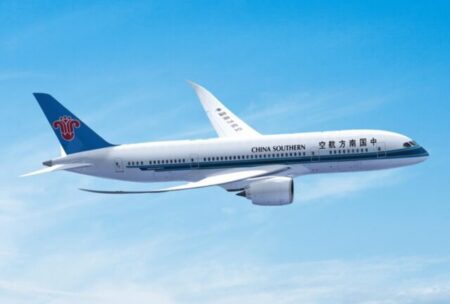
More fuel-efficient freighters will shape 2026 operations
Digital transformation drives supply chains

Deepak Teotia, Head of Sales at Fynd, describes how logistics is undergoing one of its most transformative phases. “In 2025, connected logistics extended beyond delivery visibility into manufacturing, enabling resilience from the production floor to the final mile,” he notes. With Fynd’s integrated WMS–TMS platforms, vendors, manufacturers, and carriers now operate on shared data flows. Real-time batch tracking, automated purchase order acknowledgements, and AI-driven route planning are helping organisations anticipate disruptions well before they surface, strengthening supply chains against volatility.
AI and automation redefining reverse logistics
Reverse logistics, traditionally cost-heavy, is being rebuilt through AI and automation. “Advanced systems now auto-link returned goods to their original shipments, apply configurable quality checks, and trigger instant restocking,” Teotia explains. AI-powered NDR engines are recovering nearly half of failed deliveries, turning returns into a driver of profitability and circularity.
Generative AI for predictive planning
Generative AI is pushing logistics into a predictive era. With Fynd’s AI Shipping Rule Engine Simulator and Predictive Delay Management tools, companies can combine live traffic, courier insights, and inventory data to forecast delays and optimise fulfilment. “The logistics network can simulate, decide, and act, all before a disruption hits the road,” Teotia says.
Automation achieves new efficiency standards
Automation is now a baseline expectation. AI-driven wave planning, smart putaway, multi-pick/multi-drop routing, and dynamic delivery slotting are dramatically improving precision. “Processing times have dropped by as much as 90 percent, while inventory accuracy now exceeds 99 percent,” Teotia highlights.
Human-centric platforms ensure adoption
Despite technological advances, Teotia stresses the importance of human-friendly systems. “The next generation of workers demands simplicity and intuitiveness,” he says. AI assistants and mobile-first interfaces now turn complex operations into guided, seamless workflows.
The future of connected logistics
Teotia expects 2026 to usher in smarter, more sustainable, and deeply connected logistics networks, systems that not only deliver faster but also anticipate, adapt, and respond autonomously.
AI and automation are transforming returns into profit drivers